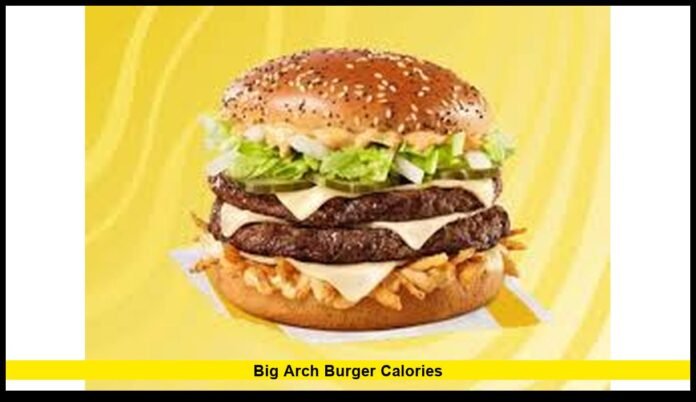

Big Arch Burger calories are drawing strong attention as McDonald’s expands its larger premium burger into more markets through 2025 and 2026. U.S. consumers searching for nutrition details want clear answers about how many calories the sandwich contains, how it compares with other menu items, and whether it fits into a balanced diet.
The Big Arch burger represents McDonald’s move toward oversized premium sandwiches. Its calorie total reflects bigger patties, more cheese, and a heavier overall build than classic burgers.
What Is the Big Arch Burger
The Big Arch burger is positioned above the Big Mac in size and portion weight. It features a stacked structure designed to deliver a more filling experience.
Core components include:
- Two large seasoned beef patties
- Multiple cheese slices
- Lettuce and onions
- Pickles
- A signature creamy sauce
- A large sesame seed bun
The burger launched internationally before gradually expanding into additional markets. Interest increased as customers began comparing its size and calories with existing McDonald’s favorites.
Big Arch Burger Calories: Latest Nutrition Range
The sandwich falls into the highest calorie tier among McDonald’s core burgers.
Current calorie estimate
- Calories: about 1,000–1,100
- Protein: roughly 55–65 g
- Total fat: about 60–70 g
- Carbohydrates: around 45–55 g
Small differences appear depending on ingredient variations and regional portion standards. In the United States, values typically sit near the higher end of the range.
The calorie level reflects the burger’s larger size rather than unusual ingredients.
Why This Burger Has So Many Calories
Several design choices increase the calorie total:
- Larger beef patties than standard sandwiches
- Extra cheese layers
- Higher sauce quantity
- Bigger bun
- Greater overall sandwich weight
Premium burgers across the fast-food industry increasingly exceed 1,000 calories, making this sandwich part of a broader trend.
Comparison With Popular McDonald’s Burgers
Customers often search for direct calorie comparisons before ordering.
| Menu Item | Approx Calories |
|---|---|
| Big Mac | ~550 |
| Quarter Pounder with Cheese | ~520 |
| Double Quarter Pounder | ~740 |
| Big Arch burger | ~1,000–1,100 |
The difference is noticeable. The Big Arch delivers nearly twice the calories of a Big Mac and significantly more than a Double Quarter Pounder.
That positioning reinforces its role as a large, premium meal choice.
Nutrition Profile Beyond Calories
Calories matter, but the full nutrition picture provides context.
Protein Content
The burger offers high protein due to its double large patties. Many customers view this as a benefit because it increases fullness.
Fat Contribution
Fat accounts for the biggest share of total calories. Cheese and sauce drive most of this increase.
Sodium Levels
Sodium levels are elevated, which is typical for large fast-food burgers. Customers monitoring salt intake often check this before ordering.
How It Fits Into Daily Intake
A general daily intake guideline sits around 2,000 calories.
One Big Arch burger alone provides roughly half that amount. Adding fries and a beverage can push a meal well above 1,400–1,600 calories.
This explains why calorie searches surged after the burger gained visibility.
Why Big Arch Burger Calories Are Trending
Interest continues to rise for several reasons:
- Expansion into more locations
- Social media size comparisons
- Video reviews highlighting portion weight
- Increased focus on calorie transparency
- Competition in the premium burger category
Nutrition questions typically spike when a larger menu item launches.
Ways Customers Reduce Calories
Many customers customize orders to manage intake without skipping the burger.
Common calorie-reducing changes
- Request light sauce
- Remove one cheese slice
- Skip half the bun
- Choose a low-calorie drink
Small adjustments can lower calories by roughly 100–250.
Customization plays a major role in modern fast-food decision-making.
Portion Size and Satisfaction
The burger is designed as a full meal item rather than a side sandwich.
Customer feedback trends highlight:
- Strong satiety compared with standard burgers
- Less need for additional menu items
- Occasional sharing due to size
- Positioning as an indulgent choice
Portion size drives both the calorie total and the product’s appeal.
Premium Burger Strategy Across Fast Food
The Big Arch reflects a wider industry shift toward larger, higher-priced burgers.
Key patterns include:
- Bigger patties
- Layered builds
- Signature sauces
- Visual impact for social media
- Clear nutrition visibility
Calorie transparency now plays a role in marketing, not just labeling.
Consumer Response to the Calorie Count
Public reactions generally fall into three categories:
- Curiosity about how large the burger is
- Concern about high calorie totals
- Interest from customers seeking filling, high-protein meals
Younger consumers, in particular, tend to check calorie information before trying new menu items.
Search behavior shows nutrition is often the first question after product launch.
Health Perspective
Large premium burgers are typically viewed as occasional choices rather than daily meals.
Main reasons include:
- High calorie density
- Elevated fat levels
- Higher sodium content
Balanced diets can still include high-calorie meals when overall intake remains controlled.
Meal frequency matters more than a single order.
What Comes Next for Nutrition Transparency
Calorie searches around oversized burgers are expected to continue rising.
Future trends likely include:
- Expanded premium burger menus
- Stronger macro tracking by consumers
- App-based nutrition visibility
- Greater emphasis on customization
Large sandwiches consistently generate long-term nutrition interest.
The conversation around Big Arch Burger calories highlights how fast-food decisions increasingly revolve around transparency. Customers want to understand portion size, calorie impact, and how a new item compares before ordering. Clear nutrition information allows consumers to enjoy premium menu items while staying aware of overall intake.
Do you think oversized burgers are worth the calories, or do you prefer smaller classics? Share your opinion and stay updated.