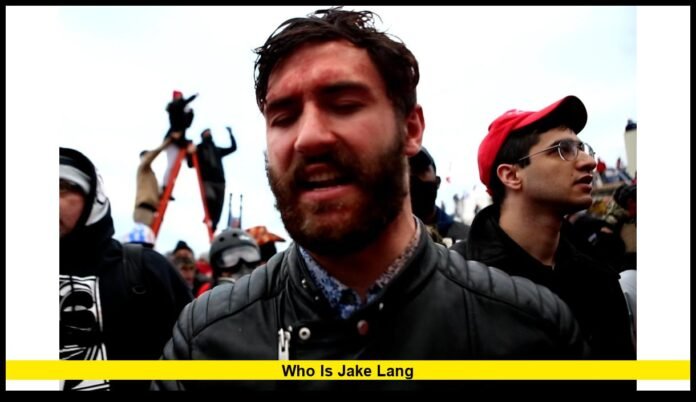

Who is Jake Lang? As of 2026, that question continues to spark public debate across the United States. Jake Lang is one of the most recognized defendants from the January 6, 2021, Capitol riot. More than four years later, his legal battle is still unresolved. His case has drawn attention not only because of the charges he faces but also because of his lengthy pretrial detention, outspoken faith, and influence within the broader discussion about justice and political division in America.
Early Life and Personal Background
Jake Lang was born in 1995 and grew up in Newburgh, New York, about 60 miles north of New York City. Before his name became linked with national headlines, Lang led a fairly typical life. Friends from his hometown remember him as an active and sociable person who enjoyed sports, fitness, and entrepreneurship.
He attended public school and later pursued small business ventures, including digital marketing and e-commerce work. Lang described himself as self-motivated and politically passionate, especially during the years leading up to the 2020 election.
By late 2020, Lang had become more engaged in conservative activism, frequently posting his political opinions online and participating in rallies. This path eventually led him to Washington, D.C., in early January 2021 — the day that would define his public identity.
Jake Lang and the January 6 Capitol Riot
On January 6, 2021, Lang traveled to the nation’s capital to attend the rally where then-President Donald Trump addressed thousands of supporters. After the rally, large crowds moved toward the U.S. Capitol building as Congress convened to certify the Electoral College vote.
Lang became part of the group gathered near the Lower West Terrace tunnel, one of the most violent locations during the riot. Federal investigators later identified Lang in several videos that showed confrontations between protesters and law enforcement officers.
The Department of Justice alleges that Lang used a bat and riot shield during the conflict and engaged in physical resistance against officers. In contrast, Lang has claimed he acted in self-defense amid what he described as chaotic and dangerous conditions. He has also said he tried to assist a fellow protester, Rosanne Boyland, who died during the turmoil that day.
This disputed series of events has been central to Lang’s case, and it continues to divide public opinion about whether his actions were criminal or defensive.
Arrest and Federal Charges
The FBI arrested Jake Lang on January 16, 2021, at his Newburgh home, ten days after the Capitol attack. Federal prosecutors filed several serious charges against him, including:
- Assaulting, resisting, or impeding law enforcement officers with a dangerous weapon
- Obstruction of an official proceeding
- Civil disorder
- Engaging in violence on restricted federal grounds
These charges placed Lang among the higher-profile defendants in the extensive set of Capitol riot prosecutions.
He has pleaded not guilty to all charges, maintaining that he never intended to harm officers and that he was trying to protect others during the melee.
Years in Pretrial Detention
As of January 2026, Jake Lang remains in federal custody awaiting trial. He has spent more than four years behind bars without a verdict, making him one of the longest-detained January 6 defendants.
Lang has been held in several facilities, including the D.C. Jail and the Metropolitan Detention Center in Brooklyn, New York. His attorneys have repeatedly asked for his release, citing constitutional concerns about his right to a speedy trial. However, federal judges have ruled that he should remain in detention due to the seriousness of the charges and the potential risk posed by his release.
His situation has become a point of legal and political debate, with some calling his lengthy detention unprecedented in recent U.S. criminal cases.
Daily Life and Faith Behind Bars
Despite his incarceration, Lang has remained outspoken about his beliefs and experiences. In letters and recorded calls shared by supporters, he describes using his time in jail for prayer, Bible study, and writing.
He has said his Christian faith has deepened during his time behind bars. Lang often refers to his detention as a test of endurance and a chance to grow spiritually. He has encouraged others facing hardship to rely on faith and forgiveness rather than anger or despair.
His supporters frequently share his faith-based messages online, portraying him as an example of resilience under pressure. Lang has emphasized that he draws strength from the prayers and encouragement sent by his family and followers across the country.
The Role of Family Support
Lang’s family has remained deeply involved in advocating for his release. His parents have spoken publicly about the emotional toll of his long detention and their hope that his case will soon move forward.
They have attended rallies, prayer gatherings, and court hearings to show support. Family members describe him as a compassionate person who loves his country and maintains faith in his eventual acquittal.
Through social media and fundraising campaigns, the Lang family has connected with other families of January 6 defendants, creating a network of emotional and financial support.
Legal Developments in 2026
As of this year, Jake Lang’s legal proceedings continue in federal court in Washington, D.C. His defense attorneys have filed motions challenging the obstruction of an official proceeding charge — a central component of many January 6 prosecutions.
This charge is currently under review in the appellate courts and may also be addressed by the U.S. Supreme Court in 2026. Depending on the outcome, it could significantly affect Lang’s case and others awaiting trial.
If the courts narrow or strike down the use of that charge, Lang could face a reduced set of counts. However, prosecutors continue to argue that his actions were violent and justify the full list of felony charges.
While no trial date has been confirmed, both sides expect substantial developments later this year.
Jake Lang’s Public and Online Presence
Even while incarcerated, Lang has become one of the most publicly visible January 6 defendants. With assistance from supporters outside jail, he has managed social media accounts and participated in interviews through recorded calls.
These interviews, shared online, often feature his perspectives on faith, justice, and the American legal system. Lang presents himself as a man of conviction who stands by his beliefs. His supporters view him as a symbol of perseverance, while his critics see him as a figure who refuses to accept responsibility for his role in the riot.
Lang’s case continues to attract strong reactions on both sides of the political spectrum. For some, he represents resistance against perceived government overreach. For others, he remains an example of the consequences of political extremism.
Broader Debate Around His Case
Jake Lang’s detention has become part of a larger national conversation about fairness, political polarization, and justice in America.
Supporters of Lang and other detained defendants argue that the government has treated January 6 participants more harshly than those charged in other political demonstrations. Civil liberties advocates have also raised concerns about extended pretrial detention and solitary confinement conditions.
On the other side, federal officials and prosecutors maintain that the Capitol riot represented a direct assault on democracy. They argue that the use of force against law enforcement and attempts to obstruct the certification of an election must be prosecuted aggressively to uphold the rule of law.
This ongoing debate ensures that Lang’s name remains central to discussions about political justice and civil rights in the United States.
Support Movements and Fundraising Efforts
Multiple advocacy groups have rallied around Lang’s case. These organizations host online events, publish letters from inmates, and organize legal defense funds for January 6 detainees.
Lang has inspired a particularly loyal following among conservative activists and faith-based communities. Some describe him as a political prisoner, while others frame his experience as part of a larger story about government accountability.
While public opinion remains divided, his supporters have consistently emphasized nonviolence, prayer, and lawful advocacy as they seek change in how the justice system handles these cases.
Impact on His Life and Reputation
More than four years after his arrest, Jake Lang’s life has transformed in every possible way. Before January 6, he was a young entrepreneur who ran online businesses, enjoyed sports, and focused on personal growth. He had plans for professional advancement and was known in his hometown as ambitious and energetic. Since then, his entire identity has been shaped by the events of that day and the lengthy legal process that followed.
Lang’s name has become widely recognized across political and media circles. He has been discussed in national news reports, congressional hearings, and public debates about the January 6 prosecutions. His case has even been cited by lawmakers and advocacy groups as an example of how the justice system handles politically sensitive cases.
While some Americans see him as a patriot standing for his beliefs, others view him as a symbol of extremism and the dangers of political unrest. This divide has deeply affected how he is perceived both locally and nationally. Once known primarily for his entrepreneurial spirit, Lang is now a polarizing public figure associated with one of the most controversial moments in modern U.S. history.
The impact of his detention has also extended into his personal life. Lang has spoken openly about how difficult it has been to spend years behind bars without a trial. He has missed family gatherings, holidays, and the normal milestones of life that most people take for granted. He has described the emotional strain of being separated from loved ones and watching time pass while waiting for a court date that keeps getting delayed.
Despite these hardships, Lang continues to express a determination to rebuild his life when his legal case concludes. In letters, phone calls, and interviews shared through supporters, he has said that his faith in God gives him strength and perspective. He often talks about redemption, forgiveness, and the lessons he’s learned through suffering.
Lang’s supporters describe him as focused, spiritually grounded, and mentally resilient. They say he has used his years of confinement not to grow bitter but to deepen his faith and prepare for a new chapter in life. They believe he will eventually use his experience to advocate for criminal justice reform and raise awareness about extended pretrial detention in America.
Still, rebuilding his public reputation will not be easy. His name is firmly tied to one of the most divisive events in the nation’s recent history, and opinions about him remain sharply split. For every person who calls him courageous, there is another who views his actions as reckless or harmful.
Lang himself has acknowledged this reality in interviews, saying he knows he will have to live with the consequences of that day for the rest of his life. He has expressed hope that time, truth, and faith will eventually allow people to see him as more than just a headline.
If he is eventually released and resumes life outside prison, Lang will face the challenge of rebuilding trust and reestablishing his career. Supporters have said they believe he will continue working in areas related to faith, advocacy, or entrepreneurship, using his story to inspire others about perseverance and redemption.
Regardless of how his trial ends, there’s no question that Jake Lang’s life has been irreversibly changed. What began as a moment of political activism has evolved into a defining personal and public journey marked by struggle, faith, and a search for justice.
His supporters remain optimistic that his eventual release will bring a new beginning — one where he can contribute positively to society and share lessons learned from years of hardship. His critics, meanwhile, will continue to debate his role in history. Yet even they agree on one point: Jake Lang’s name, and the controversy surrounding it, will remain part of the national conversation for years to come.
Looking Ahead: The Road to Resolution
In 2026, Jake Lang’s future depends on several key legal outcomes. His attorneys are waiting for rulings that could redefine how the government applies certain felony charges in January 6 cases.
If these legal challenges go in his favor, Lang may face fewer charges or a shorter sentence if convicted. If not, his case could continue into 2027 or beyond.
Regardless of the outcome, Lang’s story has already become one of the most enduring and controversial chapters in the aftermath of the Capitol riot. His experience reflects how a single day in history continues to shape personal lives and political discourse years later.
Final Thoughts
So, who is Jake Lang? He is a 31-year-old man from New York who became a key figure in one of the most significant legal and political sagas of modern America. Detained for more than four years without trial, Lang’s journey reveals the complexities of justice, faith, and identity in a deeply divided nation.
As his case moves forward in 2026, the story of Jake Lang continues to serve as a mirror reflecting the challenges and questions facing American democracy today.