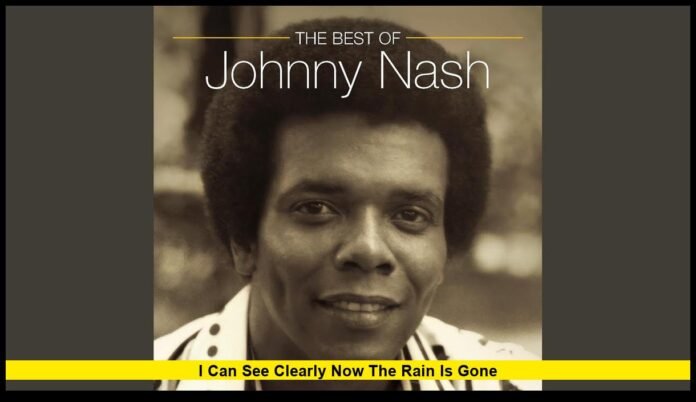

Few songs capture the feeling of hope as beautifully as “I Can See Clearly Now the rain is gone.” More than fifty years after its release, the song continues to inspire listeners across generations. Its message of perseverance and optimism remains timeless, and in 2025, its influence continues to grow through streaming, film soundtracks, and modern covers that keep it alive for new audiences.
A Classic Born from Simplicity and Strength
I Can See Clearly Now was written and recorded by American singer-songwriter Johnny Nash in 1972. Blending reggae rhythm with pop melody, the song quickly became a global hit. Its lyrics — simple yet deeply comforting — offered a message that anyone facing hardship could understand.
The track topped the Billboard Hot 100 chart in November 1972 and held its position for four weeks. It also reached the top of the charts in Canada and entered the Top 10 in the United Kingdom. By the end of the year, it had sold over one million copies in the United States alone.
The song’s opening line, “I can see clearly now, the rain is gone,” immediately sets a tone of relief and renewal. It’s not just about weather — it’s about emotional clarity and overcoming obstacles. That universal theme is what has kept the song relevant for over five decades.
Johnny Nash: The Vision Behind the Song
Johnny Nash, born in Houston, Texas, was one of the first non-Jamaican artists to record reggae music in Kingston. He worked closely with local musicians, including a young Bob Marley, helping introduce reggae to international audiences.
When Nash wrote I Can See Clearly Now, he was emerging from personal and professional challenges. The song reflected his own sense of finding hope again. Its gentle rhythm and joyful tone made it accessible to listeners from every background.
The lyrics — “Gone are the dark clouds that had me blind” — reflected not just optimism but resilience. They became a form of musical therapy for many during a time of social change and uncertainty in the early 1970s.
By the mid-1970s, Nash’s version had become a standard of the American songbook. Its message of positivity was universal, connecting with listeners facing everything from personal struggles to global tensions.
The Song’s Enduring Popularity
Over the years, I Can See Clearly Now has become more than just a hit single — it’s a cultural touchstone. In the United States, the song continues to appear in movies, television shows, and commercials.
Its inclusion in major films such as Cool Runnings (1993), Thelma & Louise (1991), and Antz (1998) introduced it to new generations. Each time the song resurfaced, it connected perfectly with stories about courage, change, and triumph.
In 2025, the song maintains a strong presence across digital platforms. On Spotify, Nash’s original version surpasses 400 million streams globally, with a significant share of listeners based in the U.S. The track also performs strongly on Apple Music and YouTube Music, often featured in playlists like “Feel Good Classics” and “Morning Motivation.”
The song’s message has become especially popular in modern times. Its theme of emerging from darkness into light resonates deeply in a world that continues to face social and emotional challenges.
Jimmy Cliff’s Reggae Revival
While Nash’s version remains the definitive original, I Can See Clearly Now gained a second wave of global fame through Jamaican singer Jimmy Cliff in 1993. His rendition appeared in the Disney film Cool Runnings, which told the true story of Jamaica’s first Olympic bobsled team.
Cliff’s version brought a distinctly Caribbean energy to the track. His soulful voice and rhythmic arrangement added warmth and authenticity that gave the song new life. The cover reached No. 18 on the Billboard Hot 100, making it one of Cliff’s biggest career hits.
Even in 2025, his version remains widely loved. On streaming platforms, it continues to attract millions of listeners each year. Fans often describe it as more vibrant and hopeful — a version that captures both joy and determination.
The presence of two equally beloved versions of the same song has helped ensure that I Can See Clearly Now never fades from public memory.
Lyrics That Transcend Generations
One of the reasons the song has endured for so long is the simplicity and universality of its lyrics. Each line conveys a message that transcends time and circumstance.
Key lines such as:
- “It’s gonna be a bright, bright, sunshiny day.”
- “I think I can make it now, the pain is gone.”
These words carry a message of renewal that feels as relevant in 2025 as it did in 1972. For many listeners, the lyrics represent personal victory — the feeling of emerging stronger after a difficult period.
The song’s enduring presence in U.S. culture — from family gatherings to motivational playlists — shows its ability to unite people through its message of positivity and gratitude.
Streaming Revival and Modern Resonance
In today’s digital age, classic songs have found new life through streaming. I Can See Clearly Now has benefited from this revival more than most.
Music data from 2025 shows that the song continues to appear in motivational, wellness, and nostalgia-themed playlists across major platforms. Its use in social media videos has also surged, with TikTok and Instagram creators pairing it with uplifting visuals, travel clips, and moments of personal success.
The track’s cross-generational appeal is reflected in its listener demographics. It’s streamed not only by older fans who grew up with it but also by younger audiences who discover it through movies, parents, or curated playlists.
Tributes and Covers Through the Years
Over the past five decades, I Can See Clearly Now has been covered by dozens of artists. From Anne Murray to Neil Finn, each interpretation brings a fresh emotional layer while preserving the song’s optimistic core.
In live performances, it has been sung at graduations, sporting events, and celebrations — occasions that symbolize hope and new beginnings. Its presence in these moments underscores its emotional universality. I Can See Clearly Now the Rain Is Gone
Even in 2025, contemporary artists continue to reference and sample the song, keeping its melody alive in new genres. Its adaptability across styles — from pop to reggae to acoustic — shows how well its message fits any musical landscape.
A Symbol of Positivity in Uncertain Times
For Americans in 2025, I Can See Clearly Now feels more than nostalgic — it feels necessary. Its uplifting tone stands as a reminder that optimism remains powerful, even amid difficulty. I Can See Clearly Now the Rain Is Gone
The song’s continued popularity reflects a larger trend of people turning to classic music for comfort. In a world full of uncertainty, listeners often seek familiar voices that remind them of brighter days. Nash’s calm optimism and Cliff’s joyful passion provide exactly that.
Music therapists and educators in the U.S. have also recognized the song’s emotional benefits. It’s often included in therapeutic playlists used to boost mood and motivation. The combination of hopeful lyrics and soothing melody makes it a natural choice for moments of reflection and renewal. I Can See Clearly Now the Rain Is Gone
The Song’s Legacy in 2025
Today, I Can See Clearly Now stands as one of the most recognizable songs of the last century. Both Johnny Nash and Jimmy Cliff have ensured that its legacy will continue for generations.
Nash’s original version remains a masterpiece of songwriting — a fusion of pop and reggae that changed how audiences perceived Caribbean rhythm. Cliff’s version brought that rhythm home, celebrating the optimism and unity that reggae embodies.
The song’s enduring message of clarity after struggle has made it more than just a hit. It’s a source of comfort — a promise that no matter how heavy the storm, the sunshine will always return.
Its words still ring true in 2025 — a reminder that light always follows darkness. What does this classic mean to you? Share your thoughts below and join the conversation