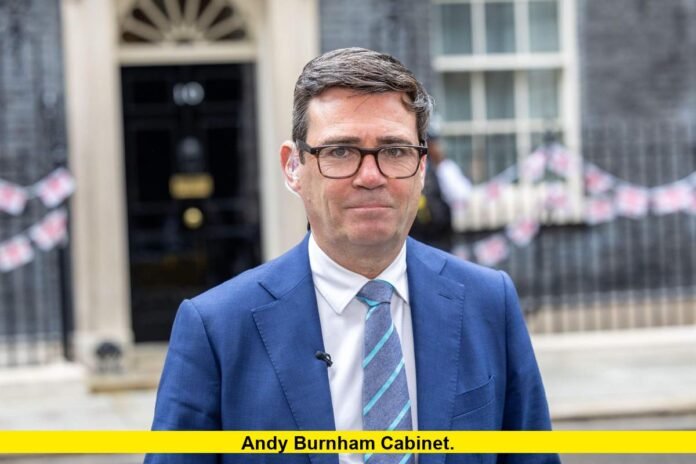

A new chapter has begun in British politics after Prime Minister Andy Burnham unveiled his first government following his rise to the country’s highest political office. The andy burnham cabinet is now at the center of national attention as ministers begin work on the administration’s priorities, ranging from economic growth and healthcare to housing, transport, and regional development. The new leadership arrives during a period of significant political and economic challenges, placing immediate focus on how the government intends to deliver its agenda.
A Return to Westminster’s Highest Office
Andy Burnham’s journey to 10 Downing Street has been unlike that of many recent prime ministers. After serving as a Labour MP and holding several senior ministerial positions in earlier governments, he stepped away from frontline Westminster politics to become the first elected Mayor of Greater Manchester in 2017.
His time leading Greater Manchester transformed his national profile. He became widely recognized for promoting greater powers for local government, championing improvements to public transport, and arguing that investment should be spread more evenly across England rather than concentrated in London.
Following his return to Parliament through a by-election in Makerfield, Burnham secured the Labour leadership and was invited by King Charles III to form a government after the resignation of Keir Starmer. He officially became Prime Minister on 20 July 2026.
Building a New Administration
One of the Prime Minister’s first responsibilities was selecting senior ministers to lead key government departments. Cabinet appointments are among the most closely watched decisions made by any incoming administration because they reveal how a prime minister intends to govern.
The government includes experienced Labour figures chosen to oversee departments responsible for finance, foreign affairs, defence, health, education, transport, justice, business, energy, and the Home Office.
Some appointments attracted widespread public discussion before they were formally announced. However, only officially confirmed ministerial appointments form part of the government’s leadership team, while unconfirmed reports should not be treated as established facts.
What the Government Wants to Achieve
The administration has outlined several broad priorities that are expected to guide policymaking during its early months in office.
Economic growth remains one of the government’s central objectives. Ministers have emphasized encouraging investment, improving productivity, and supporting employment while maintaining confidence in the UK’s economy.
Another major focus is strengthening public services. Healthcare, education, policing, and local government funding are expected to remain high on the political agenda as ministers seek improvements in service delivery.
Housing policy also features prominently. Increasing the supply of homes and addressing affordability challenges are expected to form part of the government’s long-term strategy.
Transport investment is another area likely to receive sustained attention. Burnham built much of his reputation as Mayor of Greater Manchester by expanding local transport reforms, and similar ideas may influence national infrastructure policy.
A Stronger Push for Regional Decision-Making
One defining feature of the new administration is its commitment to devolution.
Throughout his political career, Burnham has argued that cities and regions should receive greater authority over transport, planning, skills, and economic development. Supporters believe stronger local decision-making can help communities respond more effectively to regional needs.
The government is expected to continue discussions about expanding powers for metro mayors and local authorities across England, although the scope and pace of future reforms will depend on legislation and parliamentary approval.
Experience Across Government
Unlike many newly elected prime ministers, Burnham enters office with extensive ministerial experience.
Before becoming Mayor of Greater Manchester, he served in several Cabinet-level positions, including Health Secretary, Culture Secretary, and Chief Secretary to the Treasury. Those roles provided experience across multiple policy areas and prepared him for leading a national government.
His years outside Westminster also gave him practical experience managing regional budgets, transport systems, housing initiatives, and public services.
That combination of national and local leadership has become one of the defining characteristics of his premiership.
Challenges Facing the New Government
The incoming administration faces a demanding political landscape.
The economy remains under pressure from slow growth and ongoing concerns about household finances. Businesses continue to seek greater certainty on investment, while many families remain concerned about living costs.
Healthcare continues to dominate public debate, with reducing NHS waiting times and improving access to care remaining among the government’s most closely watched commitments.
Housing shortages, infrastructure investment, public sector performance, and regional economic inequalities are also expected to require sustained ministerial attention throughout the parliamentary term.
International affairs present additional responsibilities as ministers manage relationships with allies, trade partners, and international organizations while responding to evolving global events.
Political Expectations
The first months of any government often establish the tone for the years ahead.
Observers will closely monitor whether ministers can translate campaign promises into legislation and practical policy. Early decisions on spending, taxation, public services, and economic strategy are likely to influence public confidence in the administration.
Parliament will also play a key role as proposed reforms move through debate and scrutiny before becoming law.
The success of the government will ultimately depend not only on policy announcements but also on how effectively departments implement their plans.
Public Interest Remains High
Interest in the new Prime Minister extends beyond Westminster.
During his years leading Greater Manchester, Burnham developed a reputation as a prominent advocate for regional investment and local government reform. That public profile helped maintain national attention even while he was outside Parliament.
Now back at the center of British politics, expectations are high that his administration will seek to reshape how central government works with local communities across England.
As ministers settle into their departments, the andy burnham cabinet will continue to face close examination from Parliament, businesses, local leaders, and voters eager to see how the government’s priorities translate into action.
Looking Ahead
The coming months are expected to be critical for the new administration as ministers introduce legislation, deliver policy announcements, and respond to domestic and international developments.
While every government faces uncertainty during its opening period, Burnham’s leadership begins with a clear emphasis on economic renewal, public service improvement, regional empowerment, and long-term infrastructure investment.
How successfully those ambitions are delivered will become one of the defining political stories of the years ahead.