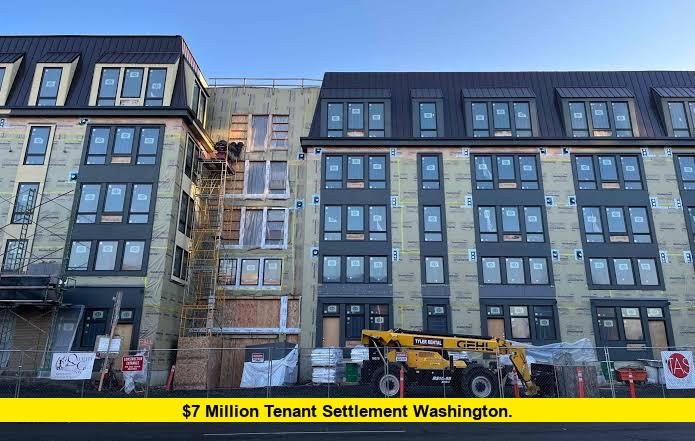

The $7 million tenant settlement in Washington is a significant housing enforcement action involving five apartment complexes in Western Washington, including Vintage at Sequim. The agreement between Washington state, California-based property management company FPI Management, and the owners of the affected properties addresses allegations of misleading rental information, inaccurate advertising, maintenance concerns, and problems involving property security and tenant communications.
Announced by Washington Attorney General Nick Brown in March 2026, the settlement combines financial relief for potentially affected tenants with requirements designed to improve housing conditions and make rental practices more transparent. The agreement includes $2.5 million for tenant restitution and other costs, alongside $4.5 million in planned capital improvements over four years.
The settlement is particularly important for older adults living in affordable housing, who may depend on predictable rental expenses and reliable property services. It also highlights the responsibility of landlords and property managers to communicate clearly about rent calculations, amenities, building conditions, and future increases.
What Is the $7 Million Tenant Settlement in Washington?
The $7 million tenant settlement in Washington resolves a state lawsuit alleging unfair and deceptive practices at five apartment communities marketed to lower-income residents, particularly seniors aged 55 and older.
According to the Washington Attorney General’s Office, the settlement was formalized through a consent decree on March 16, 2026, with the state announcing the agreement publicly the following day.
The agreement involves FPI Management, Vintage Housing Holdings, and AMWA Cedar Pointe Fund, along with related property ownership interests. It addresses allegations that renters were not given sufficiently clear information about how their rents could be calculated or increased and that some properties were advertised in ways that did not accurately reflect their conditions, amenities, or security arrangements.
The consent decree establishes financial and operational requirements intended to address those concerns. Rather than focusing solely on a monetary payment, the agreement also requires changes to rental disclosures, advertising, maintenance procedures, security reviews, staff training, and communication with residents.
The key point: The $7 million figure represents a broader settlement package, combining tenant compensation and enforcement-related costs with planned property improvements. It is not a promise that every tenant will receive an equal share of $7 million.
Which Apartment Complexes Are Covered by the Settlement?
The agreement covers five Western Washington apartment communities identified in the state’s consent decree.
The affected properties are:
- Vintage at Sequim: An apartment community in Sequim on Washington’s Olympic Peninsula.
- Vintage at Everett: The property now known as Vintage at Marine View.
- Vintage at Mill Creek: An apartment community in Mill Creek.
- Vintage at Tacoma: An apartment community in Tacoma.
- Cedar Pointe Apartments: A property included in the settlement through AMWA Cedar Pointe Fund.
These communities were part of a housing arrangement in which the state alleged that rental practices and property representations failed to meet Washington’s consumer protection standards.
The inclusion of Vintage at Sequim has drawn attention to the potential local impact of the agreement. For current and former residents, the settlement raises practical questions about compensation, maintenance work, building security, and how rental costs are explained.
The agreement also includes obligations affecting additional properties owned by the relevant entities in Washington, extending certain compliance and improvement measures beyond the five communities specifically named in the case.
Why Did Washington Investigate the Apartment Owners?
The case began with a complaint filed by Washington Attorney General Nick Brown in June 2025. The state alleged that FPI Management and the owners of the five apartment communities engaged in unfair and deceptive practices affecting older residents.
The properties participated in the federal Low-Income Housing Tax Credit (LIHTC) program, which provides tax incentives to developers in exchange for reserving a portion of their housing for qualifying lower-income households.
According to the state’s complaint, some tenants were not adequately informed about how their rent would be determined or how it could change when their leases were renewed.
The distinction matters because rents under the LIHTC program are generally subject to income-based eligibility requirements and rent limits tied to area median income. That does not necessarily mean each tenant’s individual rent is calculated as a fixed percentage of that tenant’s personal income.
The state alleged that inadequate disclosures left some residents with unexpected rental costs, despite their understanding that they were moving into affordable housing.
The lawsuit also raised concerns about the accuracy of property advertising, including representations about apartment quality, recreational facilities, and security arrangements.
The $7 million tenant settlement in Washington resolves the case through a consent decree that requires corrective action. The settlement addresses the state’s allegations; it should not be interpreted as a finding that every allegation was separately proven at trial.
How the $7 Million Settlement Will Be Used
The agreement divides the financial commitment into two principal components.
| Settlement component | Amount | Purpose |
|---|---|---|
| Restitution and other settlement costs | $2.5 million | Compensation for affected tenants, legal and administrative expenses, and future enforcement |
| Capital improvements | $4.5 million | Property upgrades and improvements over four years |
| Total settlement package | $7 million | Tenant relief and corrective improvements |
The $2.5 million settlement fund is intended to compensate residents affected by the alleged practices. It also covers other permitted costs associated with administering the settlement and enforcing consumer protection requirements.
The remaining $4.5 million is dedicated to capital expenditures over four years. The state announced that these investments would improve four of the properties involved in the case.
The distinction between the two amounts is important. The entire $7 million will not be distributed directly to tenants as cash payments.
The capital improvement commitment is intended to address property conditions, while the restitution fund provides a financial remedy for residents who qualify under the settlement’s terms.
Who Is Eligible for Compensation?
Current and former residents of the five named apartment communities may qualify for compensation if they were affected by the practices addressed in the settlement.
The Washington Attorney General’s Office has confirmed that the $2.5 million fund will be distributed under its direction. Individual payments will depend on several factors, including how long a resident lived at an affected property.
This means that residents should not assume they will all receive the same amount. Eligibility and payment amounts will depend on the settlement’s administration and the circumstances of each tenancy.
The five properties covered are Vintage at Sequim, Vintage at Marine View, Vintage at Mill Creek, Vintage at Tacoma, and Cedar Pointe Apartments.
What Should Former Tenants Do?
Residents who previously lived at one of these communities can take several practical steps:
- Confirm their former residence: Identify the property and the approximate dates of their tenancy.
- Keep rental records: Preserve lease agreements, rent notices, renewal documents, and payment records.
- Save communications: Retain emails or letters about rent increases, maintenance requests, amenities, or security concerns.
- Check official updates: Visit the Washington Attorney General’s official settlement page for information about the distribution process.
- Watch for verified notices: Follow instructions issued by the state regarding eligibility, documentation, or payments.
The official settlement information is available at the Washington Attorney General’s website: https://www.atg.wa.gov/fpi
Residents should rely on official state communications for payment instructions. They should be cautious about unsolicited messages requesting sensitive personal information or upfront fees in exchange for settlement payments.
What Changes Must the Apartment Companies Make?
The $7 million tenant settlement in Washington requires more than financial payments. It also establishes changes intended to improve how the companies communicate with renters and manage their properties.
Clearer Rent Disclosures
The companies must provide tenants with clearer information about how rent is calculated and how it may change in the future.
For residents on fixed incomes, knowing the factors that influence rental costs is essential to household budgeting. Better disclosures can help prospective tenants make more informed decisions before signing a lease.
More Accurate Advertising
The agreement requires the companies to correct inaccurate advertisements.
Rental listings must not create misleading impressions about apartment features, property conditions, or available amenities. This requirement is particularly relevant when prospective residents choose a property based on advertised facilities or the expectation of affordable housing.
Maintenance and Property Improvements
The settlement requires corrective action involving maintenance and building conditions, supported by the capital improvement commitment.
The objective is to address property concerns identified in the state’s case and improve living conditions for residents.
Security Reviews
The companies must address security issues at the affected properties.
Security is a significant concern in senior housing, where residents may depend on reliable building access arrangements and functioning safety features. The agreement’s requirements are intended to ensure that property representations and management practices reflect actual conditions.
Better Tenant Communications
The settlement also requires changes in communications with residents.
Tenants need accurate, understandable information about rent, maintenance, security, and the availability of community facilities. Clear communication can help residents understand their responsibilities and raise concerns when problems arise.
Staff Training and Policy Changes
The companies must revise policies and provide training to employees involved in marketing, leasing, and property management.
These requirements are intended to reduce the risk of similar problems occurring again. The consent decree also provides for ongoing monitoring to help ensure compliance.
What Does the Settlement Mean for Vintage at Sequim?
Vintage at Sequim is one of the five communities specifically named in the Washington case. Its inclusion means the settlement has direct relevance for residents and former tenants of the Sequim property.
For residents, the main issues are transparency, housing conditions, security, and potential financial relief.
The agreement requires clearer information about rental calculations and future increases. This can be especially important for older adults who rely on Social Security benefits, pensions, or other relatively predictable income sources.
Property maintenance is another major consideration. The settlement’s corrective requirements and capital improvement commitment are intended to address concerns raised during the state’s investigation.
However, it is important to distinguish between improvements required across the settlement and the specific work planned at an individual community. The overall $4.5 million commitment does not mean that the entire amount will be spent at Vintage at Sequim.
The agreement identifies four properties for capital improvements over four years, while other compliance obligations extend to additional properties owned by the relevant entities in Washington.
Residents who want details about specific repairs or construction schedules should seek information directly from property management or consult official state updates.
How the Settlement Protects Washington Renters
The case highlights the role of the Washington Consumer Protection Act in addressing alleged deceptive practices in the housing market.
Renters often make housing decisions based on information supplied by landlords and property managers. They may rely on advertised amenities, statements about security, and explanations of how monthly rent is determined.
When that information is incomplete or misleading, tenants may face financial pressure or discover that their homes do not match their expectations.
These concerns can be particularly serious for older adults. Moving can involve substantial expenses, physical challenges, and disruption to established support networks. Residents may find it difficult to leave a property even when they encounter problems.
By combining restitution, property improvements, clearer disclosures, and monitoring, the settlement seeks to address both the financial effects of the alleged conduct and the practices that contributed to the state’s concerns.
The agreement also reinforces an important distinction: marketing a property as affordable does not remove a landlord’s responsibility to explain rent rules accurately or represent housing conditions honestly.
Latest Update on the $7 Million Tenant Settlement in Washington
As of the latest available official information reviewed for this article, the settlement was formalized on March 16, 2026, and publicly announced on March 17, 2026.
The Washington Attorney General’s Office has confirmed the $2.5 million compensation and settlement fund, the four-year capital improvement commitment, and requirements involving rent disclosures, advertising, maintenance, security, staff training, and monitoring.
The official settlement page identifies the five properties covered by the consent decree and explains that compensation will be administered under the state’s direction.
No newer official announcement confirming a completed, property-by-property distribution of tenant payments or a final schedule of all improvements was identified in the reviewed material. Residents should therefore consult the Attorney General’s Office for the most current information rather than assume that all payments or construction work have been completed.
For tenants, the next important developments are details about individual eligibility, the timing of compensation, and progress toward the required property improvements.
Conclusion
The $7 million tenant settlement in Washington represents a major effort to address concerns about rental transparency, property conditions, and tenant protections at five Western Washington apartment communities. By combining $2.5 million for restitution and other costs with $4.5 million in planned capital improvements, the agreement seeks to provide relief to affected residents while requiring changes to housing management practices.
For current and former residents of Vintage at Sequim and the other named communities, the most important issues are whether they qualify for compensation, how the improvements will affect their homes, and whether the companies meet their obligations under the consent decree.
Have you lived at one of the apartment communities covered by this settlement? Share your experience in the comments and stay tuned for verified updates on tenant compensation and property improvements.