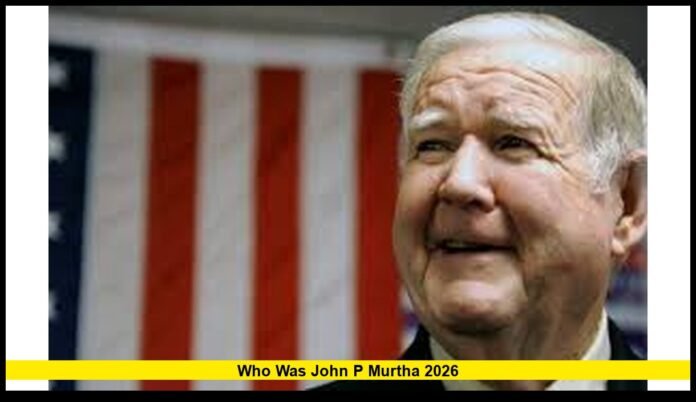

For readers seeking clarity on American political history, one question still comes up often: who was john p murtha, and why does his influence remain relevant years after his passing?
John P. Murtha was a decorated Marine Corps veteran and one of the most powerful members of the U.S. House of Representatives during his time. Known for his deep involvement in defense policy, his decades-long congressional career shaped military funding decisions, influenced national debate during wartime, and left a legacy that continues to echo through Washington today.
From Small-Town Roots to Military Service
John Patrick Murtha Jr. was born on June 17, 1932, in New Martinsville, West Virginia, and raised in the small town of Johnstown, Pennsylvania. His upbringing reflected the values of discipline, community, and hard work—qualities that would define his future path.
He attended the University of Pittsburgh but left before completing his degree to join the United States Marine Corps in 1952. That decision would prove pivotal. Murtha served during a period marked by global conflict and rising Cold War tensions, eventually becoming a career Marine reservist.
His service included deployment during the Vietnam War, where he saw combat and earned multiple decorations. Among them were the Bronze Star, two Purple Hearts, and the Vietnamese Cross of Gallantry. These honors were not just symbols—they reflected real experiences on the battlefield that shaped his views on war, leadership, and responsibility.
Murtha later rose to the rank of colonel in the Marine Corps Reserve, making him one of the highest-ranking veterans to serve in Congress.
A Historic Entry Into Congress
Murtha transitioned from military service to public office at a time when the United States was grappling with political division and social change.
He first entered politics in Pennsylvania, winning a seat in the state House of Representatives in 1969. His leadership abilities quickly became apparent, and he soon turned his focus to national office.
In 1974, Murtha won a special election to represent Pennsylvania’s 12th congressional district in the U.S. House of Representatives. That victory marked a historic moment—he became the first Vietnam War veteran elected to Congress.
His arrival in Washington brought something rare: a lawmaker with firsthand experience of combat who could speak directly about the realities of war.
Building Power in Washington
Murtha’s influence in Congress grew steadily over the years. He was not known for flashy speeches or constant media appearances. Instead, he built his reputation behind the scenes, mastering the legislative process and forming key alliances.
His most significant role came as chairman of the House Appropriations Subcommittee on Defense. In this position, he oversaw billions of dollars in military spending and played a central role in shaping how resources were distributed across the armed forces.
Murtha understood both the needs of the military and the complexities of government funding. That combination made him one of the most effective and influential lawmakers on defense issues.
He also became known for directing federal funds to projects in his district, many of which were tied to defense and technology. Supporters credited him with boosting local economies and strengthening national security infrastructure.
A Defining Moment: The Iraq War Shift
One of the most significant turning points in Murtha’s career came in 2005.
After initially supporting U.S. involvement in Iraq, Murtha publicly called for the withdrawal of American troops. This move stunned many observers. As a longtime defense advocate and decorated Marine, his words carried weight far beyond typical political criticism.
Murtha argued that the war had become counterproductive and that continued presence put American lives at unnecessary risk. His stance shifted the national conversation and opened the door for broader debate in Congress.
This moment highlighted a key aspect of Murtha’s character—his willingness to change course based on what he believed was right, even if it meant facing criticism from colleagues and political allies.
Leadership, Ambition, and Influence
Murtha’s role extended beyond policy into leadership within his party.
Following the 2006 midterm elections, when Democrats regained control of the House, Murtha sought the position of House Majority Leader. Although he did not secure the role, his candidacy demonstrated the level of influence he had achieved within the Democratic Party.
He remained a central figure in congressional decision-making and continued to shape defense policy and funding priorities.
Murtha’s leadership style was direct and results-oriented. He preferred negotiation over public confrontation and often worked behind closed doors to secure outcomes.
Controversies and Public Scrutiny
Murtha’s long career also brought scrutiny.
He became closely associated with earmarks—specific funding allocations directed to projects, often within a lawmaker’s district. While legal and common at the time, earmarks drew criticism from watchdog groups and political opponents who questioned their transparency.
Murtha defended these practices, arguing that they allowed Congress to address local needs and support national priorities, especially in defense-related industries.
There were also periods of investigation and media attention surrounding his connections with defense contractors and lobbyists. Despite these challenges, he was never convicted of any criminal wrongdoing.
These controversies added complexity to his public image, portraying him as both a powerful advocate and a polarizing figure.
Personal Life and Character
Beyond politics, Murtha remained deeply connected to his roots.
He married Joyce Murtha in 1955, and together they raised three children. Despite his national prominence, he maintained strong ties to Pennsylvania, frequently returning to his district and engaging with constituents.
Murtha was known for his straightforward manner. He spoke plainly, avoided unnecessary theatrics, and focused on achieving tangible results.
Colleagues often described him as tough but fair—a lawmaker who commanded respect through experience and persistence rather than charisma.
Final Years and Passing
John P. Murtha continued serving in Congress until his death.
He passed away on February 8, 2010, at the age of 77 due to complications following surgery. His death marked the end of a remarkable career that spanned more than three decades in the U.S. House of Representatives.
Tributes came from across the political spectrum. Lawmakers, military leaders, and public figures recognized his contributions to national defense and public service.
Murtha died while still holding office, reflecting his lifelong commitment to his role as a representative.
Enduring Legacy in American Politics
Murtha’s legacy remains visible in several key areas.
A U.S. Navy ship, the USS John P. Murtha, was named in his honor, recognizing his dedication to the military. His influence on defense appropriations continues to shape how Congress approaches military funding.
He also played a role in advancing military healthcare initiatives, contributing to programs that support service members and veterans.
Understanding who was john p murtha helps explain how individual lawmakers can shape national policy over decades. His career demonstrated the power of experience, persistence, and strategic thinking in government.
Why His Story Still Resonates
Murtha’s story is more than a political biography—it reflects broader themes in American history.
He represented a generation shaped by war, public service, and changing political landscapes. His decisions influenced debates on military engagement, government spending, and leadership responsibility.
At a time when trust in institutions often faces challenges, Murtha’s career offers insight into how long-term service and expertise can impact national direction.
His ability to navigate complex issues, from defense budgets to wartime policy, shows the importance of informed leadership in Congress.
A Lasting Figure in U.S. History
John P. Murtha remains a significant figure in American political history.
His journey from Marine Corps officer to influential congressman highlights the intersection of military service and public leadership. His actions—both praised and debated—continue to shape discussions about war, policy, and governance.
For those seeking to understand the evolution of U.S. defense policy and congressional power, Murtha’s life provides a compelling and instructive example.
What do you think about John P. Murtha’s impact on American politics and military policy? Share your thoughts and keep exploring the stories that continue to shape the nation.