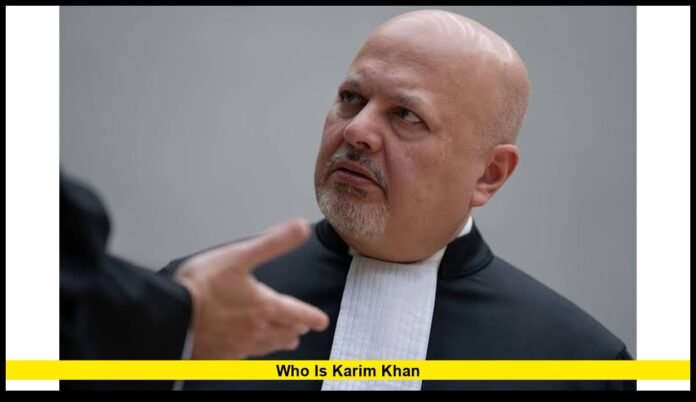

The question who is Karim Khan has become one of the most searched topics in international law as developments surrounding the International Criminal Court continue to make headlines. Known for leading some of the world’s most significant war crimes investigations, Karim Khan built a career spanning decades in international criminal justice before becoming Chief Prosecutor of the International Criminal Court (ICC) in 2021. His work has placed him at the center of cases involving armed conflicts, allegations of genocide, crimes against humanity, and violations of international humanitarian law.
In recent years, his name has received even greater attention because of both his legal decisions and the ongoing disciplinary proceedings involving allegations that he has denied. While those proceedings continue through the ICC’s governance process, his influence on international criminal law remains substantial. Understanding his background, legal career, major cases, and the responsibilities of the office he held provides important context for anyone following global legal affairs.
Early Life and Background
Karim Asad Ahmad Khan KC was born in Edinburgh, Scotland, in 1970. He grew up in a family that valued education and public service, and from an early age he showed an interest in law and justice. After completing his legal education in the United Kingdom, he qualified as a barrister and began practicing in criminal law.
His early years in the legal profession exposed him to complex criminal litigation, but he soon developed a strong interest in international law. During the 1990s, the world witnessed several devastating conflicts that prompted the creation of international tribunals to prosecute war crimes and crimes against humanity. These historic developments shaped the direction of his professional career.
Rather than remaining focused solely on domestic legal practice, he pursued opportunities to work on cases involving international humanitarian law, eventually becoming one of the most recognized lawyers in this specialized field.
Building a Career in International Criminal Law
International criminal law differs significantly from ordinary criminal practice. Lawyers often work across multiple countries, examine evidence gathered from conflict zones, and deal with cases involving thousands of victims and witnesses.
Karim Khan gradually established himself as an experienced advocate in this demanding area.
Throughout his legal career, he appeared before numerous international courts and tribunals handling cases related to:
- War crimes
- Crimes against humanity
- Genocide
- Terrorism
- Human rights violations
Unlike many legal professionals who work only for prosecutors or defendants, Khan gained experience representing different sides in international proceedings. That broad legal background helped him understand every stage of complex criminal trials, from investigations and evidence gathering to courtroom litigation and appeals.
His work earned respect within international legal circles long before he assumed one of the highest-profile positions in global justice.
Experience Before Joining the International Criminal Court
Before becoming ICC Prosecutor, Karim Khan participated in several landmark international cases.
He worked with courts established to prosecute atrocities committed during conflicts in places such as the former Yugoslavia and Rwanda. He also represented clients before hybrid tribunals created through cooperation between national governments and international organizations.
His legal expertise extended beyond courtroom advocacy.
Over the years, he advised governments, international organizations, and legal institutions on issues involving international humanitarian law, criminal investigations, and judicial reform.
By the time he was selected to lead the Office of the Prosecutor at the ICC, he had accumulated decades of experience handling some of the world’s most legally and politically sensitive cases.
Becoming Chief Prosecutor of the ICC
In 2021, Karim Khan officially became the Chief Prosecutor of the International Criminal Court.
The ICC, headquartered in The Hague, Netherlands, investigates individuals accused of committing the gravest crimes under international law when national courts cannot or will not prosecute those responsible.
The role of Chief Prosecutor carries enormous responsibility.
The prosecutor oversees investigations, manages legal teams, determines whether sufficient evidence exists to seek arrest warrants, and represents the Office of the Prosecutor before ICC judges.
The position also requires balancing legal independence with the intense political scrutiny that accompanies nearly every major international investigation.
What Does the ICC Prosecutor Actually Do?
Many people mistakenly believe the ICC functions like a national criminal court.
In reality, its jurisdiction is much narrower.
The prosecutor investigates allegations involving four categories of international crimes:
- Genocide
- Crimes against humanity
- War crimes
- Crime of aggression
Every investigation begins with careful examination of available evidence.
Investigators gather witness testimony, review military records, analyze satellite imagery, examine forensic evidence, and cooperate with governments and international organizations whenever possible.
If prosecutors conclude that sufficient evidence exists, they may request judges to issue arrest warrants or summonses for suspects.
These investigations often continue for years before reaching trial.
Major Investigations During His Leadership
One reason Karim Khan became internationally recognized is the number of high-profile investigations conducted during his tenure.
Several ongoing conflicts generated unprecedented public attention, making the ICC’s work more visible than ever before.
Ukraine Investigation
Following Russia’s full-scale invasion of Ukraine in 2022, the ICC rapidly expanded its investigation into alleged war crimes.
The Office of the Prosecutor deployed investigators to gather evidence related to attacks on civilians, destruction of infrastructure, unlawful deportations, and other alleged violations of international humanitarian law.
The investigation became one of the largest and fastest-moving operations in the court’s history.
Sudan
The ICC continued its long-running investigations involving Darfur while also monitoring renewed violence in Sudan.
Prosecutors focused on allegations involving attacks against civilians and other serious international crimes.
The situation demonstrated the long-term nature of international criminal investigations, many of which continue for years before suspects appear before judges.
Afghanistan
The Afghanistan investigation remained among the ICC’s most challenging assignments.
The case involved allegations connected to multiple parties over an extended period of conflict.
Political disagreements surrounding the investigation made it one of the court’s most closely watched cases.
Israel and the Palestinian Territories
Perhaps no investigation generated more international debate than proceedings related to the conflict involving Israel and the Palestinian territories.
Legal decisions announced during Khan’s leadership attracted worldwide attention.
Supporters viewed the investigations as evidence that international law should apply equally to everyone.
Critics argued that the court’s legal interpretation and jurisdiction were flawed.
The differing reactions illustrated how international criminal law frequently intersects with global politics.
Leadership Style
Throughout his tenure, Karim Khan emphasized the importance of accountability for serious international crimes regardless of nationality or political influence.
He regularly stated that victims deserve justice and that international law must apply consistently.
Supporters praised his willingness to pursue difficult investigations despite political pressure.
Many observers believed he strengthened the visibility of the ICC by increasing communication with affected communities and emphasizing transparency during investigations.
At the same time, critics questioned several prosecutorial decisions, arguing that priorities, timing, or legal strategies could have been handled differently.
Such disagreements are common in international criminal law because investigations often involve active conflicts and competing geopolitical interests.
Challenges Facing the ICC
Leading the International Criminal Court involves obstacles rarely encountered by domestic prosecutors.
The court has no independent police force.
Instead, it depends on member states to execute arrest warrants and cooperate with investigations.
This creates significant challenges.
Suspects may remain outside ICC custody for years.
Governments sometimes decline to cooperate.
Evidence can be difficult to collect from active conflict zones.
Witnesses may face security risks.
Political tensions can further complicate ongoing investigations.
Despite these challenges, prosecutors continue pursuing cases that often require years of investigative work before reaching trial.
International Recognition
Over the course of his legal career, Karim Khan earned recognition as one of the most experienced practitioners in international criminal law.
His work involved appearances before multiple international tribunals and participation in cases affecting thousands of victims.
Colleagues frequently highlighted his courtroom advocacy skills, extensive knowledge of international legal procedure, and ability to manage highly complex investigations involving multiple jurisdictions.
His appointment as ICC Prosecutor reflected decades of professional experience rather than a sudden rise to prominence.
Recent Controversy
Public attention surrounding Karim Khan increased significantly after allegations of sexual misconduct became public.
He has consistently denied those allegations.
The matter led to internal disciplinary proceedings within the International Criminal Court and additional professional reviews.
Because the Chief Prosecutor occupies one of the court’s most important leadership positions, the proceedings attracted substantial international interest.
Observers viewed the situation not only as a matter involving one individual but also as an important test of institutional accountability and governance.
Current Status
As of July 2026, Karim Khan remains suspended from his prosecutorial duties while the ICC’s member states continue considering the outcome of disciplinary proceedings.
His deputy prosecutors continue managing the Office of the Prosecutor during this period.
No final determination has removed him permanently from office, and he continues to reject the allegations made against him.
The process remains one of the most closely watched developments affecting the International Criminal Court.
Why His Work Matters
International criminal law plays a unique role within the global legal system.
Unlike national prosecutors, ICC officials investigate crimes that often involve entire populations affected by armed conflict.
Their decisions can influence diplomatic relations, humanitarian efforts, and international cooperation.
For victims of war crimes and crimes against humanity, ICC investigations may represent one of the few opportunities for independent judicial review.
Because of this, every major prosecutorial decision attracts worldwide attention.
Karim Khan’s tenure coincided with several of the most significant international conflicts of recent years, making his office especially visible to governments, legal experts, and the general public.
Impact on International Criminal Justice
Regardless of future disciplinary outcomes, Karim Khan’s period as Chief Prosecutor has already become an important chapter in the history of the International Criminal Court.
His office handled investigations involving multiple ongoing conflicts while navigating increasing geopolitical tensions.
The period also highlighted broader questions facing international justice.
Can international courts remain independent under political pressure?
How should global institutions balance accountability with practical limitations?
What reforms might strengthen international criminal investigations in the future?
These questions extend far beyond any single prosecutor and will continue shaping discussions among legal scholars and policymakers for years to come.
Understanding the Broader Debate
Opinions about the International Criminal Court remain divided across different countries.
Supporters believe the court provides an essential mechanism for holding individuals accountable when national judicial systems fail.
They argue that international justice helps deter future atrocities and offers victims an opportunity to pursue accountability.
Critics contend that enforcement remains inconsistent and that political realities sometimes influence which situations receive greater attention.
These differing perspectives became especially visible during Karim Khan’s leadership because many investigations involved internationally significant conflicts.
Regardless of differing viewpoints, few dispute the importance of the office he held or the impact its decisions can have on international law.
Looking Ahead
The coming months are expected to be significant for both Karim Khan and the International Criminal Court.
The outcome of ongoing disciplinary proceedings will influence the court’s future leadership while also affecting broader conversations about governance, accountability, and institutional integrity within international justice.
At the same time, the investigations initiated during his tenure continue moving forward under the leadership of the Office of the Prosecutor.
Those cases remain central to the ICC’s mission of addressing allegations involving genocide, crimes against humanity, war crimes, and aggression.
As international conflicts continue to evolve, the court’s work will likely remain under close global scrutiny, making its leadership and legal decisions important subjects for governments, legal professionals, and the public alike.
What are your thoughts on the future of international criminal justice and the role of the ICC? Share your views in the