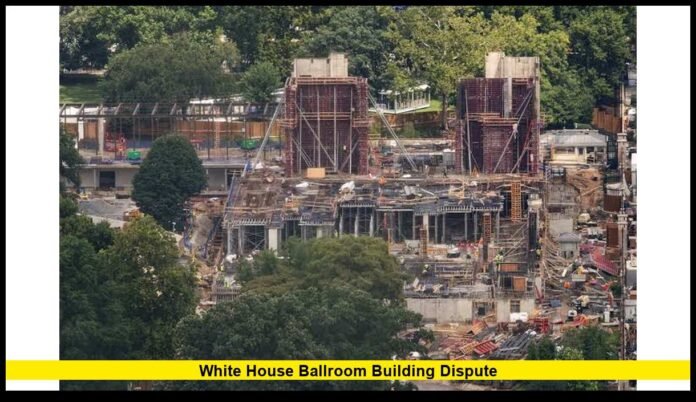

The white house ballroom building dispute has moved to the U.S. Supreme Court as President Donald Trump’s administration fights to keep construction of a new ballroom moving.
The administration filed an emergency request with the Supreme Court on August 14. It wants the justices to pause a lower-court order that blocks above-ground construction at the White House.
The legal fight began after the administration demolished the East Wing and started building a roughly 90,000-square-foot ballroom. The project has already reached about 65% completion, according to the administration.
The case now raises a much bigger question: Can a president make a major change to the White House without getting approval from Congress?
Latest White House Ballroom Building Dispute Update
The newest development puts the Supreme Court at the center of the controversy.
The Trump administration wants the court to allow construction to continue while the legal challenge moves forward. The request came after a federal appeals court ruled against the administration earlier this month.
That court found that the project could not proceed without congressional authorization. It also blocked above-ground construction but temporarily paused the effect of its decision for 14 days. That pause gives the administration time to seek Supreme Court intervention.
Unless the Supreme Court steps in, the appeals court’s order is scheduled to take effect on August 21.
Why the White House Ballroom Project Is Facing a Legal Challenge
The White House ballroom project has become controversial because of the scale of the planned changes.
The administration wants to replace the former East Wing area with a large ballroom. Officials say the facility would give the White House a permanent venue for major dinners, receptions and other events.
The administration also says the project includes important security infrastructure.
Opponents, however, argue that the president cannot make such a significant change to federal property without Congress.
The National Trust for Historic Preservation filed the lawsuit challenging the project. The organization argued that the White House has special historic importance and that the administration needed proper legal authority before making such extensive changes.
What the Appeals Court Decided
The U.S. Court of Appeals for the District of Columbia Circuit issued a 2-1 ruling against the administration.
The majority concluded that the Trump administration could not continue above-ground construction without congressional approval.
The judges did not say that the ballroom could never be built.
Instead, they focused on who has the authority to approve such a major project.
The ruling said the dispute was about legal authority rather than whether the ballroom would be a good or bad policy choice. Congress, according to the majority, must decide whether such a major change should happen.
One judge dissented from the ruling. The dissent raised questions about the preservation group’s legal standing and challenged the court’s decision to stop the project.
Trump Ballroom Construction Has Already Moved Forward
The Trump ballroom construction project has advanced considerably despite the ongoing court battle.
The administration says work is about 65% complete. Construction has continued for roughly 10 months, according to reporting on the latest Supreme Court filing.
That progress makes the current court fight more urgent.
A construction halt at this stage could create additional costs and complications. The administration argues that stopping work could also interfere with security-related portions of the project.
The government therefore wants the Supreme Court to allow construction to continue while the larger case proceeds.
East Wing Demolition Started the Current Dispute
The East Wing demolition marked a major turning point.
The administration removed the East Wing to make room for the planned ballroom. That decision triggered strong criticism from preservation advocates.
The lawsuit later became a broader challenge to the administration’s authority over the White House complex.
The National Trust for Historic Preservation argues that the president cannot simply order such a major transformation without congressional involvement.
The Trump administration takes the opposite position. Its lawyers argue that presidents have significant authority over renovations and security improvements at the White House.
The disagreement has now reached the nation’s highest court.
White House Ballroom Lawsuit Puts Congress in the Spotlight
The White House ballroom lawsuit has turned the role of Congress into one of the most important issues in the case.
The appeals court majority found that Congress has authority over federal property and that the administration needed legislative approval for a project of this scale.
That ruling could have consequences beyond the ballroom.
If the Supreme Court agrees with the appeals court, future presidents could face greater limits when they seek to make major structural changes to federal properties.
If the Supreme Court sides with the administration, the decision could strengthen presidential authority over White House renovations.
The final ruling could therefore become important in future disputes involving executive power and government property.
Why Trump Says the Ballroom Is Necessary
Trump’s administration has defended the project on both practical and security grounds.
Officials say the White House does not have a large enough permanent venue for major events. A 90,000-square-foot ballroom would give the administration significantly more space for formal gatherings.
The administration also says the project forms part of a larger security and military complex.
Government lawyers have pointed to features involving medical facilities, bomb protection and systems designed to defend against drones and missiles.
The administration argues that these features make the project more than a simple renovation.
National Security Argument Becomes Central
National security is one of the administration’s strongest arguments before the Supreme Court.
Government lawyers say the ballroom is integrated with security infrastructure beneath the White House complex. They argue that separating the ballroom from that infrastructure could undermine the broader project.
The appeals court did not accept national security as a reason to bypass the legal process.
The judges maintained that important security concerns do not automatically give the executive branch unlimited authority.
That disagreement could become one of the most closely watched issues if the Supreme Court takes up the broader case.
How Much Will the White House Ballroom Cost?
The administration has described the project as a $400 million construction effort.
The size and financing of the project have attracted additional attention.
Trump has said private donors are funding the ballroom. However, government-related security work can involve public resources, creating questions about the overall cost of the broader project.
The administration’s Supreme Court filing focuses heavily on the project’s security features and the consequences of stopping construction after so much work has already been completed.
The cost issue could remain part of the political debate even if the courts ultimately focus on legal authority rather than funding.
What Happens to Construction on August 21?
August 21 is now an important date in the white house ballroom building dispute.
The appeals court temporarily delayed its ruling for 14 days. That gave the administration time to ask the Supreme Court to intervene.
If the Supreme Court grants the administration’s request, construction could continue while the appeal moves forward.
If the court refuses to intervene, the appeals court’s restriction on above-ground construction will take effect.
That would create another major pause in a project that the administration says is already about 65% complete.
Could Congress Approve the Ballroom?
Congress could provide another route forward.
The appeals court’s ruling says the administration needs congressional authorization to proceed with the project during the current litigation.
That means lawmakers could potentially remove the legal obstacle by approving the construction.
However, the administration is currently seeking relief from the Supreme Court rather than waiting for Congress to resolve the issue.
The political response in Congress could therefore become important as the legal case develops.
Why the Case Matters for Presidential Power
The white house ballroom building dispute is about much more than architecture.
At its heart, the case asks how much control a president has over a major federal property.
The White House holds a unique position in American government. It serves as the president’s residence and workplace while also functioning as a historic national landmark.
The appeals court majority viewed that status as an important reason to require congressional involvement.
The Trump administration argues that the president needs enough flexibility to protect and modernize the White House without excessive interference from Congress or the courts.
The Supreme Court may eventually have to decide where that line should be drawn.
Historic Preservation Remains a Major Concern
Historic preservation groups have continued to oppose the way the project has moved forward.
Their argument does not necessarily mean that the White House can never receive major upgrades.
Instead, preservation advocates want significant changes to follow the appropriate legal process.
The demolition of the East Wing made the issue especially sensitive because the administration changed a historic part of the complex before the courts settled the broader legal dispute.
The National Trust for Historic Preservation has continued to challenge the administration’s authority to proceed.
What the Supreme Court Could Decide
The Supreme Court’s immediate decision will likely focus on whether construction can continue while the broader case remains active.
The justices could grant the administration’s request and temporarily lift the construction restriction.
They could deny the request and allow the appeals court’s order to take effect.
The court could also take further action as it considers the government’s appeal.
A decision allowing construction to continue would not necessarily settle every legal question surrounding the ballroom.
Likewise, a decision stopping construction would not automatically mean that the project can never be completed.
White House Ballroom Building Dispute Could Continue for Months
The white house ballroom building dispute may continue even after the Supreme Court addresses the immediate construction question.
The broader case involves questions about presidential authority, federal property and congressional power.
Those issues could require additional legal proceedings.
Congress could also influence the outcome if lawmakers consider legislation connected to the project.
For that reason, the Supreme Court’s next move will be important, but it may not provide the final answer.
Key Facts About the White House Ballroom Dispute
- The Trump administration has asked the Supreme Court to let construction continue during the appeal.
- The proposed ballroom covers about 90,000 square feet.
- The administration says the project is about 65% complete.
- The East Wing was demolished to make room for the new structure.
- The D.C. Circuit ruled 2-1 that the administration needs congressional approval.
- The appeals court blocked above-ground construction but temporarily paused its order for 14 days.
- The administration says security infrastructure is an important part of the project.
- The National Trust for Historic Preservation brought the legal challenge.
- The current appeals court order is scheduled to take effect on August 21 unless the Supreme Court intervenes.
What is the white house ballroom building dispute about?
The white house ballroom building dispute concerns Trump’s plan to construct a large ballroom on the site of the demolished East Wing. The main legal question is whether the president can authorize the project without congressional approval.
Why did an appeals court stop construction?
The appeals court ruled that the administration did not have the required congressional authorization for such a major change to the White House complex. The majority said Congress has a role in approving significant changes to federal property.
Has the ballroom project been permanently canceled?
No. The courts have not permanently canceled the project. The administration has asked the Supreme Court to allow construction to continue while the broader legal fight proceeds.
How big is the proposed ballroom?
The planned ballroom is approximately 90,000 square feet. The administration says it would provide a much larger space for major White House events.
Why does the administration say the project is important?
Officials say the ballroom would improve the White House’s ability to host large events. They also say the structure is connected to security and military-related infrastructure designed to protect the presidential complex.
What happens if the Supreme Court rejects Trump’s request?
If the Supreme Court does not intervene, the appeals court’s restriction on above-ground construction is scheduled to take effect on August 21. The broader legal dispute could then continue through the courts.
Could Congress still approve the project?
Yes. The appeals court’s ruling specifically points to congressional authorization as the legal path for moving forward under the current circumstances.
Why is the White House ballroom case important?
The case could help define the limits of presidential authority over major changes to federal property. It also raises questions about the balance between the executive branch, Congress and the courts.
The white house ballroom building dispute is now heading into a critical phase, with the Supreme Court facing a request that could determine whether construction continues or another halt takes effect.
Stay with us for the latest developments as the Supreme Court considers the next step in the White House ballroom fight.