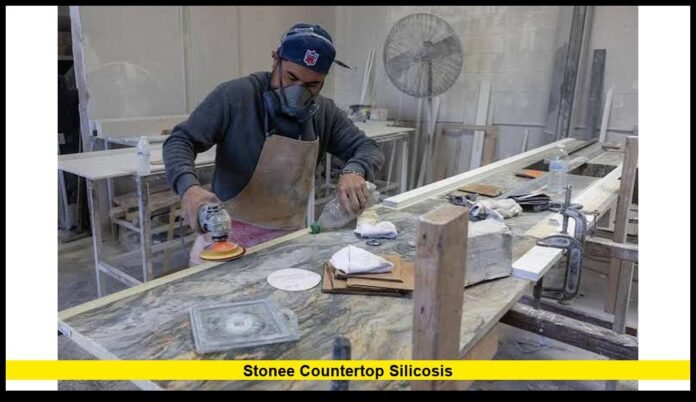

The latest stone countertop silicosis data is drawing renewed attention to the dangers faced by workers who cut, grind, polish and install engineered-stone countertops. New California surveillance findings covering January 2019 through June 2026 identified 592 diagnosed cases among countertop fabrication workers, including 65 people who required lung transplants and 31 deaths. The findings have intensified calls for stronger workplace protections, earlier diagnosis and tougher controls on high-silica engineered stone.
Why Quartz Countertops Have Become a Workplace Health Concern
Engineered stone has become a popular choice for kitchens and bathrooms because it is durable, attractive and available in a wide range of colors and patterns. It is commonly called quartz, artificial stone or manufactured stone.
The polished slab sitting in a finished kitchen is very different from the material being cut inside a fabrication shop.
Many engineered-stone products contain extremely high concentrations of crystalline silica. When an intact slab is left undisturbed, that silica does not normally create the same occupational exposure encountered during fabrication. The major concern begins when workers use saws, grinders, polishers, drills and other tools that disturb the material.
Those operations can generate microscopic particles that become suspended in the air. The smallest particles can travel deep into the respiratory system and reach areas of the lungs where they can cause permanent injury.
This is why the growing number of illnesses among countertop workers has become an important occupational-health issue.
The Latest Numbers Show How Serious the Problem Has Become
California has emerged as the clearest example of the health crisis.
State surveillance identified 592 workers diagnosed with silicosis between January 2019 and June 2026. Among those workers, 65 underwent lung transplantation and 31 died.
The figures are particularly concerning because many affected workers were relatively young compared with people traditionally associated with severe occupational lung disease.
The median age at diagnosis was about 46. Among workers who died, the average age at death was approximately 52.
The number of reported cases also accelerated sharply. California recorded only a small number of cases during the first several years of surveillance, while hundreds were identified more recently.
Health experts have warned that the official total may not represent every affected worker. Silicosis can be difficult to recognize, particularly when doctors are unaware that a patient has spent years fabricating engineered stone.
What Happens When Silica Dust Enters the Lungs?
The body attempts to respond to these particles, but silica cannot simply be removed like ordinary dust.
Repeated exposure can trigger inflammation and the formation of scar tissue. Over time, this scarring can interfere with the lungs’ ability to transfer oxygen and function normally.
Silicosis is considered irreversible. Once substantial scarring has developed, treatment cannot simply restore the lungs to their original condition.
The disease can progress even after a worker stops being exposed.
That makes prevention particularly important.
Three Forms of Silicosis Workers Should Know
Silicosis is generally classified according to how quickly the disease develops.
Chronic Silicosis
Chronic silicosis is the most common form and usually develops after many years of exposure to lower concentrations of silica dust.
Symptoms may not appear until significant lung damage has occurred.
Accelerated Silicosis
Accelerated disease can develop after a shorter period of substantial exposure. This form has become an important concern among engineered-stone workers because some affected employees have developed serious disease after years rather than decades of exposure.
Acute Silicosis
Acute silicosis is uncommon but can occur after very intense exposure to silica. It can cause severe breathing problems and rapid deterioration.
The pattern being observed among some engineered-stone workers has raised concern because serious disease can appear much earlier than many people might expect from a traditional understanding of occupational lung disease.
What Symptoms Should Workers Watch For?
Silicosis can initially produce subtle symptoms.
Possible warning signs include:
- Persistent coughing
- Shortness of breath
- Chest discomfort
- Unusual fatigue
- Reduced ability to exercise
- Difficulty breathing during physical activity
- Progressive respiratory problems
- Unexplained weight loss in advanced illness
Early symptoms can resemble other respiratory conditions, making occupational history especially important.
Someone who has worked around stone dust for years should tell a healthcare professional exactly what materials they handled and which tasks they performed.
A person who routinely cut engineered stone may have a substantially different exposure history from someone who merely installed finished countertops without cutting or grinding them.
Why Diagnosis Can Be Delayed
One of the biggest challenges is that silica-related disease can remain unnoticed for years.
A worker might initially visit a doctor because of a cough or breathlessness. If the physician does not know about the person’s countertop fabrication work, the possibility of occupational silica exposure may not immediately be considered.
This can delay specialized testing and workplace investigations.
The latest research has increased calls for healthcare professionals to ask patients with unexplained respiratory problems about their occupations.
A detailed employment history can reveal important information, including whether someone has:
- Cut stone slabs
- Used handheld grinders
- Operated polishing equipment
- Drilled countertop openings
- Worked in poorly ventilated fabrication shops
- Performed dry cutting
- Cleaned accumulated stone dust
These details can help doctors determine whether additional evaluation is appropriate.
Why Dry Cutting Is a Major Problem
Dry cutting is especially concerning because it can create visible and invisible dust.
The most dangerous particles may be so small that workers cannot easily see them. A shop can therefore appear relatively clean while still containing hazardous airborne particles.
Water-based cutting and grinding can reduce dust at the point where it is produced. Local exhaust systems can also capture particles before they spread throughout a workplace.
However, protective measures must be properly designed, maintained and consistently used.
Simply having a water hose or ventilation system in a workshop does not guarantee that exposure is adequately controlled.
What Other Workplace Practices Matter?
Reducing exposure requires more than one safety measure.
Employers and workers should consider a comprehensive approach that includes:
Wet Methods
Water can suppress airborne dust during cutting, grinding and polishing.
Local Exhaust Ventilation
Extraction systems can capture contaminants close to the source.
Proper Housekeeping
Accumulated dust should be removed using methods that do not unnecessarily send particles back into the air.
Respiratory Protection
Respirators may be necessary when engineering controls cannot adequately reduce exposure.
Training
Workers should understand the hazards associated with silica and know how to operate dust-control equipment correctly.
Medical Surveillance
Workers with significant occupational exposure may benefit from appropriate medical monitoring under applicable workplace rules.
The goal is to prevent workers from inhaling dangerous levels of dust rather than relying on medical treatment after disease develops.
California Is Considering Stronger Action
The latest health findings have added pressure to California’s regulatory debate.
California regulators are pursuing emergency rulemaking aimed at prohibiting the fabrication and installation of engineered stone containing more than 1% crystalline silica.
The proposal represents a major potential change because it moves beyond simply requiring workers to control exposure. Instead, it considers restricting the use of high-silica engineered stone for fabrication and installation.
A July 2026 advisory meeting brought together stakeholders to discuss the proposed emergency regulation.
The process remains significant because it could influence how engineered-stone fabrication is conducted in California and potentially affect broader national discussions about the safety of these products.
The proposal should not be confused with an immediate nationwide ban on quartz countertops. Regulatory action varies by jurisdiction, and the California rulemaking process determines what ultimately becomes enforceable.
Australia Has Already Taken a Different Approach
California is not the first jurisdiction to reconsider engineered stone.
Australia implemented a nationwide ban on engineered-stone benchtops, slabs and panels beginning in 2024 after years of concern over silica-related disease among workers.
That decision has become an important reference point in international discussions.
Supporters of stronger restrictions argue that when a product contains extremely high levels of silica and safer alternatives are available, eliminating the hazard may be more reliable than expecting every workplace to maintain perfect exposure controls.
Opponents and industry representatives have generally emphasized the importance of engineering controls, workplace compliance and the economic consequences of restricting engineered stone.
The debate is likely to continue as more health data becomes available.
Does Having a Quartz Countertop at Home Cause Silicosis?
For homeowners, the most important distinction is between owning an intact countertop and working with the material.
The primary occupational concern involves fabrication activities that disturb the slab and generate respirable dust.
A finished countertop that remains intact is not equivalent to a worker repeatedly cutting and grinding slabs inside a fabrication shop.
Homeowners should nevertheless avoid attempting to cut, grind or modify engineered stone themselves.
Anyone who needs a countertop altered should use professionals who understand appropriate dust-control procedures and have equipment designed for this type of work.
Why Workers May Face Serious Long-Term Consequences
Silica exposure is not simply a short-term irritation.
Repeated exposure can lead to permanent lung scarring, reduced respiratory capacity and severe disability.
Silica-related disease can also be associated with other serious health complications, including increased susceptibility to certain infections and other respiratory and systemic conditions.
Advanced disease can dramatically affect a person’s ability to work, exercise and perform everyday activities.
For workers supporting families, the consequences can extend well beyond medical treatment. Loss of income, long-term disability and the need for intensive medical care can create significant financial and emotional pressure.
The fact that dozens of affected California workers have already required lung transplantation illustrates how severe the disease can become.
Why the Latest Research Matters Beyond California
California’s experience may serve as an early warning for other states.
Engineered stone is used throughout the United States, and countertop fabrication shops operate in communities far beyond California.
If cases are not consistently identified and reported, the national burden could be difficult to measure.
Researchers and public-health specialists are therefore calling for stronger disease surveillance and greater awareness among healthcare professionals.
Better tracking could help officials determine where workers are being exposed, which fabrication practices create the greatest risks and whether existing workplace controls are actually reducing disease.
What Workers Can Do If They Are Concerned
Anyone who has spent significant time cutting, grinding or polishing engineered stone should not ignore persistent respiratory symptoms.
Workers can start by discussing their occupational history with a healthcare professional.
It is useful to explain:
- How long they worked in stone fabrication
- Which materials they handled
- Whether they performed dry cutting
- Whether dust-control systems were used
- Whether they regularly wore respiratory protection
- How frequently they experienced visible dust
- Whether other workers developed respiratory problems
Workers should also follow applicable workplace safety procedures and seek appropriate medical evaluation when symptoms develop.
The Bigger Question: Can the Industry Prevent More Cases?
The latest data has shifted the discussion from whether silica exposure is dangerous to how much exposure can realistically be prevented in everyday fabrication environments.
Engineered-stone manufacturers and fabrication businesses face growing pressure to improve product safety and workplace practices.
Some industry representatives argue that modern engineering controls can dramatically reduce exposure when properly implemented. Public-health experts counter that real-world enforcement can be difficult, particularly at smaller fabrication businesses where equipment maintenance, training and monitoring may vary.
That disagreement is at the center of the current policy debate.
The California experience has demonstrated that regulations alone do not automatically eliminate exposure. Effective implementation, worker education, inspections and medical surveillance all remain important.
At the same time, regulators are increasingly considering whether reducing or eliminating the most hazardous materials could provide a more dependable long-term solution.
What Comes Next for Engineered Stone?
The future of high-silica engineered stone remains uncertain.
California’s rulemaking process could produce stronger restrictions, while other states may evaluate their own workplace policies. Manufacturers are also facing greater pressure to develop products that contain substantially less crystalline silica.
For workers, the immediate priority remains exposure prevention.
For healthcare providers, recognizing occupational exposure earlier could lead to faster diagnosis.
For regulators, the challenge is determining whether existing safeguards are sufficient.
And for manufacturers, the growing health crisis is increasing scrutiny over the design and composition of products used throughout the construction and remodeling industries.
The Bottom Line
The growing number of cases among countertop fabrication workers shows that silica exposure remains a serious occupational hazard. The latest California figures, including hundreds of diagnosed workers, dozens of lung transplants and multiple deaths, have added urgency to the national conversation.
The danger is concentrated around activities that generate respirable dust, particularly cutting, grinding and polishing high-silica engineered stone.
Strong workplace controls can reduce exposure, but prevention is ultimately the most effective strategy. As California considers tougher restrictions and researchers call for improved surveillance, the industry is entering a period of significant change.
For workers, knowing the risks, recognizing symptoms and reporting occupational exposure can be important steps toward protecting long-term lung health.
The conversation around safer countertops is only getting louder—share your thoughts below and stay tuned for the latest developments in worker health and engineered-stone safety.