
Updated October 15, 2026
Few pieces of body art are as instantly recognizable as the black tribal pattern curling around Mike Tyson’s left eye, and one of the most common questions fans ask is when did Mike Tyson get his face tattoo. The answer takes us back to the winter of 2003, when a former undisputed heavyweight champion, then in the late stretch of his career, walked into a Las Vegas studio and made a decision that would reshape his public image for good. More than two decades later, the design still defines him as much as his knockout record does.
The Short Answer and the Timeline
Mid-February 2003
Tyson received the tattoo in mid-February 2003, in the days leading up to his bout with Clifford Etienne. Legal documents tied to a later copyright dispute point to a session on February 10, while other retellings describe it as roughly a week before the fight. The most reliable way to put it is this: the ink went on in the middle of February 2003, only days before he stepped into the ring in Memphis on February 22.
A Promise Made Months Earlier
The tattoo was not a total surprise. Before his 2002 title fight against Lennox Lewis, Tyson had joked that he might tattoo his face if he won the championship. He lost that fight by knockout, yet the idea never left his mind. Within a year he followed through anyway, proving that the boast was more than trash talk.
The Artist Behind the Design
S. Victor Whitmill of Las Vegas
The man holding the tattoo machine was S. Victor Whitmill, a Las Vegas artist who had built a reputation among athletes and entertainers. Whitmill drew the pattern, applied it, and later registered the artwork with the U.S. Copyright Office, a move that would matter enormously years afterward.
A Studio Visit With a Surprising Twist
By Tyson’s own account, he arrived with a very different plan in mind. The champion wanted something playful and personal, and the artist had to decide whether to simply do the job or speak up. Whitmill chose to speak up, and that single moment of honesty gave the world the design we know today.
From Hearts to Tribal Patterns
The Design Tyson Never Got
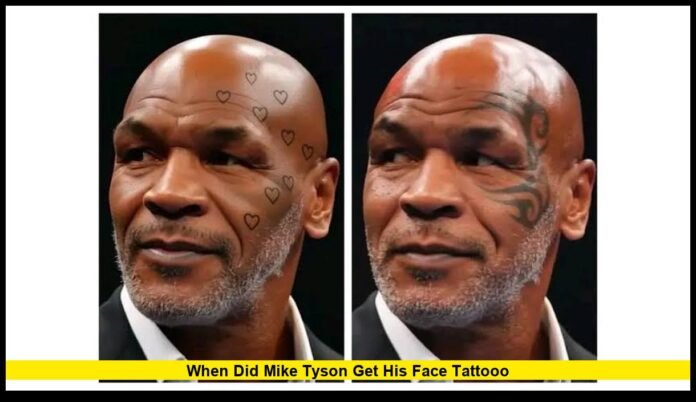
Tyson has said in interviews that he originally wanted a collection of hearts on his face because he thought they looked cool. Whitmill declined, telling him the idea did not suit him, and asked him to come back in a few days. Tyson later admitted that hearts would have been a mistake he would have regretted.
The Māori Connection
When Tyson returned, Whitmill presented a bold tribal concept drawn from the visual language of Māori facial tattooing, known as tā moko. Tyson loved it immediately. He even asked for the pattern to be mirrored so that the lines swept down the left side of his face, creating the asymmetrical, sweeping look that photographers have captured ever since.
Fight Week With Clifford Etienne
Ink Still Fresh at the Pyramid
The bout against Clifford Etienne took place at The Pyramid in Memphis and was pushed back about a week from its original date. Tyson entered the ring with the tattoo barely healed. He won by first-round knockout, finishing the fight in under a minute, according to most accounts. It became the 50th and final victory of his professional career, closing out a record of 50 wins and 7 losses.
Did the Tattoo Interfere With Training?
Some stories claim the tattoo cost him several days of preparation. His former trainer Jeff Fenech has even suggested Tyson may have gotten inked partly to avoid the fight, since a fresh tattoo can scab and is not ideal for someone about to take punches. Tyson never confirmed that theory, and he stepped into the ring regardless. Whatever his motivation, the timing turned the tattoo into a permanent part of the story of that night.
What the Tattoo Means
A Warrior’s Mark
Tyson has called the design his warrior tattoo. In his view, the Māori tradition represents fierce fighters, and he wanted a symbol that matched the identity he carried into the ring. He has also been refreshingly blunt about the simpler side of the decision, saying he got it because he thought it looked awesome and he wanted it.
A Cultural Debate That Never Faded
Not everyone has embraced the design. Tā moko carries deep meaning for Māori communities, often recording ancestry, status, and personal history. Critics argue that borrowing the style without that heritage turns a sacred practice into decoration. The conversation has resurfaced every time the tattoo trends in pop culture, and it remains part of any honest discussion of the artwork.
The Copyright Fight Over a Face
The Hangover Part II Lawsuit
The tattoo took on a surprising legal life in 2011. In the sequel to the hit comedy, actor Ed Helms appeared with a copy of the design on his face, and Whitmill sued the studio behind the film, arguing that the artwork was his intellectual property. A judge allowed the movie to open on schedule but signaled that Whitmill had a strong chance of winning his claim. The dispute was later settled privately.
Why the Case Still Matters
The lawsuit raised unusual questions about who owns art once it lives on someone else’s skin. Tyson himself was never a party to the case, and he had appeared in the first film of the franchise without any such controversy. The episode helped spark wider conversations about tattoo copyright that continue today.
Tyson’s Other Tattoos
A Gallery of Heroes
The face is the headline, but Tyson carries at least seven tattoos in total. Several honor figures he admired, including tennis champion Arthur Ashe, Chinese leader Mao Zedong, and revolutionary Che Guevara. A number of these were reportedly done during his years in prison, a time he has described as defined by anger and distrust. The face tattoo is the only one he placed where nobody could ever miss it.
Does Tyson Regret It? Has He Removed It?
No Regrets, No Removal
Tyson has never had the tattoo removed. On April Fools’ Day in 2013, he joked about taking it off, but the gag was exactly that. In interviews he has said he has no regrets, adding that plenty of good things have come from it, including younger athletes telling him that a certain type of face tattoo is simply called a Mike Tyson.
Where Things Stand in 2026
Turning 60 and Still in the Spotlight
Tyson turned 60 this summer and remains one of the most talked-about figures in combat sports. His most recent major ring appearance was his November 2024 loss to Jake Paul in Arlington, Texas, an eight-round bout that drew a huge live crowd and a massive streaming audience. A long-discussed exhibition against Floyd Mayweather has been pushed back more than once, with promoters pointing to the fall of 2026 after a hand injury, so fans should watch for official updates.
A New Look Back at His Life
Tyson’s story is also getting fresh attention on streaming. A four-part Netflix docuseries titled TYSON has been reported for release on October 13, 2026, giving a new generation a chance to revisit the highs, lows, and symbols of his career, including that unforgettable face.
Why the Tattoo Endures
More Than Ink
The reason the design keeps its power is simple: it fused with the man. The pattern became shorthand for intensity, danger, and reinvention. It has been copied at Halloween parties, parodied in films, and even imitated by Jake Paul in a promotional stunt ahead of their fight. Few athletes can claim a visual signature that survives long after their last victory, but Tyson can.
The Bottom Line
A casual decision made in February 2003, a refused request for hearts, and a bold tribal design inspired by Māori art combined to create one of the most famous tattoos in sports history. Whether admired, debated, or imitated, it remains inseparable from the name Mike Tyson.
Which moment from Tyson’s story fascinates you most? Share your thoughts in the comments and keep checking back for the latest boxing news and legends’ stories!