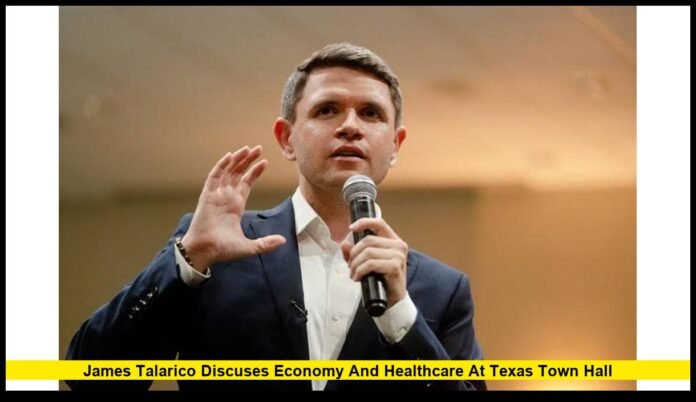

James Talarico discusses economy and healthcare at Texas town hall as the Democratic candidate seeks to convince voters that his economic agenda can address rising household expenses, medical costs and the challenges facing working families. His October 14, 2026, appearance in a CNN and Jubilee Media town hall in the Fort Worth area came during a closely watched U.S. Senate campaign against Republican Ken Paxton. With the November midterm elections approaching, Talarico faces the challenge of translating concerns about affordability into support from Democrats, independents and Republicans open to considering a different candidate.
The event offered voters an opportunity to hear directly from Talarico, a Texas state representative whose campaign has placed economic opportunity and access to affordable health care among its central priorities. The broader campaign conversation also reflects the financial pressures many Texans face when paying for housing, groceries, insurance, prescriptions and child care. These concerns have become important to the Senate race as candidates compete to demonstrate which policies would offer practical relief.
A Town Hall During a Competitive Senate Campaign
Talarico appeared at the October 14 event as he pursued the Democratic nomination’s statewide momentum into the general-election contest against Paxton. CNN anchor Erin Burnett moderated the town hall, which brought together voters with different political affiliations.
CNN partnered with Jubilee Media for the event, combining a traditional television town hall with a format designed to encourage direct exchanges between candidates and members of the public. The audience included Democrats, Republicans and independent voters, giving Talarico an opportunity to address people who may not automatically support his party.
The timing added significance to the appearance. Texas has voted Republican in recent presidential and statewide elections, and Democrats have not won a U.S. Senate race in the state since 1988. Talarico is attempting to challenge that pattern.
The campaign has focused on the cost of living, corporate influence, medical expenses and the future of the middle class. Those subjects are particularly important in a state with a large and diverse population, where economic conditions differ considerably between major metropolitan areas, smaller communities and rural counties.
The town hall also offered a chance to assess Talarico’s ability to explain his positions under questioning. Campaign speeches allow candidates to present carefully prepared arguments, while live discussions can reveal how they respond to concerns and disagreements.
Why Economic Affordability Is Central to Talarico’s Campaign
Talarico introduced his New American Dream economic agenda in August 2026. The plan outlines his argument that economic growth should provide greater benefits to working people rather than concentrating gains among wealthy individuals and large corporations.
His platform addresses several expenses that can make it difficult for families to build financial security. Housing, child care, education and medical treatment can absorb substantial portions of household income, leaving less money for savings and unexpected emergencies.
Talarico has argued that these pressures reflect long-term economic and policy decisions. His proposals call for higher wages, stronger worker protections, investment in public services and measures intended to reduce essential expenses.
The agenda includes the following priorities:
- Raising the federal minimum wage to $15 an hour.
- Expanding overtime protections for eligible workers.
- Supporting labor unions and small businesses.
- Increasing access to affordable child care.
- Investing in education, infrastructure and health care.
- Addressing medical debt and prescription drug expenses.
- Protecting Social Security and Medicare.
- Closing tax loopholes that benefit wealthy taxpayers.
These are elements of his broader campaign platform, rather than a list of policies newly enacted or necessarily introduced during the town hall.
The proposals would require different legislative and administrative steps. Some would involve federal spending, while others would require changes to labor law, tax policy or health care regulations.
For voters, the important question is whether the measures could reduce their expenses and improve their financial stability. Their practical effects would depend on the final legislation, funding arrangements and congressional support.
Housing and Everyday Expenses Remain Major Concerns
Housing affordability has become a defining issue in many American communities. High purchase prices, mortgage costs, property taxes and rents can make it difficult for families to move into more stable living arrangements.
Talarico has included housing affordability in his economic agenda and has supported policies intended to give individual homebuyers a better opportunity to compete with large institutional investors.
He has also backed changes intended to reduce barriers to building affordable housing. Increasing the availability of homes can help address supply shortages, although construction costs, local regulations, interest rates and infrastructure needs all influence final prices.
Texas presents a varied housing picture. Some communities offer comparatively affordable homes, while major employment centers can present substantial challenges for renters and prospective buyers.
Housing costs also affect other parts of the household budget. Families spending more on rent or mortgage payments may have less money available for health insurance, prescriptions, transportation and education.
Talarico’s approach treats these pressures as connected parts of the affordability problem. His campaign argues that families need more than wage increases if essential expenses continue to rise faster than their ability to pay them.
Child Care and Education as Economic Investments
Child care is another important component of Talarico’s platform. Parents who cannot find affordable, reliable care may have to reduce their working hours, delay career advancement or leave employment altogether.
Expanding access to affordable child care could help families manage expenses while allowing more parents to participate in the workforce. The details would determine how much assistance families receive and whether enough providers are available to meet demand.
Education also features prominently in his economic agenda. Talarico supports investment in public education and training opportunities that can prepare workers for employment in changing industries.
Vocational programs and technical education can provide routes into skilled occupations without requiring every student to pursue a traditional four-year degree. However, their value depends on training quality, employer demand and the availability of jobs that pay enough to support a household.
These proposals reflect a broader view of economic security. Talarico argues that government policy should help people develop skills, find employment and afford the necessities of daily life.
Healthcare Costs Shape the Economic Debate
Health care affordability is closely connected to the financial concerns Talarico has highlighted throughout his campaign. Medical expenses can create serious difficulties for families, even when they have insurance coverage.
Premiums, deductibles, copayments and prescription costs can add up quickly. Patients with chronic conditions may face recurring expenses that leave little room for unexpected bills.
Talarico’s personal experience with Type 1 diabetes has influenced his discussion of prescription drug affordability. He has spoken about the financial demands associated with managing the condition and the importance of ensuring that patients can obtain essential medication.
His broader health care priorities include lowering prescription costs, improving access to affordable coverage and addressing medical debt.
These issues are especially important for patients who depend on medication over many years. When treatment becomes too expensive, some people may delay refills or struggle to cover other necessities. Making essential medication more affordable can therefore affect both health outcomes and household finances.
Talarico has supported government action to reduce the financial burden of prescription drugs. His proposals also include greater protections for patients facing excessive medical bills.
However, the effect of any new policy would depend on its design. A measure might benefit people with certain insurance plans without reaching uninsured patients or individuals whose coverage follows different rules.
Prescription Drug Prices and Insulin Access
Insulin costs illustrate the connection between health care policy and economic security.
People living with diabetes need reliable access to medication and supplies. The expense of treatment can become particularly difficult for patients who lack comprehensive insurance or face substantial out-of-pocket costs.
Talarico has supported insulin affordability measures in Texas and has advocated broader efforts to reduce prescription drug prices. He has also called for changes intended to increase competition in the pharmaceutical market.
Drug pricing is influenced by several factors, including manufacturer pricing, patents, insurance arrangements, pharmacy benefit managers and negotiations between health plans and pharmaceutical companies.
As a result, lowering prices across the health care system requires more than one policy change. The effect on individual patients depends on their medications, coverage and eligibility for available assistance.
Talarico’s position is that patients should not face financial hardship simply because they need medication to manage a serious or chronic condition.
For Texas voters, the issue also raises questions about the responsibilities of government, insurers and drug manufacturers. A policy’s success should ultimately be measured by whether it improves access to treatment and reduces the amount patients must pay.
Medical Debt and Financial Security
Medical debt can affect a family’s finances long after a hospital visit or course of treatment ends.
An unexpected emergency can generate bills for hospital services, specialist care, diagnostic testing and follow-up appointments. Insurance may cover some expenses, but deductibles and uncovered charges can leave patients responsible for substantial balances.
Talarico has advocated medical debt relief as part of his effort to reduce financial pressure on working households. He has also criticized health care practices that can leave patients struggling with bills for necessary treatment.
Medical debt can interfere with a person’s ability to save, qualify for financial products or meet regular household expenses. The burden may be particularly difficult for people who miss work during an illness or care for a family member.
Federal action could address some aspects of the problem through billing protections, limits on certain collection practices or programs targeting eligible outstanding balances. Each approach would require clear eligibility rules and an assessment of its financial impact.
Talarico’s proposals remain campaign priorities unless and until the relevant legislation or programs take effect. Voters should distinguish between a candidate’s stated intentions and policies that have already become law.
How His Economic Proposals Compare With Ken Paxton’s
The contest between Talarico and Paxton gives Texas voters two different approaches to economic policy.
Talarico’s New American Dream agenda emphasizes worker protections, public investment, affordable services and changes to the tax system. His campaign argues that these measures could help working families retain more of their income and gain greater economic security.
Paxton has promoted a different approach centered on tax relief and incentives related to household expenses. The candidates differ in how they propose to use government policy to respond to affordability concerns.
Tax deductions and credits can provide assistance to eligible households, but their value depends on the rules and a family’s financial circumstances. Public programs and regulatory changes have different costs and implementation requirements.
Neither candidate can guarantee that every campaign proposal will become law. Congressional negotiations, budget decisions and political opposition would influence what either could accomplish in Washington.
Voters evaluating the candidates can compare the expected benefits, costs and eligibility requirements of their proposals. They can also examine whether each plan explains how it would be funded and implemented.
What the Town Hall Means for Texas Voters
The town hall took place as the Senate race attracted increasing national attention. Polls released on October 14 showed a close contest between Talarico and Paxton.
A University of Texas poll placed Talarico at 50% and Paxton at 47% among likely voters. A separate Marist poll showed Talarico at 47% and Paxton at 45%. Both results fell within the respective polls’ margins of error, so neither established a definitive leader.
The figures illustrated the competitive nature of the election, but polling represents a snapshot of voter preferences rather than a prediction of the final result.
Talarico’s economic and health care message could appeal to voters who prioritize living costs and access to treatment. However, voters also consider taxes, public safety, immigration, social issues and the candidates’ records.
The town hall’s direct-question format gave Talarico an opportunity to communicate with people outside his usual political base. Whether that appearance translates into additional support will depend on how voters assess his responses, proposals and overall candidacy.
Conclusion
Talarico’s campaign places economic opportunity and affordable health care at the center of its argument for a different direction in Texas politics. His proposals address wages, housing, child care, prescription drugs and medical debt, connecting national policy debates with the financial decisions families make every day.
The challenge ahead is demonstrating how those proposals could work in practice and persuading enough Texans that they offer a better path forward. Which issue should receive the most attention in the Senate race: lowering everyday expenses, reducing health care costs or strengthening wages? Share your opinion in the comments and follow the latest verified election developments.