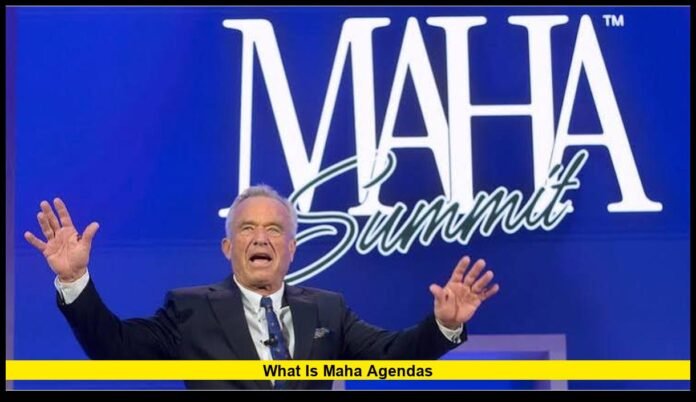

The what is maha agenda question has become increasingly relevant as the Trump administration pushes to reshape America’s approach to nutrition, preventive healthcare, food safety, and childhood wellness. Known as Make America Healthy Again, MAHA is a broad health policy movement that seeks to address factors contributing to chronic illnesses while encouraging Americans to make healthier lifestyle choices. Its growing influence extends beyond healthcare, reaching food manufacturers, schools, farmers, families, and federal regulatory agencies.
At the center of the movement is the belief that improving public health requires more than treating medical conditions. Its supporters want greater attention paid to everyday dietary habits, environmental exposures, food ingredients, physical activity, and the conditions that influence long-term health.
The initiative has also attracted criticism over certain scientific claims, proposed regulatory changes, and questions about how its recommendations could affect established medical practices. As federal agencies continue working on health-related policies, MAHA remains an important part of the national discussion about America’s healthcare future.
How the MAHA Movement Became a National Policy Priority
Make America Healthy Again developed into a prominent political movement during the 2024 presidential election. Robert F. Kennedy Jr. became its leading public advocate, promoting changes to America’s food system and healthcare priorities.
After Donald Trump returned to the White House in January 2025, the movement gained a direct role in federal policymaking. Kennedy became secretary of the Department of Health and Human Services, placing him in a position to influence major health agencies and national public health priorities.
In February 2025, Trump established the President’s Make America Healthy Again Commission through an executive order. The commission was directed to investigate potential contributors to childhood chronic diseases and recommend ways to improve children’s health.
This development transformed MAHA from a campaign message into a government initiative involving federal departments, regulatory agencies, research priorities, and nutrition programs.
Food Reform Remains a Major Focus
One of the movement’s most recognizable priorities involves changing how Americans think about the food they consume.
MAHA advocates have called for greater scrutiny of ingredients used in packaged foods, particularly artificial colors, added sugars, and certain additives. They also encourage consumers to choose more nutrient-rich foods and reduce their dependence on heavily processed products.
Federal officials have pursued initiatives involving synthetic food dyes and food ingredient transparency. The broader objective is to encourage manufacturers to reconsider product formulations and provide consumers with clearer information.
However, food ingredients are not all subject to identical safety considerations. Regulatory decisions must account for individual substances, exposure levels, scientific findings, and applicable legal requirements.
The administration’s approach has therefore involved a combination of regulatory reviews, industry engagement, and public nutrition messaging rather than a universal prohibition on processed foods.
Latest MAHA Developments: Food Safety and Regulatory Changes
Food regulation has become a key test of the administration’s ability to turn its health priorities into measurable action.
In August 2026, federal health officials announced a proposed rule that would require manufacturers to notify the Food and Drug Administration when determining that certain food substances qualify as Generally Recognized as Safe, or GRAS. The proposal is intended to improve transparency around ingredients entering the food supply.
Officials also submitted a proposed federal definition of ultra-processed foods for further review. Establishing a consistent definition could help researchers compare findings and give policymakers a clearer framework for future nutrition initiatives.
As of November 2026, the proposed definition remains under review. The distinction matters because a proposal does not automatically establish a binding nationwide requirement.
Another development involves Calley Means, a prominent MAHA advocate who resigned from his advisory role in October. In early November, he publicly criticized delays in advancing parts of the administration’s food policy agenda. His departure has highlighted disagreements over priorities, industry influence, and the speed of regulatory change.
These developments suggest that the movement’s future will depend partly on whether proposed reforms progress into final regulations and practical programs.
What Could MAHA Mean for American Families?
The effects of the initiative will vary according to individual policies and where families live.
Grocery shopping: Changes to food labeling, ingredient oversight, and manufacturer practices could influence the products available to consumers. Families may also encounter more public guidance encouraging balanced diets and fewer foods high in added sugars.
School meals: Nutrition initiatives may encourage schools to review ingredients, improve meal quality, and offer more nutrient-rich choices. The precise requirements depend on the programs and rules that apply.
Public assistance: Some states have pursued SNAP waivers restricting purchases of specified products, including soda and candy. The restrictions vary by state and do not represent a single nationwide purchasing rule.
Healthcare decisions: The movement promotes prevention and greater attention to lifestyle factors. Nevertheless, people should continue consulting qualified healthcare professionals about vaccinations, medications, and treatment for existing conditions.
For families, the most practical question is whether new policies make nutritious food more accessible, improve health outcomes, and provide reliable information without creating unnecessary financial or medical barriers.
Why Scientists and Policymakers Disagree About MAHA
The movement brings together several distinct issues, which means support for one objective does not necessarily translate into agreement with every proposal.
Many public health professionals support better nutrition, stronger food safety oversight, and efforts to reduce exposure to established environmental hazards. However, debates continue over specific chemical risks, the classification of processed foods, and the scientific evidence behind certain health claims.
Childhood vaccination has been another source of disagreement. Some MAHA advocates call for changes to existing recommendations, while many medical experts emphasize the importance of evidence-based vaccination policies in preventing serious infectious diseases.
Questions about affordability also remain important. Fresh produce and other nutritious foods can be expensive or difficult to access in some communities. Policies encouraging healthier choices may have limited benefits if households cannot reasonably afford the recommended alternatives.
Evaluating the initiative therefore requires looking beyond political messaging. Scientific quality, implementation, consumer access, and measurable outcomes all matter.
What Happens Next for the MAHA Agenda?
The coming months will help determine whether the movement can maintain momentum while resolving disagreements over its policy priorities.
Food ingredient transparency, nutrition standards, childhood wellness, and chemical safety are likely to remain significant areas of attention. Regulatory reviews and public consultations will influence how quickly certain proposals advance.
Congress and state governments may also shape the direction of future reforms through legislation, oversight, and their own public health initiatives.
Ultimately, the success of the MAHA agenda will depend on whether its policies produce demonstrable improvements in Americans’ health. Clear regulations, credible scientific research, affordable nutritious food, and effective preventive healthcare will be central to that assessment.
For readers following what is maha agenda, the key takeaway is that it represents a broad effort to change how the United States approaches health, food, and disease prevention. Its long-term influence will depend on the difference between its stated ambitions and the results that families and communities actually experience.