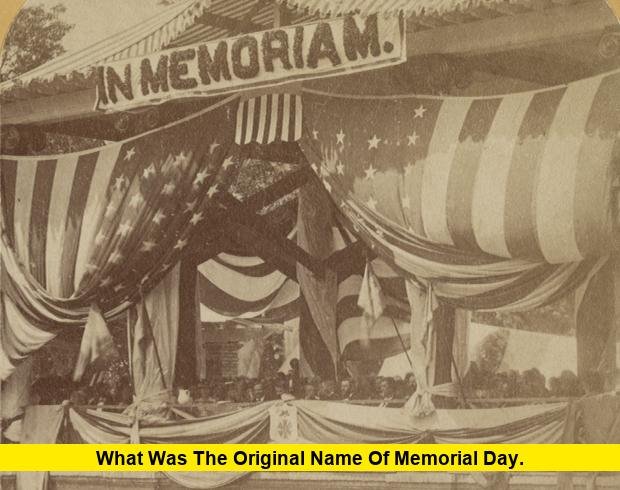

Every year, Americans gather for parades, cemetery visits, family cookouts, and moments of reflection during Memorial Day weekend. But many people still ask: what was the original name of Memorial Day and how did the holiday begin?
The answer takes us back to the years following the Civil War, when communities across the United States searched for a way to honor fallen soldiers. Long before it became the federal holiday Americans recognize today, Memorial Day carried a very different name and meaning.
The Original Name of Memorial Day
The original name of Memorial Day was Decoration Day.
The holiday earned this name because people would decorate the graves of soldiers with flowers, flags, and wreaths. The tradition started in the late 1860s after the devastating Civil War, which claimed more American lives than any conflict in the nation’s history.
Families and local communities gathered at cemeteries to remember those who had died in battle. Fresh flowers were placed on gravestones, speeches were delivered, and ceremonies were held to honor military sacrifice.
The name “Decoration Day” perfectly described the main purpose of the observance at that time.
How Decoration Day Began
Following the Civil War, both Northern and Southern communities organized separate remembrance events for fallen soldiers. These local tributes slowly evolved into a larger national tradition.
In 1868, General John A. Logan, leader of a Union veterans organization called the Grand Army of the Republic, officially proclaimed May 30 as a day to decorate the graves of war dead. The first large national observance took place at Arlington National Cemetery in Virginia.
Thousands of people attended the ceremony, including military veterans, families, and public officials. Children placed flowers on graves while speeches emphasized national healing after years of conflict.
This event helped establish Decoration Day as an important American tradition.
Why the Name Changed to Memorial Day
Over time, the holiday expanded beyond Civil War remembrance. Americans began honoring soldiers who died in all U.S. wars, including World War I, World War II, Korea, Vietnam, Iraq, and Afghanistan.
As the meaning of the day broadened, the term “Decoration Day” gradually became less common. By the early 20th century, more people started calling it “Memorial Day.”
The new name better reflected the holiday’s growing purpose: remembering and memorializing all military personnel who lost their lives while serving the country.
Eventually, “Memorial Day” became the officially recognized name.
When Memorial Day Became a Federal Holiday
Memorial Day became an official federal holiday in 1971 under the Uniform Monday Holiday Act.
The law moved the observance from May 30 to the last Monday in May. The change created a three-day weekend for many Americans while still preserving the holiday’s importance.
Today, Memorial Day remains one of the most significant national observances in the United States. It combines remembrance ceremonies with family traditions, patriotic events, and community gatherings.
The Importance of Memorial Day Today
Although many people associate Memorial Day weekend with travel, sales, and the unofficial start of summer, the holiday’s deeper meaning remains rooted in sacrifice and remembrance.
Across the country, Americans continue traditions that began during the Decoration Day era, including:
- Visiting military cemeteries
- Placing flowers and flags on graves
- Attending remembrance ceremonies
- Participating in parades
- Observing moments of silence
At Arlington National Cemetery and other memorial sites, volunteers often place thousands of American flags at gravestones before the holiday weekend.
The National Moment of Remembrance, observed at 3 p.m. local time on Memorial Day, also encourages Americans to pause briefly and honor fallen service members.
Who Started the Tradition of Decorating Graves?
Several towns across the United States claim to be the birthplace of Memorial Day traditions. Communities in states such as Mississippi, Georgia, Pennsylvania, Illinois, and South Carolina all held early remembrance events after the Civil War.
One of the most notable ceremonies took place in Charleston, South Carolina, in 1865. Freed African Americans organized a tribute for Union soldiers who had died in a Confederate prison camp. Historians often point to this event as one of the earliest Memorial Day-style commemorations.
Because multiple communities participated in similar traditions around the same time, historians still debate the single true origin of the holiday.
Why Flowers Became a Symbol of the Holiday
Flowers played a major role in early Decoration Day ceremonies because they symbolized respect, peace, and remembrance.
Families carefully arranged floral displays on gravesites to show gratitude toward fallen soldiers. Red poppies later became associated with Memorial Day after World War I, inspired by the famous wartime poem In Flanders Fields.
Today, flowers remain one of the most recognizable symbols connected to Memorial Day observances.
Difference Between Memorial Day and Veterans Day
Many people confuse Memorial Day with Veterans Day, but the two holidays honor different groups of service members.
Memorial Day
- Honors military personnel who died while serving
- Observed on the last Monday in May
- Focused on remembrance and sacrifice
Veterans Day
- Honors all U.S. military veterans, living and deceased
- Observed on November 11
- Celebrates military service overall
Understanding the difference helps preserve the unique meaning behind Memorial Day traditions.
How Americans Observe Memorial Day Now
Modern Memorial Day observances vary widely across the country. Some families attend solemn ceremonies at cemeteries, while others participate in patriotic community events.
Common traditions include:
- Flying the American flag at half-staff until noon
- Watching Memorial Day parades
- Visiting memorials and monuments
- Sharing stories about military family members
- Supporting veterans organizations
Even as customs evolve, the holiday’s core purpose remains honoring those who gave their lives in military service.
Final Thoughts
So, what was the original name of Memorial Day? The holiday was first known as Decoration Day, a name inspired by the practice of decorating soldiers’ graves with flowers after the Civil War. Over generations, the observance evolved into Memorial Day, becoming a nationwide tribute to all American service members who died in the line of duty.
The history behind the holiday serves as a reminder that Memorial Day is more than a long weekend — it is a national moment of gratitude, remembrance, and respect for sacrifice.
What are your family’s Memorial Day traditions or memories? Share your thoughts and stay connected for more history and culture updates.