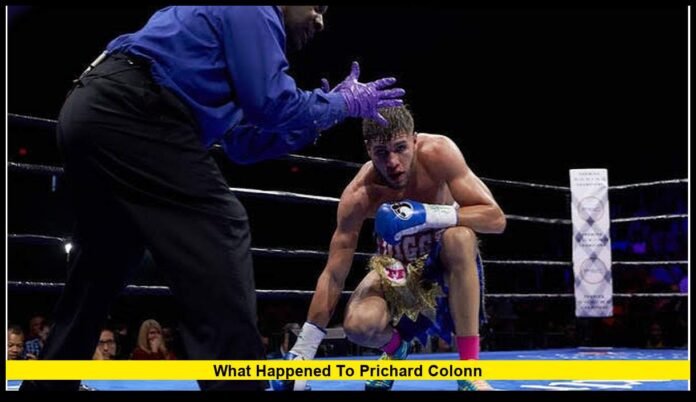

What happened to Prichard Colon became an urgent question again on August 13, 2026, when the former Puerto Rican boxing prospect died at the age of 33, more than a decade after a catastrophic brain injury ended his career. Colón had entered his final professional fight as an undefeated 23-year-old with championship ambitions. By the end of that night in October 2015, his life had changed permanently, beginning an extraordinary 11-year medical struggle supported closely by his family.
Key Points Summary
╔════════════════════════════════════════════════════════════════════╗
║ – Prichard Colón died on August 13, 2026, at the age of 33. ║
║ – His father, Richard Colón, publicly confirmed his death. ║
║ – Colón suffered a devastating brain injury after his October 2015 fight with Terrel Williams. ║
║ – He underwent emergency brain surgery and spent 221 days in a coma. ║
║ – Colón finished his professional boxing career with a 16-1 record, including 13 knockout victories. ║
║ – His family cared for him for more than a decade as he lived with severe neurological disabilities. ║
║ – The WBO, WBC and WBA were among the boxing organizations paying tribute after his death. ║
╚════════════════════════════════════════════════════════════════════╝
Prichard Colón Dies at 33
His death came nearly 11 years after the bout that transformed him from one of Puerto Rico’s promising young fighters into a symbol of the potentially devastating consequences of traumatic brain injuries in combat sports.
Colón’s father had remained closely involved in his son’s life throughout those years. In announcing his death, he thanked supporters for the love and prayers they had offered the family.
He also revealed that he had hoped to fulfill his son’s wish of taking him back to Puerto Rico for a vacation, but they were unable to make that trip.
The World Boxing Organization confirmed Colón’s passing, while the World Boxing Council and World Boxing Association were among the major organizations offering condolences and remembering his courage.
Who Was Prichard Colón Before the Injury?
For younger boxing fans, Colón may be known primarily because of the terrible events surrounding his last fight. Before that night, however, he was building a reputation as an exciting prospect.
Prichard Colón Meléndez was born on September 19, 1992. He developed into a highly accomplished amateur boxer, winning multiple national championships in Puerto Rico and a gold medal at the 2010 Pan American Youth Championship.
His amateur success created significant expectations when he entered the professional ranks in 2012.
Those expectations appeared justified.
Colón accumulated victories quickly and developed a reputation for his punching power. Before facing Terrel Williams, his professional record stood at a perfect 16-0.
Thirteen of those victories had come by knockout.
At 23, Colón was young enough to have potentially spent many more years competing professionally. He had the combination of an unbeaten record, amateur credentials and knockout ability that often attracts attention to a rising boxer.
His 17th professional contest would ultimately be his last.
The October 2015 Fight Against Terrel Williams
Colón fought American boxer Terrel Williams on October 17, 2015, at EagleBank Arena in Fairfax, Virginia.
The contest was scheduled for 10 rounds.
During the fight, controversy developed over blows that landed around the back of Colón’s head. Such punches, frequently called rabbit punches, are prohibited under boxing rules because of the danger associated with striking the back of the head.
Colón complained about the punches during the bout.
Referee Joe Cooper eventually deducted a point from Williams in the seventh round for an illegal blow to the back of the head.
But the contest continued.
As the rounds progressed, Colón’s condition became increasingly concerning. He was knocked down twice during the ninth round.
After that round, his corner removed his gloves because of confusion over whether the contest had finished. When Colón was not ready to continue for the tenth round, he was disqualified.
The official result gave Williams the victory and left Colón with the first defeat of his professional career.
Within a short period, however, the result of the fight became almost irrelevant.
A medical emergency was unfolding.
What Happened Immediately After the Fight?
Colón’s condition deteriorated after he left the ring.
He became ill in the dressing-room area and was taken for emergency medical treatment. Doctors discovered that he had suffered bleeding in his brain.
The situation was critical.
Colón was rushed to Inova Fairfax Hospital, where surgeons performed an emergency operation to relieve pressure on his brain. Reports at the time described the procedure as necessary because of the severity of the brain bleed and swelling.
The young boxer who had walked into the arena undefeated was now fighting for his life.
He subsequently fell into a coma.
It would last 221 days.
The Brain Injury That Ended His Career
Understanding what happened to Prichard Colon requires looking beyond the controversial ending of the Williams bout. The defining event was the severe traumatic brain injury and brain hemorrhage that followed the fight.
A subdural hematoma involves bleeding between the brain and its protective outer covering. The accumulation of blood can place dangerous pressure on brain tissue and become life-threatening without rapid treatment.
Colón required emergency surgery to relieve that pressure.
Although doctors were able to save his life at the time, the neurological damage was profound.
There would be no boxing comeback.
Instead, the promising fighter began an entirely different battle centered on survival, rehabilitation and daily care.
Prichard Colón Spent 221 Days in a Coma
One of the most striking facts about Colón’s medical ordeal is its duration.
He remained in a coma for 221 days following the injury.
His treatment involved multiple facilities as his medical needs changed. After initial treatment in Virginia, he received rehabilitation care, and his family eventually became responsible for much of his long-term support.
When Colón emerged from the prolonged coma, the consequences of the brain injury remained severe.
He was unable to return to the independent life he had lived before October 2015.
His mobility was profoundly affected, and he required a wheelchair and extensive assistance. His ability to communicate was also severely impaired.
For his family, the transformation was enormous.
A son who had been an elite athlete suddenly needed around-the-clock care.
His Family Became Central to His Long-Term Recovery
Richard and Nieves Colón became two of the most important people in their son’s post-injury life.
The family spent years caring for him, supporting rehabilitation efforts and sharing selected updates with followers who wanted to know about his condition.
Over time, videos showed Colón participating in therapy and responding in different ways to people around him. Some updates offered encouraging glimpses of progress, including efforts to communicate through assistive technology.
These moments generated significant attention because so many boxing fans remembered how severe his initial prognosis had been.
However, progress should not be confused with a full recovery.
Colón continued to live with serious neurological disabilities and needed extensive support throughout the remainder of his life.
His family’s commitment became one of the defining aspects of his story.
Why Did Prichard Colón’s Case Become So Controversial?
The case generated intense discussion because of what occurred before Colón collapsed.
The punches to the back of his head became the central focus of debate.
Boxing has strict rules against rabbit punches, and Colón had complained about being hit behind the head during the contest. Williams was penalized during the fight, confirming that the referee had recognized at least one illegal blow.
Questions were subsequently raised about whether the fight should have been stopped earlier and whether signs of neurological distress had been adequately addressed.
Those questions became especially significant once the severity of Colón’s injury was known.
His case has since been frequently invoked in discussions about referee intervention, ringside medical examinations, fighter complaints and the responsibility of boxing officials to prioritize health over continuing a contest.
The $50 Million Lawsuit Filed by His Parents
The aftermath eventually moved beyond medicine and boxing into the legal system.
In 2017, Colón’s parents filed a lawsuit seeking more than $50 million in damages.
The litigation included allegations concerning the medical handling of Colón during the bout and raised questions about the responsibilities of the ringside physician and parties connected to the event.
The promoters named in the litigation were later dismissed after a court determined they were not responsible for assigning or supervising medical personnel or in-ring officials.
As of reports surrounding Colón’s death in August 2026, the litigation had not produced a final trial resolution.
The legal proceedings reflected the larger question that has surrounded the tragedy for years: could stronger intervention have changed what happened?
What Did Terrel Williams Say About the Fight?
Terrel Williams became permanently connected to Colón’s story because he was the opponent in the ring that night.
The intense public reaction to the incident has sometimes resulted in hostility directed toward Williams, including reported threats years after the bout.
Williams previously expressed sympathy for Colón and his family and said that he prayed for him.
It is important to distinguish the documented events inside the ring from assumptions about intent. Williams was not criminally charged in connection with Colón’s injury.
The controversy instead became part of a much broader debate involving the enforcement of boxing rules, the responsibility of referees and the medical safeguards surrounding professional fighters.
Did Prichard Colón Ever Box Again?
No.
October 17, 2015, was Colón’s final professional appearance.
His official career record ended at 16 victories and one defeat, with 13 wins by knockout.
The loss came by disqualification rather than a conventional knockout or judges’ decision, but the record alone cannot convey what the bout ultimately meant.
Colón never had the opportunity to discover how far his boxing talent might have taken him.
Instead of pursuing championships, rankings and major fights, he spent the next decade facing medical challenges that required enormous support.
Why His Story Changed the Conversation About Boxing Safety
Professional boxing has always involved risk. Even punches that are legal under the rules can cause concussions and neurological injuries.
Colón’s case, however, became particularly powerful because of the combination of illegal blows, his complaints during the contest and the catastrophic medical emergency that followed.
It raised fundamental questions about when referees should intervene.
When should a ringside doctor insist that a fight end?
How seriously should complaints about dizziness or pain be treated?
What responsibility does a corner have when its fighter appears confused?
And how can boxing commissions improve procedures designed to recognize neurological emergencies before permanent damage occurs?
There are no simple solutions capable of eliminating all risk from boxing. But Colón’s experience remains a compelling reminder that safety rules have consequences far beyond points being deducted from a scorecard.
Boxing Organizations Mourn Colón
News of Colón’s death quickly spread throughout the international boxing community on August 13.
Major sanctioning organizations including the WBO, WBC and WBA paid tribute to him.
Their messages emphasized his strength, courage and resilience.
Those descriptions reflected how Colón’s public identity had changed during the decade after his injury. He was no longer known primarily for knockouts or an undefeated record. To many supporters, he represented perseverance under extraordinarily difficult circumstances.
The reaction also demonstrated how deeply his story had remained embedded in boxing culture despite his last professional fight occurring nearly 11 years earlier.
Prichard Colón’s Legacy Is Bigger Than His Record
Statistics tell only a small part of Colón’s life.
He had 16 professional victories.
He scored 13 knockouts.
He entered his final fight undefeated.
But his lasting impact on boxing cannot be measured by wins and losses.
His case forced generations of fans to confront the risks fighters take and the responsibilities carried by referees, physicians, trainers, promoters and regulators.
It also became a story about family.
For more than a decade after the injury, Colón’s parents cared for their son while maintaining hope, supporting rehabilitation and keeping his supporters informed.
Their commitment became inseparable from his story.
A Promising Career That Ended Far Too Soon
Colón was only 23 when his boxing career ended.
That makes the contrast between his life before and after October 17, 2015, especially painful.
Before the Williams bout, his future was defined by possibilities. He was undefeated, physically gifted and building momentum as a professional fighter.
Hours later, those ambitions had been replaced by an emergency operation and uncertainty about whether he would survive.
Colón did survive that initial crisis.
He then lived for nearly another 11 years, surrounded by a family that remained deeply committed to his care.
His death at 33 closes that chapter, but it does not end the questions his case created for professional boxing.
Remembering Prichard Colón
Prichard Colón’s life should not be remembered solely for the terrible night that ended his career.
He was an accomplished amateur, an undefeated professional prospect through his first 16 bouts and a young athlete whose success had created genuine excitement about his future.
After the injury, he became something different: a symbol of resilience and of the human consequences that can exist behind the spectacle of combat sports.
His story also serves as a warning.
Rules designed to protect fighters matter. Medical symptoms during competition matter. Complaints about illegal punches matter. The ability and willingness to stop a fight when something appears wrong can matter far more than the result recorded on a scorecard.
Prichard Colón never received the opportunity to pursue the championship career that once appeared possible. Instead, his legacy became tied to an issue more important than any championship belt: protecting the lives and long-term health of fighters.
He died on August 13, 2026, at only 33 years old, after spending more than a decade living with the consequences of the devastating brain injury suffered during his final fight.
For the boxing world, his name will remain associated with both enormous tragedy and an enduring lesson about fighter safety.
What are your memories of Prichard Colón and his boxing career? Share your thoughts in the comments and stay updated as the boxing community continues to remember his life and legacy.