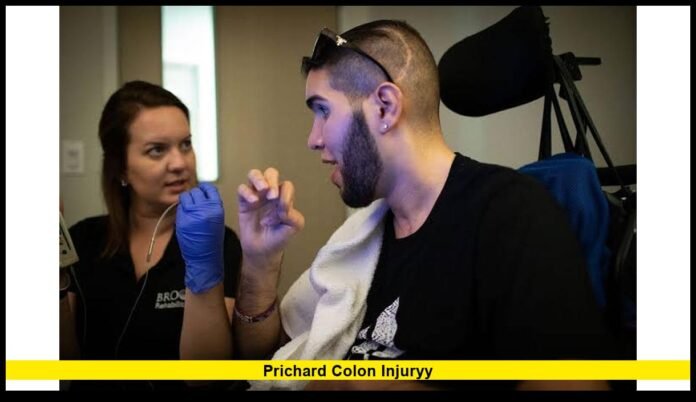

The Prichard Colon injury remains one of boxing’s most devastating tragedies, and the story has returned to the spotlight after the former Puerto Rican prospect died at age 33 on August 13, 2026, more than a decade after suffering a catastrophic brain injury during a 2015 fight. Colón was only 23 when his promising professional career was abruptly transformed by a severe brain hemorrhage that left him requiring extensive care for the rest of his life.
His death closes a heartbreaking chapter in a story that has remained deeply connected to discussions about boxing safety, illegal punches and the responsibilities of everyone working around professional fighters.
Who Was Prichard Colón?
Prichard Colón Meléndez was born on September 19, 1992, in Maitland, Florida, and was raised with strong ties to Puerto Rico. Known by his nickname “Digget,” he developed into a highly regarded amateur boxer before making the transition to the professional ranks.
Colón’s amateur career included a gold medal at the 2010 Pan American Youth Championships in the 64-kilogram division. He eventually decided to pursue professional boxing rather than continue toward the Olympic route.
His professional debut came in February 2013.
Colón immediately began building a reputation as an exciting young fighter. He was an aggressive boxer with considerable punching power, and his schedule reflected the momentum surrounding his career. He fought five times during his first professional year and seven times in 2014.
By 2015, his name was becoming increasingly familiar among boxing followers.
Before the fight that changed his life, Colón had won all 16 of his professional contests, with 13 victories coming by knockout.
He appeared to be on the path toward bigger fights and potentially a world championship opportunity.
The Fight Against Terrel Williams
On October 17, 2015, Colón faced Terrel Williams at EagleBank Arena in Fairfax, Virginia.
The contest was scheduled in the super welterweight division and was viewed as another significant test for the undefeated prospect.
Instead, it became the final professional fight of Colón’s career.
The bout lasted nine rounds. During the contest, Colón repeatedly complained about punches landing to the back of his head and neck area. Those strikes are prohibited under boxing rules because of the serious risks associated with blows to vulnerable areas of the head.
The fight became increasingly difficult for Colón as it progressed.
He had never previously suffered a professional knockdown, but that changed during the ninth round. Colón was dropped, and his condition became a major concern as the contest approached its conclusion.
Between rounds, he reportedly told the ringside physician that he was experiencing dizziness but believed he could continue.
The fight ultimately ended under unusual circumstances.
Colón’s corner removed his gloves after the ninth round, believing the contest had ended. Because his gloves had been removed before the next round, Colón was disqualified.
The official result therefore went down as a defeat, but the outcome of the fight quickly became far less important than what happened to Colón afterward.
What Happened After the Fight?
Colón was assisted toward the dressing area after leaving the ring.
His condition deteriorated rapidly.
He began vomiting and eventually collapsed. He was taken to hospital, where doctors discovered a serious brain injury.
Medical examinations revealed a subdural hematoma, meaning blood had collected around the brain following traumatic injury.
The situation was life-threatening.
Doctors performed emergency surgery to reduce pressure and address the bleeding and swelling in his brain.
The young boxer who had entered the arena unbeaten was now fighting for his life.
The damage was catastrophic enough to leave him in a coma for 221 days.
That extraordinary period became one of the defining details of Colón’s story and illustrated the severity of the neurological trauma he had suffered.
A 221-Day Coma
Colón remained unconscious for more than seven months.
During this period, his family faced an agonizing uncertainty about his future. Medical treatment continued, including additional procedures as doctors worked to manage the consequences of the original injury.
Colón was eventually transferred from a Virginia hospital to the Shepherd Center in Atlanta for rehabilitation.
His condition remained extremely serious.
After emerging from the coma, he did not simply return to his previous life. The neurological damage had left him with profound disabilities, meaning he needed extensive assistance with everyday activities.
His family became his primary source of support.
His mother, Nieves Colón, was particularly involved in his care and rehabilitation, sharing occasional updates about his condition over the years.
Life After the Brain Injury
Colón’s post-injury journey was marked by small but meaningful signs of progress.
He participated in physical therapy and rehabilitation programs designed to help him regain as much function as possible.
Over time, reports showed him responding to family members and participating in therapy. He also worked with communication technology as his family searched for ways to help him interact with the people around him.
His recovery was never described as a return to his former physical condition.
Instead, it became a long-term effort focused on maintaining his quality of life and encouraging whatever neurological progress was possible.
His family continued providing care for him after he eventually left institutional treatment.
For boxing fans, the contrast was difficult to ignore. A young athlete who had once spent his life training, competing and preparing for major fights now depended on others for basic daily needs.
The Importance of Illegal Punches
One of the central issues surrounding Colón’s case has always been the repeated discussion of punches to the back of the head.
Boxing allows fighters to strike specific legal target areas, but blows to the back of the head and neck are prohibited. Such strikes are commonly described as rabbit punches.
The rules exist because the areas behind the head contain vulnerable neurological structures and because fighters may be unable to adequately protect themselves from repeated impacts in that location.
Colón’s complaints during the 2015 fight became an important part of the later discussion surrounding his injury.
His case demonstrated how quickly a competitive boxing match can become a medical emergency when a fighter is exposed to repeated trauma.
The tragedy also raised broader questions about officiating, medical assessment, corner decisions and the responsibilities of boxing authorities.
The Prichard Colón Rule
Colón’s name eventually became associated with a specific effort to improve fighter safety.
The World Boxing Council introduced what became known as the “Prichard Colón Rule,” emphasizing strict action against punches to the back of the head.
The rule became one of the most visible parts of Colón’s legacy.
Instead of his name being remembered solely because of a tragic injury, it also became linked to efforts to make officials more vigilant about illegal punches.
That distinction matters.
Colón’s career ended at just 23, but his experience continued to influence conversations about the responsibilities of referees and other officials.
His case became an enduring reminder that an illegal blow should not simply be viewed as a minor foul when a fighter’s health could be at risk.
His Professional Boxing Record
Colón finished his professional career with a record of 16 wins and one loss, including 13 knockouts.
The defeat came against Williams in the October 2015 contest.
Before that night, he had never lost professionally.
His record therefore reflects both his accomplishments and the abrupt end to what had been a highly promising career.
At the time of his final fight, Colón was still only 23 years old. He had years ahead of him in which he could potentially have developed into a championship-level fighter.
Instead, his professional career ended after nine rounds.
For many supporters, the record never fully captured the circumstances surrounding his final contest.
Questions Surrounding the Official Result
The unusual ending of the fight and the events surrounding Colón’s injury eventually generated efforts to challenge the official result.
There were arguments from supporters that the circumstances warranted a reconsideration of how the contest was recorded.
However, the official professional record continued to list the fight as a defeat.
This became another complicated element of a case already filled with difficult questions.
For Colón’s family and supporters, however, the official record was never the most important issue.
His health and long-term care were far more significant than whether one line in a boxing record book should have read differently.
The Legal Battle
Colón’s family also pursued legal action following the injury.
In 2017, his parents filed a lawsuit seeking more than $50 million in damages. The case raised questions about medical care, ringside decisions and the responsibilities of individuals and organizations connected with the event.
The legal proceedings became part of the wider public debate surrounding what happened on the night of October 17, 2015.
The case also highlighted an important issue in professional boxing: fighters may accept the inherent risks of competing, but there are still rules, medical protocols and safety responsibilities intended to reduce preventable harm.
Colón’s situation brought those questions into sharp focus.
Terrel Williams and the Aftermath
Terrel Williams remained connected to the story because he was Colón’s opponent that night.
Williams has expressed sympathy for Colón and his family in comments made after the fight. He has also rejected the suggestion that he intentionally caused the devastating outcome.
The debate surrounding responsibility has continued for years.
Colón’s story cannot be understood simply through the actions of one person, however. The broader questions involve the rules of boxing, enforcement inside the ring, medical evaluation and the decisions made before and after a fighter shows signs of distress.
That complexity is part of why the case has remained relevant for so long.
A Family’s Decade of Care
Perhaps the most overlooked part of Colón’s story is the role played by his family.
His parents and relatives remained involved throughout years of rehabilitation and medical care.
Instead of a short recovery period, they faced an ongoing commitment that stretched across more than a decade.
His mother became one of the most recognizable advocates for her son’s well-being, periodically providing updates and sharing glimpses of his rehabilitation.
Those updates were important because they showed that Colón was more than the tragic circumstances of one boxing match.
They showed a young man surrounded by people who continued to fight for his dignity and quality of life long after his boxing career had ended.
Why False Death Reports Caused Confusion
Over the years, social media repeatedly generated rumors about Colón’s condition.
In 2025, his mother publicly pushed back against false reports claiming that he had died, emphasizing that information about his condition should come from his family.
That history is important because reports of his death on August 13, 2026 represent a genuine new development rather than another social-media rumor.
His family confirmed that Colón had died at age 33.
The announcement brought renewed attention to his extraordinary journey and prompted tributes throughout the boxing community.
Prichard Colón Injury and His Final Legacy
The Prichard Colon injury changed the direction of a young athlete’s life, but it also created a legacy that extends far beyond his professional record.
Colón became a symbol of the dangers associated with combat sports and the importance of protecting athletes from unnecessary risks.
His story also demonstrated the enormous burden that can fall on families after catastrophic sports injuries.
More than a decade after the 2015 fight, his death at 33 has prompted another wave of reflection about the boxer he was, the career he might have had and the family that stood beside him.
The boxing world has lost a fighter whose professional career ended far too soon, but his name will remain associated with one of the sport’s most important safety conversations.
A Promising Fighter Remembered
Before the tragedy, Colón was an undefeated prospect with speed, power and ambition.
He had already built a 16-0 record and was moving toward the bigger opportunities that come with success in professional boxing.
Everything changed in a single night.
His subsequent years were defined not by championship belts or knockout victories, but by rehabilitation, family care and an extraordinary struggle to live with the consequences of severe brain trauma.
His story is therefore larger than boxing.
It is about resilience, family, responsibility and the permanent consequences that can follow a moment inside a sporting arena.
Colón’s name will continue to remind boxing fans that behind every record is a human being and that fighter safety must remain more important than any individual contest.
What do you think Prichard Colón’s legacy should mean for the future of boxing? Share your thoughts below and stay connected for the latest updates.