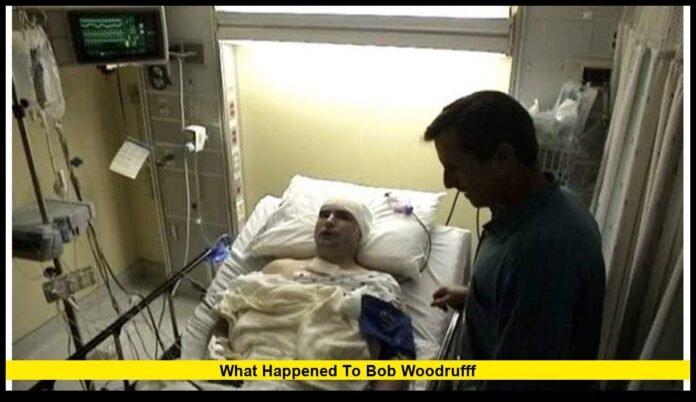

American television journalist Bob Woodruff experienced a life-threatening medical emergency while covering the Iraq War in 2006. A roadside bomb struck the military vehicle carrying him and his cameraman, causing devastating injuries that threatened his life and interrupted his broadcasting career. Nearly 21 years later, his journey remains closely associated with traumatic brain injury awareness, rehabilitation, and support for American veterans.
The question of what happened to bob woodruff continues attracting attention because his experience involved more than surviving a dangerous explosion. He spent 36 days unconscious, underwent extensive medical treatment, and faced significant challenges involving speech, memory, and cognitive abilities. His return to journalism became a remarkable milestone, while his family’s experience inspired a nonprofit organization dedicated to helping injured service members.
As of November 12, 2026, Woodruff remains an ABC News correspondent. He also continues his involvement with the Bob Woodruff Foundation, which has grown into a nationwide organization supporting veterans, military families, and caregivers. Recent developments include a major fundraising milestone and the expansion of its network of community organizations.
His experience offers an extraordinary look at the dangers of war reporting, the complexities of brain injury recovery, and the importance of long-term support for people affected by military conflicts.
Bob Woodruff’s Career Before the Iraq Bombing
Before becoming known for his recovery story, Woodruff had already established himself as an accomplished American journalist.
He joined ABC News in 1996 after beginning his professional career in law. He studied at Colgate University and earned a law degree from the University of Michigan Law School.
His transition into journalism began during his time teaching law in Beijing, China. In 1989, he witnessed the Tiananmen Square uprising and worked as a translator for CBS News during the demonstrations.
The experience introduced him to television reporting and encouraged him to pursue journalism as a full-time profession.
After joining ABC News, Woodruff covered important developments across the United States and internationally. His assignments included political stories, military conflicts, diplomatic developments, and major humanitarian events.
In December 2005, ABC News appointed him co-anchor of World News Tonight, succeeding Peter Jennings.
The position represented a major achievement in his broadcasting career. However, he had only recently taken on the responsibility when the Iraq attack changed everything.
January 29, 2006: The Roadside Explosion in Iraq
Woodruff was reporting alongside American and Iraqi security forces near Taji, approximately 12 miles north of Baghdad, when the explosion occurred.
He was traveling with ABC News cameraman Doug Vogt in a military vehicle as part of an assignment covering security operations.
An improvised explosive device detonated near their vehicle on January 29, 2006.
The explosion sent shrapnel and debris toward the journalists. Both Woodruff and Vogt suffered serious injuries, while an Iraqi soldier was also hurt.
The incident immediately required emergency medical attention.
Woodruff sustained severe injuries to his head and upper body. The damage to his skull and brain was particularly serious.
Military medical personnel provided initial treatment before arranging his transfer to Germany.
He subsequently received care in the United States at the National Naval Medical Center in Bethesda, Maryland.
For ABC News, the attack represented a devastating development. The network had recently placed Woodruff in one of its most prominent broadcasting positions.
For his family, however, the situation was much more personal. His wife and children suddenly faced the possibility that he might not survive.
The Extent of Bob Woodruff’s Brain and Skull Injuries
The roadside explosion caused a traumatic brain injury, commonly abbreviated as TBI.
This type of injury occurs when an external force damages the brain. Depending on its severity and location, it can affect movement, speech, memory, concentration, and behavior.
Woodruff suffered extensive damage to his skull and brain from the explosion.
His medical treatment required major surgery. Doctors removed part of his skull to help manage swelling and protect his brain.
The injury also created concerns about possible long-term complications.
His medical team needed to address the immediate physical damage while monitoring his neurological condition.
The consequences extended beyond his initial hospitalization.
After regaining consciousness, Woodruff faced difficulties with language and memory. These problems affected abilities that had previously been essential to his everyday life and professional responsibilities.
For a journalist, communication is particularly important. Interviewing people, understanding complicated information, and presenting reports require strong cognitive and language skills.
Woodruff had to work toward rebuilding these abilities through rehabilitation.
His experience also illustrated why traumatic brain injuries can remain challenging long after the initial emergency has passed.
Why Bob Woodruff Spent 36 Days in a Coma
One of the most difficult aspects of Woodruff’s medical emergency was his prolonged unconsciousness.
Following the explosion, he underwent several medical procedures and received intensive treatment.
Doctors faced serious concerns involving his brain injury and other complications.
He remained unconscious for approximately 36 days.
During this period, his family could not know exactly what his condition would mean for his future.
Doctors had to monitor his recovery while managing complications associated with the injury and treatment.
Accounts of the medical emergency describe several occasions when his life was in serious danger.
His family continued waiting for signs of improvement.
On March 6, 2006, Woodruff finally regained consciousness.
Although this was a major development, he still faced significant medical and rehabilitation challenges.
His ability to communicate was affected, and he struggled to retrieve familiar words.
He also experienced memory difficulties.
The recovery process required sustained medical attention, patience, and support from people around him.
How Lee Woodruff Supported Her Husband Through Recovery
Woodruff’s wife, Lee, played an essential role throughout the medical crisis.
When she learned about the explosion, she faced the possibility of losing her husband while also caring for their four children.
The family had to adjust to an entirely different reality.
Instead of planning ordinary family activities, Lee suddenly found herself dealing with hospital visits, medical updates, and uncertainty about Bob’s future.
She remained closely involved throughout his treatment and rehabilitation.
Her experience also highlighted the challenges spouses face when caring for someone with a serious brain injury.
Recovery can affect household responsibilities, family relationships, financial planning, and emotional well-being.
The Woodruffs later shared their experiences in the bestselling memoir In an Instant: A Family’s Journey of Love and Healing.
The book explores the explosion, medical emergency, and difficult process of rebuilding their family life.
It also demonstrates that a serious injury affects everyone close to the injured person.
Lee’s contribution extended beyond providing personal support. Together, the couple eventually used their experience to bring attention to the needs of injured military personnel and their families.
The Long Rehabilitation Process After Waking Up
Regaining consciousness was only one milestone in Woodruff’s recovery.
He needed to rebuild several important abilities affected by the traumatic brain injury.
One challenge involved aphasia, a condition that can interfere with speaking, understanding language, reading, and writing.
Woodruff experienced difficulties finding familiar words and expressing himself.
He also had to work on memory and concentration.
Rehabilitation involved different forms of treatment designed to help him regain functional abilities.
These included:
- Speech therapy: Improving communication and language skills.
- Cognitive rehabilitation: Working on memory, attention, and information processing.
- Physical rehabilitation: Addressing physical abilities affected by the injury.
- Medical monitoring: Managing complications and evaluating neurological progress.
- Family assistance: Providing support while he adjusted to changes in everyday life.
The process was gradual.
His recovery demonstrated that brain injuries do not necessarily follow a predictable timetable. Different abilities can improve at different speeds, and some difficulties may remain long after the initial treatment.
Woodruff’s determination and access to specialized medical care helped him make substantial progress.
Bob Woodruff’s Return to ABC News in 2007
In February 2007, Woodruff returned to television journalism.
His comeback came approximately 13 months after the roadside explosion.
He appeared in the ABC News special To Iraq and Back: Bob Woodruff Reports.
The program documented his personal recovery and explored the consequences of traumatic brain injuries among American service members.
It offered viewers an opportunity to understand the medical and emotional challenges associated with severe combat-related injuries.
The documentary also connected Woodruff’s experience with the difficulties faced by thousands of military personnel returning from Iraq and Afghanistan.
His return to broadcasting represented a significant professional achievement.
Before the explosion, he had spent years developing his journalism career. After the injury, he had to regain communication abilities that were central to his work.
His comeback demonstrated considerable progress, although it did not mean that every consequence of the brain injury had disappeared.
He continued working with ABC News and gradually rebuilt his professional responsibilities.
How the Attack Changed His Approach to Journalism
Woodruff’s experience gave him a personal understanding of the consequences of military conflict.
Before the bombing, he covered wars and international developments as a journalist.
After surviving the attack, he understood the medical and personal consequences of serious injuries from a different perspective.
His reporting continued to cover international events, but he also developed a stronger connection to stories involving military families, rehabilitation, and veterans’ needs.
He became particularly interested in the challenges people face after returning from dangerous assignments.
His professional work has included international reporting and documentary projects examining communities affected by environmental threats and humanitarian challenges.
ABC News continues to list him as a correspondent in its February 2026 official biography.
His journalism has received significant recognition, including 10 Emmy Awards, two George Foster Peabody Awards, and an Alfred I. duPont-Columbia University Award.
His career demonstrates that the Iraq attack interrupted his professional journey without ending it.
The Bob Woodruff Foundation: Turning a Personal Crisis Into a National Mission
One of the most lasting developments following Woodruff’s recovery was the creation of the Bob Woodruff Foundation.
Established in 2006, the nonprofit focuses on improving the lives of injured veterans, service members, and military families.
The idea developed after Woodruff and his family encountered the challenges facing military personnel who had sustained serious injuries.
Medical treatment could save lives, but many veterans still needed substantial assistance after leaving hospitals.
They faced difficulties finding employment, securing housing, accessing mental health services, and rebuilding family relationships.
The foundation was established to help address these needs.
Rather than concentrating on a single type of assistance, the organization supports programs addressing different aspects of veterans’ lives.
Its major areas of work include:
Employment and Career Opportunities
Returning to civilian employment can be difficult for veterans, particularly those dealing with injuries or long-term health challenges.
The foundation supports organizations that help military personnel develop professional skills and find meaningful work.
Mental Health Resources
Veterans and their families may need access to specialized mental health services.
The foundation helps support programs designed to improve access to these resources.
Housing and Financial Stability
Stable housing is essential for rebuilding life after military service.
The organization supports initiatives that help veterans and families address housing and financial difficulties.
Family and Caregiver Support
Spouses, children, and caregivers often carry substantial responsibilities when a military family member experiences a serious injury.
The foundation recognizes the importance of providing assistance to these individuals as well.
The Foundation’s Latest Developments in November 2026
The Bob Woodruff Foundation continues to expand its partnerships and programs.
Its third-quarter 2026 impact report highlighted the growth of its Got Your 6 Network.
The network reached 500 organizations and covered approximately 98% of communities where military families live.
Together, these partner organizations provided care and assistance to approximately 2.3 million people during the previous year.
The foundation also introduced an Innovation Lab to help organizations develop new solutions for challenges affecting veterans and military families.
Another focus involves addressing burnout among people working in organizations that support military communities.
The foundation also supported research examining the organizations serving veterans and identifying areas where additional resources may be necessary.
Its publicly reported impact figures show the scale of its work.
The organization reports approximately $228 million in funding for programs and services and more than 20 million veterans, service members, and family members reached through its work.
These developments demonstrate how an organization inspired by one journalist’s injury has developed into a substantial national support network.
Stand Up for Heroes Raises a Record $5.9 Million
Another major milestone arrived in November 2026.
The 20th annual Stand Up for Heroes event raised a record $5.9 million.
The event took place on November 9 at David Geffen Hall at Lincoln Center in New York City.
Presented by the Bob Woodruff Foundation and the New York Comedy Festival, the program brought together entertainers and supporters to recognize American veterans and military families.
The performers included:
- Bruce Springsteen
- Jon Stewart
- Hasan Minhaj
- Josh Johnson
- Alex Warren
- The Resilient
The event has developed into an important annual fundraising initiative.
Its history began in 2007 when New York Comedy Festival founders Caroline Hirsch and Andrew Fox partnered with Bob and Lee Woodruff to create an event honoring wounded and injured veterans.
The 2026 celebration marked 20 years of that partnership.
An additional major announcement involved philanthropist Craig Newmark.
He pledged another $28 million over five years, bringing his total contributions to the foundation to $100 million over the past decade.
The fundraising achievement represents an important development for the organization and its ability to continue supporting military communities.
What Is Bob Woodruff Doing in 2026?
Woodruff remains professionally active as an ABC News correspondent.
His work continues to involve international journalism, documentary storytelling, and public discussions about important global issues.
One of his notable recent public appearances occurred on October 6, 2026.
He delivered the Christiane Amanpour Lecture at the University of Rhode Island.
The event examined his journalism career, international experiences, and the personal challenges associated with recovering from his Iraq injury.
He also discussed his experiences as a reporter and offered perspectives to students interested in journalism.
His participation demonstrated his continued involvement in professional and educational discussions.
Alongside his broadcasting responsibilities, he remains connected to the Bob Woodruff Foundation.
His work with the organization reflects the importance he places on improving resources for injured service members and their families.
There is no confirmed indication in his latest official professional biography that he has left ABC News or ended his journalism career.
Instead, his current activities show continued involvement in broadcasting and veterans’ advocacy.
Did Bob Woodruff Completely Recover From His Injuries?
Woodruff made substantial progress after the explosion and returned to a demanding television career.
However, a return to professional work should not be confused with proof that every effect of a traumatic brain injury has disappeared.
His recovery involved serious challenges with communication, memory, and cognitive abilities.
Brain injuries can have lasting consequences, and the experience differs considerably between individuals.
Woodruff’s progress was particularly significant because his profession required strong communication and analytical skills.
His return to television showed that he had regained many important abilities.
However, the available information does not establish that every medical consequence of the attack was completely resolved.
His experience remains valuable because it demonstrates the importance of long-term rehabilitation and support.
Why His Experience Continues to Matter to American Veterans
Woodruff’s story has a broader significance beyond his personal recovery.
Thousands of American service members have experienced traumatic brain injuries and other serious combat-related conditions.
For many, leaving a hospital does not mean returning immediately to their former lives.
They may need continuing medical care, employment assistance, housing support, and help rebuilding family relationships.
The transition into civilian life can be especially difficult when injuries affect communication, concentration, or physical independence.
Woodruff’s foundation addresses several of these challenges through its partnerships with veteran-serving organizations.
Its growing network demonstrates the importance of connecting military families with practical resources in their communities.
His experience also reinforces the value of specialized medical care.
The treatment he received involved military and civilian medical professionals whose work helped him survive a devastating injury.
His recovery subsequently provided an opportunity to bring greater public attention to the needs of people living with brain injuries.
Frequently Asked Questions About Bob Woodruff
1. What happened to Bob Woodruff in Iraq?
Bob Woodruff was seriously injured on January 29, 2006, when an improvised explosive device struck his military vehicle near Taji, Iraq. The explosion caused a severe traumatic brain injury and extensive damage to his skull.
2. Is Bob Woodruff still alive in November 2026?
Yes. He remains alive and professionally active as an ABC News correspondent. He also continues participating in activities connected to the Bob Woodruff Foundation.
3. How many days was Bob Woodruff in a coma?
He remained unconscious for approximately 36 days following the roadside bomb attack. He regained consciousness on March 6, 2006.
4. Did Bob Woodruff return to ABC News?
Yes. He returned to television in February 2007 with the special To Iraq and Back: Bob Woodruff Reports.
5. Who is Bob Woodruff’s wife?
His wife is Lee Woodruff. They have four children and jointly wrote the memoir In an Instant: A Family’s Journey of Love and Healing.
6. What happened to Doug Vogt?
Doug Vogt, the cameraman traveling with Woodruff in Iraq, also sustained serious injuries during the January 2006 explosion.
7. What does the Bob Woodruff Foundation do?
The nonprofit supports veterans, injured service members, military families, and caregivers. Its programs address employment, housing, mental health, and other community needs.
8. How much did Stand Up for Heroes raise in 2026?
The 20th annual event raised a record $5.9 million to support American veterans, military families, service members, and caregivers.
9. Is Bob Woodruff still an ABC News correspondent?
Yes. His official ABC News biography, updated in February 2026, identifies him as a correspondent.
10. What is Bob Woodruff’s biggest contribution after his recovery?
Beyond returning to journalism, one of his most significant contributions has been helping establish the Bob Woodruff Foundation, which supports military communities nationwide.
Conclusion
Bob Woodruff’s life changed dramatically when a roadside bomb struck his vehicle in Iraq in January 2006. The explosion caused devastating brain and skull injuries, leaving him unconscious for 36 days and forcing him through a lengthy rehabilitation process. His return to ABC News in 2007 marked an extraordinary professional achievement. However, his influence extends beyond broadcasting. Through his foundation, he has helped build a nationwide support network for veterans and their families. His continued journalism work and the foundation’s record fundraising achievement in 2026 demonstrate that his commitment to helping others remains an important part of his life.
What stands out most about Bob Woodruff’s journey: his remarkable recovery, his return to journalism, or his continued dedication to American veterans? Share your thoughts in the comments.