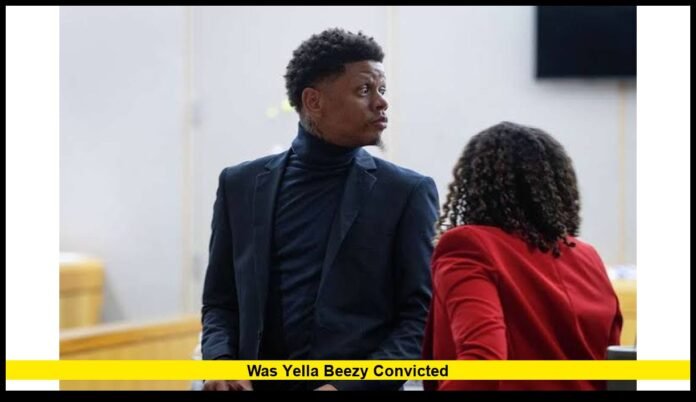

The question Was Yella Beezy convicted has a definitive answer following a major development in Dallas, Texas. Rapper Yella Beezy, whose legal name is Markies Conway, was found guilty of capital murder on November 11, 2026, in connection with the 2020 killing of fellow Dallas rapper MO3, born Melvin Noble. A Dallas County jury returned a unanimous guilty verdict, and the court sentenced Conway to life in prison without the possibility of parole.
The decision came after a closely watched trial that examined an alleged murder-for-hire arrangement, a yearslong conflict between two artists, witness testimony and evidence surrounding a fatal shooting on Interstate 35E. Prosecutors maintained that Conway arranged the attack by hiring Kewon White to kill Noble. Conway pleaded not guilty and denied responsibility for the crime.
The verdict arrived on the sixth anniversary of MO3’s death, adding another significant detail to a case that has remained in the public eye since 2020. White had already been convicted of capital murder for carrying out the shooting and received the same life-without-parole sentence in September 2026.
Although the jury has delivered its decision, Conway’s legal team has indicated that it intends to challenge the outcome through an appeal. Here is what happened during the case, why prosecutors pursued a capital murder charge, what the jury heard and what the conviction means for the rapper’s future.
Was Yella Beezy Convicted in the MO3 Murder Case?
Yes. Markies Conway, professionally known as Yella Beezy, was convicted of capital murder by a Dallas County jury on November 11, 2026.
The conviction concerns the death of Melvin Noble, better known as MO3, who was shot and killed in Dallas in November 2020. Prosecutors accused Conway of arranging the attack rather than personally firing the weapon.
The state argued that Conway hired Kewon White to carry out the killing as part of a murder-for-hire plan. Prosecutors connected the alleged arrangement to a prolonged disagreement between Conway and Noble.
Conway entered the trial with a not-guilty plea. His defense team challenged the prosecution’s explanation and argued that the evidence did not establish his involvement beyond a reasonable doubt.
Jurors considered the competing arguments before reaching a unanimous decision. The guilty verdict established Conway’s criminal responsibility under the charge presented at trial.
The court imposed life imprisonment without the possibility of parole. Consequently, the latest answer to whether Yella Beezy was convicted is not simply that he faced charges or stood trial. He was found guilty and received the sentence associated with the conviction.
Who Is Yella Beezy? A Look at Markies Conway’s Music Career
Before the criminal case became a major national story, Yella Beezy was known for his music and his place in the Dallas hip-hop scene.
Born Markies Conway, he developed his career through independent releases, local performances and music that attracted listeners beyond Texas. His work reflected the influence of Southern rap, combining melodic delivery, energetic production and lyrics associated with his experiences.
His breakthrough came with “That’s On Me,” a track released in 2017 that helped him reach a wider audience. The song became one of the most recognizable releases in his catalog and introduced his name to listeners who were not familiar with Dallas rap.
Conway subsequently increased his visibility through collaborations with established artists. His 2019 release “Bacc At It Again,” featuring Quavo and Gucci Mane, demonstrated his growing connections within the wider hip-hop industry.
His professional background included several notable milestones:
- 2017 breakthrough: “That’s On Me” helped establish his wider audience.
- National recognition: His music gained attention outside the Dallas area.
- Industry collaborations: He worked with established performers, including Quavo and Gucci Mane.
- Southern hip-hop presence: His recordings contributed to his recognition within the regional rap community.
The capital murder conviction has now become the most significant development associated with Conway’s public profile. His musical history remains separate from the criminal proceedings, but the verdict has substantially changed the conversation surrounding his career.
What Was Yella Beezy Accused of in MO3’s Death?
The prosecution’s case focused on an alleged agreement to have MO3 killed.
According to prosecutors, Conway and Noble had experienced an escalating dispute over several years. The state argued that the disagreement eventually developed into a murder-for-hire arrangement involving Kewon White.
Prosecutors alleged that Conway offered money to arrange the attack and that White became the person responsible for carrying it out.
The case was prosecuted as capital murder by remuneration, a specific category of capital murder under Texas law involving a killing committed for payment or the promise of payment.
The state sought to establish several elements through its presentation:
- A conflict existed between Conway and Noble.
- The killing involved an alleged financial arrangement.
- White carried out the fatal shooting.
- Conway was responsible for arranging the murder, according to the prosecution’s theory.
One of the most discussed details was the alleged $40,000 payment. Prosecutors claimed that this amount was connected to the arrangement for Noble’s killing.
The defense disputed the prosecution’s interpretation of the evidence. Conway maintained his not-guilty position, while his attorneys challenged the reliability of the state’s account.
The jury ultimately accepted the prosecution’s case and found Conway guilty.
The Alleged $40,000 Payment: A Central Issue in the Trial
Money became an important part of the prosecution’s explanation of how the alleged murder-for-hire arrangement worked.
Prosecutors claimed that Conway offered $40,000 to have Noble killed. They also presented evidence and witness testimony intended to connect the alleged payment to the people involved in the case.
The amount attracted attention because it helped explain why prosecutors pursued a remuneration-based capital murder charge instead of treating the case as an ordinary murder allegation.
However, the testimony surrounding the alleged payment was not without controversy.
One important witness was rapper Jose Bodega, whose legal name is Theodore Thomas. Prosecutors confronted him with earlier grand jury testimony in which he had reportedly connected Conway and another individual, TrapBoyFreddy, to the alleged $40,000 arrangement.
During the trial, Thomas disputed his earlier account and said that the statement was a lie. He explained that he had made the earlier claims while facing serious legal difficulties of his own.
The prosecution challenged this change in testimony and sought to establish why his earlier statements should be considered.
The defense, meanwhile, highlighted Thomas’s circumstances and questioned the credibility of his previous account.
This disagreement became one of the important evidentiary issues for jurors to evaluate. The prosecution’s case involved more than one allegation, and the jury had to consider the overall evidence rather than rely on a single statement.
What Happened to MO3 on November 11, 2020?
MO3, whose legal name was Melvin Noble, was a Dallas rapper who had developed a strong following through his music.
His career included songs that connected with Southern hip-hop audiences, and he became a recognizable name in the Dallas music community. His 2019 remix of “Errybody,” featuring Boosie Badazz, helped introduce his work to additional listeners.
On November 11, 2020, Noble was driving on Interstate 35E in south Dallas when a gunman attacked him.
According to the account presented during the criminal proceedings, the shooter approached Noble’s vehicle and opened fire. Noble attempted to escape by leaving his vehicle and running along the interstate, but the attacker continued shooting.
Authorities described an attack involving more than 40 rounds fired from an AK-47-style pistol. A person in another vehicle was also wounded but survived.
Noble sustained fatal injuries and died after being transported to a hospital. He was 28 years old.
The daylight shooting on a heavily traveled interstate shocked the local community and attracted national attention because of Noble’s growing music career.
Investigators subsequently worked to identify the shooter and determine whether other people had participated in planning or arranging the attack.
That investigation eventually led to separate criminal proceedings involving White, Conway and another defendant.
How Did the Investigation Connect Yella Beezy to the Case?
The investigation examined the circumstances surrounding the shooting, the relationships among individuals connected to the case and the possibility that the attack had been arranged before it happened.
Prosecutors developed a theory that the killing was connected to the dispute between Conway and Noble. They argued that White was not acting independently but had been hired to carry out the attack.
The prosecution also relied on witness accounts and other evidence to support its explanation of the alleged arrangement.
One aspect of the state’s argument involved Conway’s earlier experience with gun violence. In 2018, Conway had been shot multiple times during an incident on the Sam Rayburn Tollway in Lewisville.
Prosecutors referred to Conway’s comments about revenge and retaliation while presenting their theory of motive. They attempted to connect those remarks with the alleged conflict involving Noble.
However, the defense challenged the prosecution’s interpretation of Conway’s statements and the circumstances surrounding the case.
It is important to distinguish between the prosecution’s theory and the jury’s ultimate finding. Prosecutors presented the alleged motive and payment arrangement as evidence supporting the charge. The jury then determined that the evidence was sufficient to convict Conway.
Inside Yella Beezy’s 2026 Capital Murder Trial
Conway’s trial became a closely followed legal proceeding because it examined not only the shooting itself but also the alleged events that led to Noble’s death.
The proceedings lasted more than two weeks and included testimony from witnesses, investigators and individuals familiar with the circumstances surrounding the case.
Both sides presented substantially different explanations.
The prosecution attempted to demonstrate that Conway had organized the attack. The defense focused on weaknesses it identified in the state’s evidence, particularly the reliability of certain witnesses and the interpretation of statements made during the investigation.
Prosecutors Presented Evidence of a Planned Attack
The prosecution maintained that MO3’s death was the result of a deliberate plan rather than an isolated confrontation.
Prosecutors described an alleged relationship between Conway and White that resulted in the fatal shooting. They argued that the financial arrangement and the history of conflict helped establish the motive behind the attack.
The state also presented testimony intended to explain the events surrounding the November 2020 shooting.
A major objective was to demonstrate that Conway had a role beyond knowing the people involved. Prosecutors wanted jurors to conclude that he had arranged the killing.
Their presentation included witness testimony, investigative findings and discussions about the alleged payment.
Medical Witness Described the Shooting
Among the testimony that drew attention was that of a doctor who witnessed the shooting and attempted to help Noble.
The witness described the frightening circumstances surrounding the attack on Interstate 35E.
The testimony provided jurors with an account of the immediate aftermath and the efforts to assist the wounded rapper.
This part of the trial helped explain the seriousness of the shooting and the circumstances in which Noble sustained his fatal injuries.
The Defense Questioned Witness Credibility
The defense challenged several aspects of the prosecution’s presentation.
One of its important arguments concerned Theodore Thomas, also known as Jose Bodega. Thomas had previously provided statements connecting Conway to the alleged payment arrangement, but he disputed those earlier statements during the trial.
The defense used his changing account to raise questions about the reliability of the prosecution’s evidence.
Attorneys also examined his personal legal circumstances and the possibility that pressure from his own situation influenced what he had previously told investigators.
The prosecution, however, challenged his explanation for changing his story.
The disagreement created an important credibility issue for the jury. Jurors had to consider whether the earlier account, the later explanation or other evidence provided a more reliable understanding of the alleged arrangement.
The Defense Maintained That the State Had Not Proved Its Case
Conway pleaded not guilty throughout the proceedings.
His attorneys argued that the prosecution had not established his involvement beyond a reasonable doubt. They challenged the interpretation of witness testimony and questioned whether the evidence adequately supported the alleged murder-for-hire arrangement.
The defense also presented information concerning Conway’s professional activities around the relevant period.
A music marketing executive testified about a marketing plan that placed Conway in California around the time of the killing. This testimony formed part of the defense’s effort to challenge the prosecution’s account.
Despite the competing arguments, the jury returned a guilty verdict.
November 11, 2026: The Day the Jury Found Yella Beezy Guilty
The date of the verdict became one of the most notable details of the entire case.
On November 11, 2026, jurors announced that they had reached a decision after considering the evidence presented during the trial.
The unanimous verdict found Conway guilty of capital murder.
The announcement came exactly six years after Noble was killed on Interstate 35E.
The courtroom reacted emotionally as the decision was delivered. Reports described people leaving the courtroom and others visibly crying.
Conway was taken into custody following the verdict.
Judge Chikya Anyiam then imposed the life-without-parole sentence required under the applicable Texas capital murder sentencing framework.
The decision brought the trial to an end but left the possibility of further legal proceedings through the appellate system.
For people who had followed the case since 2020, the verdict marked a major turning point.
Why Did Yella Beezy Receive Life Without Parole?
The sentence resulted from the capital murder conviction.
Texas law treats certain forms of murder as capital murder when specific aggravating circumstances exist. One category involves a killing committed for remuneration or the promise of remuneration.
The prosecution pursued this theory because it alleged that Conway arranged Noble’s killing in exchange for payment.
Under the applicable sentencing rules, the conviction resulted in life imprisonment without the possibility of parole.
This is different from an ordinary life sentence in which a person may become eligible for parole after meeting specific legal requirements.
Life without parole means that Conway does not have an ordinary opportunity to seek release through the parole system.
The sentence also reflects the seriousness of the offense established by the jury’s verdict.
Does Life Without Parole Mean He Can Never Challenge the Conviction?
No. A life-without-parole sentence does not eliminate a person’s legal right to challenge a conviction.
Conway’s defense attorney, Toby Shook, expressed disappointment with the verdict and indicated that the legal team intended to continue fighting the case.
An appeal may examine whether significant legal errors occurred during the proceedings or whether other recognized grounds exist to challenge the judgment.
However, filing an appeal does not automatically result in release.
The conviction remains in effect unless a court grants appropriate legal relief.
What Happened to Kewon White in the MO3 Murder Case?
Kewon White was separately prosecuted for the shooting that killed MO3.
Authorities identified White as the gunman who carried out the attack on Interstate 35E.
His trial took place before Conway’s November proceedings. In September 2026, a jury found White guilty of capital murder.
White also received life imprisonment without the possibility of parole.
The two convictions are connected to the same killing, but the prosecution presented different alleged roles for the defendants.
White was identified as the individual who physically shot Noble. Conway was accused of arranging the attack through a murder-for-hire agreement.
The separate convictions represent two major developments in the criminal proceedings surrounding MO3’s death.
They also explain why the case continued to attract attention even after White’s trial concluded.
Who Is Devin Brown, and What Is His Connection to the Case?
Devin Brown is another defendant connected to the investigation into MO3’s death.
He was charged with capital murder in connection with the alleged arrangement involving the killing.
Prosecutors included Brown in their account of the alleged plot, while the legal proceedings against the other defendants moved forward separately.
However, a criminal charge is not the same as a conviction.
As of the latest available reporting on November 12, 2026, Brown’s case remained separate from the completed trials involving White and Conway.
There had been no confirmed guilty verdict against Brown in the information available at that time.
His legal position should therefore not be confused with the convictions already secured against the other two defendants.
How Has the Conviction Changed Yella Beezy’s Public Image?
Yella Beezy built his reputation through music, performances and his association with Dallas hip-hop.
His breakthrough helped establish him as an artist with an audience beyond his hometown. His collaborations also gave him opportunities to reach listeners across different parts of the United States.
The capital murder conviction has changed the way many people discuss his name.
For music fans, the case raises questions about the relationship between an artist’s professional career and serious criminal allegations. It has also brought renewed attention to the history of conflict between artists in the Dallas music scene.
However, the legal proceedings should remain separate from assumptions about the wider hip-hop industry.
A criminal conviction establishes the responsibility of the person found guilty in that particular case. It does not establish that every disagreement within the music community involves violence or criminal conduct.
Conway’s recordings and previous achievements remain part of his musical history. His conviction and prison sentence, meanwhile, represent his current legal circumstances.
Will Yella Beezy’s Music Career Continue After the Verdict?
The future of Conway’s music career remains uncertain.
His life-without-parole sentence creates a substantial obstacle to the possibility of returning to the professional music industry in the conventional way.
Nevertheless, previously released recordings may remain available through streaming services and other music platforms, depending on distribution agreements and decisions made by the relevant rights holders.
A prison sentence does not automatically remove an artist’s existing catalog from digital services.
There is also an important distinction between previously recorded material and new music. No confirmed announcement establishes a specific schedule for future releases or new professional projects.
For now, the criminal proceedings and the planned appeal are the most significant developments concerning Conway.
What Happens Next in the Yella Beezy Case?
The next major development may come through the appellate process.
Conway’s defense has indicated that it plans to challenge the verdict. His attorney has expressed confidence that there are issues the legal team can raise before a higher court.
The appeal process may examine different aspects of the trial, including legal decisions, evidentiary questions and procedural matters.
However, an appellate court does not simply repeat the original trial. Its role is to review the legal issues presented under the applicable standards.
Several possible outcomes exist:
- The conviction remains in place: The appellate court may find no reversible legal error.
- A new trial is ordered: The court may determine that a significant error requires another proceeding.
- Other legal relief is granted: The court may provide another remedy permitted by law.
There is currently no confirmed decision overturning Conway’s conviction.
The separate case involving Devin Brown is another development to watch because it concerns the same broader investigation.
For readers following the story, it is important to distinguish confirmed court decisions from statements about what attorneys intend to do next.
Key Facts About the Yella Beezy Conviction
The most important details surrounding the case can be summarized as follows:
| Category | Information |
|---|---|
| Rapper’s name | Yella Beezy |
| Legal name | Markies Conway |
| Age reported during trial | 35 |
| Victim | Melvin Noble, known as MO3 |
| Shooting date | November 11, 2020 |
| Shooting location | Interstate 35E, Dallas |
| Verdict date | November 11, 2026 |
| Court | Dallas County |
| Judge | Chikya Anyiam |
| Conviction | Capital murder |
| Alleged arrangement | Murder-for-hire |
| Alleged payment | $40,000 |
| Identified gunman | Kewon White |
| Sentence | Life without parole |
| Defense attorney | Toby Shook |
| Next legal development | Planned appeal |
These details help clarify the distinction between the original shooting, the prosecution’s allegations, the jury’s decision and the legal steps that may follow.
Final Thoughts
The answer to Was Yella Beezy convicted is yes. Markies Conway, known professionally as Yella Beezy, was found guilty of capital murder on November 11, 2026, for his alleged role in arranging the killing of Dallas rapper MO3.
The unanimous decision followed a trial lasting more than two weeks. Prosecutors argued that Conway hired Kewon White to carry out the shooting following a prolonged conflict between the two artists. Conway pleaded not guilty, and his defense challenged the reliability and interpretation of the evidence.
The court sentenced Conway to life in prison without the possibility of parole. White had previously received the same sentence after his separate capital murder conviction.
The defense intends to continue challenging the outcome through the appellate process, but no reversal has been confirmed. Meanwhile, the separate proceedings involving Devin Brown remain an additional part of the broader case.
The verdict marks a significant development in a criminal investigation that began with MO3’s fatal shooting six years earlier. Further legal developments may follow as the appellate process moves forward.
Frequently Asked Questions
Q1. Was Yella Beezy convicted of killing MO3?
Yes. A Dallas County jury found Yella Beezy, whose legal name is Markies Conway, guilty of capital murder in connection with MO3’s death on November 11, 2026.
Q2. What sentence did Yella Beezy receive?
He received life imprisonment without the possibility of parole following his capital murder conviction.
Q3. When was Yella Beezy found guilty?
The jury delivered its unanimous guilty verdict on November 11, 2026. The date marked six years since MO3 was killed.
Q4. What is Yella Beezy’s real name?
His legal name is Markies Conway. He performs professionally under the name Yella Beezy.
Q5. What was Yella Beezy accused of doing to MO3?
Prosecutors alleged that Conway arranged a murder-for-hire scheme and paid Kewon White to kill MO3. The jury found Conway guilty of capital murder.
What do you think about the verdict in the Yella Beezy case? Share your thoughts in the comments and follow the latest updates as the legal proceedings continue.