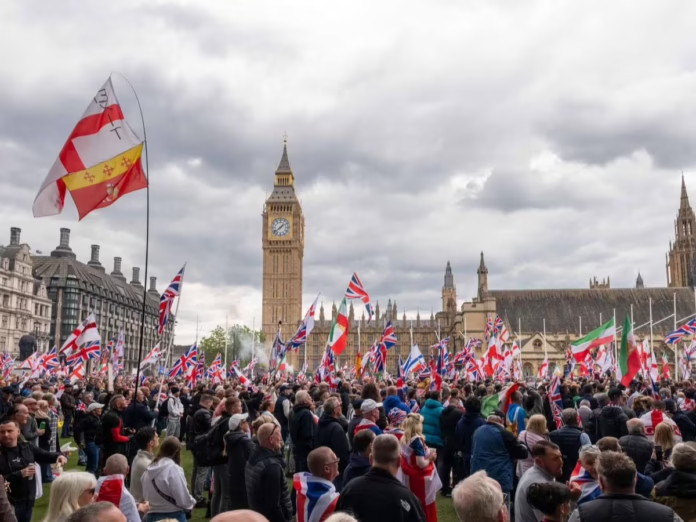

London witnessed one of the most politically charged weekends in recent memory as the Unite the Kingdom rally brought tens of thousands of demonstrators into the heart of the capital, intensifying an already heated national debate over immigration, identity, policing, and the future direction of British politics.
The demonstration, led by controversial activist Tommy Robinson, transformed central London into a focal point for competing ideologies, with rival protest groups, heavy police deployment, and growing concerns over political extremism dominating public attention throughout the day.
What began as a nationalist gathering quickly evolved into a wider symbol of the divisions shaping modern Britain.
Huge Crowds Gather in Central London
Large crowds began arriving in London early in the morning, with supporters traveling from cities and towns across England, Scotland, and Wales. Protesters carrying Union Jack flags marched through key government districts while chanting slogans focused on border security, national sovereignty, and frustration with mainstream political institutions.
By midday, major roads surrounding Whitehall and Parliament Square were filled with demonstrators, creating one of the largest right-wing political gatherings seen in the UK in recent years.
Organizers described the rally as a patriotic movement designed to “protect British values,” while critics characterized it as an event fueled by anti-immigration anger and populist rhetoric.
Police barriers, surveillance cameras, mounted officers, and public order teams were visible across the capital as authorities attempted to maintain control over the rapidly growing crowds.
Tommy Robinson Returns to the Political Spotlight
Tommy Robinson, whose public profile has remained deeply divisive for more than a decade, used the event to re-establish himself as a central figure within Britain’s anti-establishment activist scene.
Speaking to supporters during the demonstration, Robinson delivered a fiery speech focused on immigration policy, free speech, crime, and public dissatisfaction with Westminster politics. He argued that ordinary citizens no longer felt represented by the country’s political leadership and claimed that concerns surrounding border control and cultural identity were being ignored.
Supporters repeatedly cheered references to “taking the country back” and protecting British traditions.
The rally also highlighted Robinson’s continuing ability to mobilize large audiences despite years of controversy, legal disputes, and criticism from anti-racism organizations.
Political observers noted that the scale of attendance demonstrated how nationalist messaging continues to resonate with a segment of the British population frustrated by economic pressures, social change, and distrust of government institutions.
Police Launch Major Security Operation
The Metropolitan Police carried out a massive security operation throughout the day as authorities prepared for possible confrontations between rival groups.
Thousands of officers were stationed across central London, with additional support units brought in to handle crowd management, traffic control, and public safety concerns. Drones monitored gathering points from above while officers established designated protest zones to reduce the risk of direct clashes.
Law enforcement officials faced an especially difficult challenge because multiple large-scale demonstrations were taking place across the city at the same time.
Counter-protest groups gathered nearby to oppose the nationalist rally, accusing participants of promoting racism and division. Separate demonstrations connected to international political issues also added to the strain on police resources.
Authorities later confirmed several arrests linked to public order incidents, though officials said the overall operation prevented major violence from erupting in central areas.
Despite tense moments throughout the day, police largely succeeded in keeping rival factions apart.
Growing Political Polarization in Britain
The events in London reflected a wider political shift that has become increasingly visible across Britain in recent years.
Public frustration over rising living costs, immigration pressures, housing shortages, and strained public services has contributed to growing distrust toward traditional political parties. That frustration has created space for more populist movements and outsider figures to gain traction both online and in public demonstrations.
Analysts say the rally represented more than a single protest movement.
Instead, it highlighted deeper anxieties surrounding national identity, globalization, and cultural change that continue to shape political debate throughout the country.
For some supporters, the demonstration was seen as an expression of patriotism and concern over border policy.
For opponents, it represented a dangerous escalation of far-right activism capable of increasing social tensions and hostility toward minority communities.
The sharp divide in public reaction illustrated how emotionally charged these issues have become across Britain.
Government Faces Pressure From All Sides
The demonstration placed renewed pressure on the government as ministers faced criticism from multiple directions.
Some politicians condemned the rhetoric heard during the rally and warned against language they believe contributes to extremism and intolerance. Others argued that dismissing protesters outright risks ignoring genuine public concerns about immigration, security, and economic instability.
The situation has exposed a difficult balancing act for political leaders attempting to address rising public frustration while also preventing the spread of extremist narratives.
Immigration policy has become one of the most sensitive issues in British politics, particularly following years of record migration numbers and ongoing debates surrounding asylum seekers crossing the English Channel.
Several recent polls suggest that border security remains a top concern among voters, particularly outside major metropolitan areas.
That political environment has allowed activist groups and independent campaign movements to attract larger audiences than many analysts expected.
Counter-Protesters Challenge Nationalist Messaging
Anti-racism organizations, community activists, and left-wing groups organized separate demonstrations to oppose the London rally.
Counter-protesters accused nationalist speakers of promoting fear and division while warning about the long-term consequences of extremist political movements gaining visibility.
Some groups carried banners promoting multiculturalism and solidarity, while others criticized what they described as inflammatory language targeting immigrants and religious minorities.
The atmosphere remained tense throughout the afternoon as rival chants echoed through nearby streets separated by police lines.
Community leaders later urged calm and encouraged politicians to avoid language that could deepen divisions within society.
Several faith organizations also released statements calling for unity and warning against rising hostility between different communities.
Social Media Amplifies the Demonstration
The rally quickly dominated online discussion across Britain, with videos, livestreams, and clips from speeches spreading rapidly across social media platforms.
Supporters shared footage showing large crowds waving British flags and chanting patriotic slogans, presenting the event as evidence of growing dissatisfaction with the political establishment.
Critics circulated separate clips highlighting controversial comments and confrontations near protest zones.
The online response demonstrated how political movements increasingly rely on social media visibility to expand influence and mobilize supporters.
Digital platforms have become central to modern activism, allowing political figures to bypass traditional media outlets and communicate directly with audiences.
Analysts believe this online ecosystem has played a significant role in the rapid growth of highly emotional political movements across Europe and North America.
Far-Right Concerns Continue to Rise
Security experts and civil rights organizations have repeatedly expressed concern over the rise of nationalist activism and anti-immigration rhetoric across parts of Europe.
Britain has experienced periodic spikes in political tension linked to debates over migration, identity, and economic insecurity.
Some experts warn that increasingly confrontational demonstrations could fuel further polarization if political leaders fail to address underlying frustrations within communities.
At the same time, others argue that suppressing controversial political expression risks strengthening anti-establishment narratives among supporters who already distrust mainstream institutions.
This tension between public safety, free speech, and democratic protest remains one of the biggest challenges facing authorities across Western democracies.
The London demonstration placed those competing concerns directly into the national spotlight.
Economic Anxiety Adds to Public Frustration
Beyond immigration and cultural debates, economic pressures continue to influence political anger throughout Britain.
Many households are still struggling with inflation, housing affordability problems, energy costs, and pressure on public services. In several regions, frustration over declining local economies has contributed to rising support for outsider political movements promising dramatic change.
Political strategists believe these economic anxieties create fertile ground for emotionally driven campaigns centered on national identity and institutional distrust.
That broader backdrop helps explain why demonstrations tied to populist themes continue drawing large crowds.
The combination of economic insecurity and cultural tension has become one of the defining political realities shaping Britain’s current climate.
What Happens Next
The aftermath of the London rally is likely to continue influencing political discussion in the weeks ahead.
Government officials are expected to face renewed questions over immigration policy, protest regulation, and the handling of extremist rhetoric. Meanwhile, activists on both sides of the political divide are already signaling plans for future demonstrations.
Observers believe the event could mark an important moment in the evolution of Britain’s populist political movements, particularly as parties prepare for future election battles.
Whether the rally ultimately strengthens nationalist activism or triggers stronger political opposition remains unclear.
What is certain is that the scenes witnessed in London revealed a country wrestling with profound disagreements over identity, leadership, and the direction of modern Britain.
The political tensions exposed during the weekend are unlikely to disappear anytime soon.