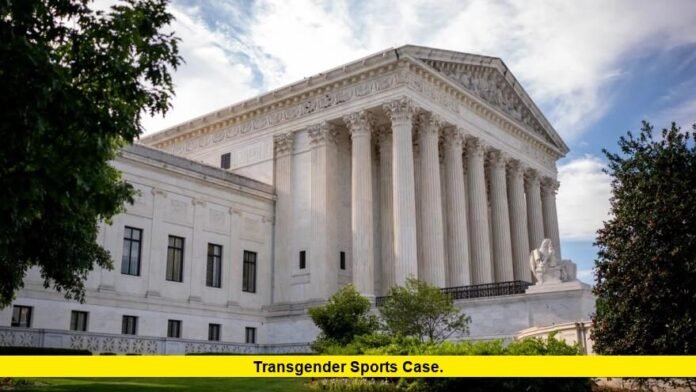

The Transgender Sports Case has dominated national headlines this week after the U.S. Supreme Court issued a landmark ruling that reshapes the future of school athletics across the country. On June 30, 2026, the nation’s highest court delivered a decisive 6-3 opinion allowing states to bar transgender girls and women from competing on girls’ and women’s sports teams at publicly funded schools. The decision closes out one of the most closely watched legal battles of the court’s term and resolves years of conflicting lower court rulings that had left schools, athletes, and families in limbo.
The ruling arrives at a moment when transgender athletic participation has become one of the most contentious issues in American politics, sports, and education policy. With more than half the country already enforcing some version of a transgender sports restriction, the Supreme Court’s decision effectively validates that trend and clears the way for additional states to follow suit. Below is a full breakdown of what happened, who was involved, and what it means going forward.
Background of the Transgender Sports Case
The Transgender Sports Case actually combined two separate lawsuits that had been working their way through the federal court system for years: West Virginia v. B.P.J. and Little v. Hecox. Both cases asked the same fundamental legal question — does barring transgender athletes from girls’ and women’s sports teams violate Title IX or the Constitution’s Equal Protection Clause?
Title IX is the landmark 1972 civil rights law that prohibits sex-based discrimination in any education program receiving federal funding. Over the decades, it has been credited with transforming opportunities for women and girls in school athletics, from equal facilities to proportional scholarship funding. The central dispute in this case was whether excluding transgender girls from girls’ teams counts as discrimination “on the basis of sex” under that same law, or whether states have the authority to define sports eligibility according to biological sex.
The West Virginia case was brought by Becky Pepper-Jackson, a transgender teenager who has identified as a girl since the third grade and who competes in shot put and discus on her high school’s girls’ track team. She is believed to be the only openly transgender athlete competing in school sports anywhere in West Virginia. A federal district court initially upheld the state’s ban in 2023, but a federal appeals court reversed that decision in 2024, ruling that the law unlawfully discriminated against her based on sex.
The Idaho case centered on Lindsay Hecox, a transgender student who sought to try out for the women’s track and cross-country teams at Boise State University. Idaho had been the first state in the nation to pass a law banning transgender athletes from women’s and girls’ sports. Hecox challenged the law as unconstitutional, and a federal appeals court agreed in 2024, finding the ban likely violated equal protection guarantees.
The Supreme Court’s Ruling
On June 30, 2026, the Supreme Court reversed both lower court decisions in a 6-3 opinion authored by Justice Brett Kavanaugh, a jurist known for having long coached his own daughters’ school basketball teams. The majority held that states may lawfully restrict girls’ and women’s sports teams to biological females without violating either Title IX or the Constitution’s Equal Protection Clause.
Kavanaugh’s 29-page opinion emphasized that sports, by their nature, are highly competitive and largely zero-sum, meaning that expanding eligibility for one athlete inevitably affects the opportunities available to others. He wrote that separating teams by biological sex is a reasonable approach given inherent physical differences between males and females, arguing the distinction serves legitimate interests in both athletic safety and competitive fairness. Importantly, the court found that these interests were substantial enough to satisfy the heightened scrutiny standard applied in sex-based equal protection cases.
The court also rejected arguments that a 2020 Supreme Court ruling on workplace discrimination under Title VII should extend to this case. Kavanaugh distinguished the two, noting that employment law and school athletics operate in fundamentally different contexts, and that the earlier ruling was therefore not directly relevant here.
Notably, the ruling on Title IX was unanimous — even the court’s three liberal justices agreed that the state bans do not violate that specific statute. Where the justices split was over the constitutional question. Justice Sonia Sotomayor, joined by Justices Elena Kagan and Ketanji Brown Jackson, dissented on the equal protection issue, arguing that the court moved too quickly on a legally and socially complex question without allowing sufficient lower court development of the factual record. Sotomayor wrote that the case touched on “deeply sensitive, contentious and evolving issues” that called for judicial restraint rather than a sweeping nationwide resolution.
Public and Political Reaction
The Transgender Sports Case ruling triggered an immediate wave of reaction from lawmakers, advocacy groups, and the public. Supporters of the decision, including many Republican officials, hailed it as a victory for fairness in women’s athletics. President Donald Trump celebrated the outcome on social media, framing it as a decisive resolution to a debate that had featured prominently in national political campaigns in recent years.
Civil rights organizations and transgender advocacy groups condemned the decision as a significant setback. Joshua Block, an attorney with the American Civil Liberties Union representing Pepper-Jackson, described the ruling as devastating for transgender girls seeking the same opportunities afforded to their peers. Advocacy groups noted that the decision continues a pattern in which the current Supreme Court has consistently ruled against transgender rights in nearly every case involving the issue that has reached its docket, including last year’s decision upholding a Tennessee law restricting gender-affirming medical care for minors.
Public opinion polling has shown broad support for restricting transgender participation in girls’ sports, with earlier national surveys indicating that a clear majority of Americans favor limiting girls’ and women’s teams to those assigned female at birth. That sentiment has been reflected in state legislatures, where more than half the country has already enacted similar restrictions in recent years, according to tracking by legal researchers and advocacy organizations.
What the Ruling Means Going Forward
While the Supreme Court’s decision resolves the core legal question at the heart of the West Virginia and Idaho cases, legal analysts note that it leaves several related issues unresolved. It remains unclear how the ruling will apply to elementary school sports, where boys and girls often already compete on the same teams, or to club and recreational leagues that operate outside official school athletic programs. Those questions are likely to generate further litigation in the years ahead.
Legal experts have also pointed out that the ruling could have implications beyond athletics. Because the court applied heightened scrutiny to the sex-based classification and found it satisfied by the state’s stated interests, some analysts believe the decision may influence how future cases involving transgender rights — from restroom access to broader public accommodations — are evaluated by courts going forward. Others caution that the ruling was narrowly focused on athletics and should not be read as a blanket precedent for every transgender rights dispute.
For now, the decision immediately reinstates the West Virginia and Idaho laws and is expected to strengthen the legal footing of similar transgender sports restrictions already in place in roughly half the states. School districts, athletic associations, and state lawmakers in jurisdictions without existing bans may also feel renewed pressure to consider similar legislation in light of the ruling.
Final Thoughts
The Transgender Sports Case marks one of the most consequential Supreme Court decisions of the year, closing the door on a legal question that had divided federal courts for years while opening new uncertainty about how far its reasoning will extend. For transgender student-athletes like Becky Pepper-Jackson and Lindsay Hecox, the ruling brings a personal and public end to years of litigation, even as the broader cultural and legal debate over transgender rights in America continues. As states, schools, and advocacy groups adjust to the new legal landscape, the Transgender Sports Case is likely to remain a reference point in future battles over gender, athletics, and civil rights law.
Stay tuned for continuing coverage and share your thoughts on this landmark ruling in the comments below.