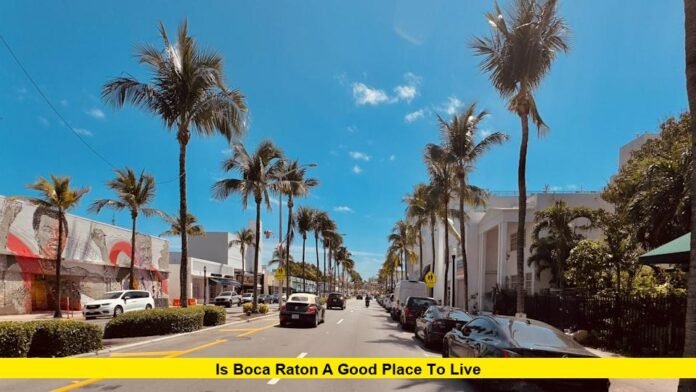

Is Boca Raton a good place to live? For a growing number of families, professionals, and retirees, the answer is a resounding yes, and the city’s appeal recently made headlines when “Dancing With the Stars” alums Maksim Chmerkovskiy and Peta Murgatroyd relocated there with their three sons after years in Los Angeles. Their move has put a fresh spotlight on this South Florida city, prompting many to ask what makes Boca Raton such a sought-after destination. From its beaches and top-rated schools to its low violent crime rate and lack of state income tax, Boca Raton has built a reputation as one of Florida’s most desirable places to settle down.
Where Is Boca Raton and What Makes It Unique
Boca Raton sits at the southern edge of Palm Beach County in South Florida, positioned between Fort Lauderdale and West Palm Beach. The city is home to roughly 98,000 to 107,000 residents, depending on the data source and city limits used, giving it that sweet spot between suburban calm and coastal energy. Locals often divide the city into three main sections: East Boca, which offers walkable streets, oceanfront living, and high-rise condos near downtown; Central Boca, known for tree-lined neighborhoods and established communities; and West Boca, which features golf course communities and family-friendly suburban developments.
The city benefits from an ideal location for travel and connectivity. Residents can choose between multiple nearby airports, including Fort Lauderdale-Hollywood International, and the Brightline high-speed rail station in downtown Boca connects directly to Miami, Fort Lauderdale, and West Palm Beach, cutting down on the need to sit in I-95 traffic for regional trips. Orlando’s theme parks are roughly three hours away, while the Florida Keys and Naples are both within a two-hour drive, making Boca Raton a convenient home base for exploring the entire state.
Why Celebrities Like Maksim Chmerkovskiy and Peta Murgatroyd Are Choosing Boca Raton
The recent move by Maksim Chmerkovskiy and Peta Murgatroyd has added a new layer of visibility to Boca Raton’s appeal. The married couple, who met and rose to fame as professional dancers on “Dancing With the Stars,” spent 16 years building their lives in Los Angeles before deciding to relocate to Boca Raton with their three sons, Shai, Rio, and Milan. The couple documented the emotional transition in a YouTube vlog and on social media, describing tears and mixed feelings as they said goodbye to the city that shaped much of their careers.
Despite the difficulty of leaving a familiar home behind, Murgatroyd and Chmerkovskiy have been open about why they made the change. They cited a desire for a slower pace of life, warmer year-round weather, more outdoor space, and an environment better suited to raising young children. In her social media posts, Murgatroyd described the move as “the best decision” for their family, noting that their boys were adjusting happily to their new surroundings. The family’s Los Angeles home in Valley Village has since been listed for rent rather than sold, suggesting they wanted to keep a foothold in California while fully committing to their new chapter in Florida.
Their story reflects a broader pattern seen across South Florida in recent years, where families and professionals from higher-cost, higher-tax states have relocated in search of better weather, more space, and a different lifestyle. Boca Raton, with its blend of beach access, good schools, and suburban comfort, has become one of the primary beneficiaries of that trend.
Cost of Living in Boca Raton
One of the first questions anyone asks when considering a move is whether they can afford it, and Boca Raton is not a cheap city. Various cost of living indexes place Boca Raton somewhere between 14 percent and 28 percent above the national average, with estimates varying depending on the methodology used. Housing is the biggest driver of that premium. The median home value in Boca Raton has been reported anywhere from roughly $480,000 to over $700,000 depending on the specific area and data source, compared to a national median in the $360,000 to $404,000 range.
Renters should also expect to pay a premium, with median rents commonly cited in the $1,800 to $3,000 range depending on unit size and neighborhood. Property taxes in Boca Raton run slightly above the national median, and homeowners insurance tends to be notably higher than the U.S. average due to the region’s hurricane exposure, with annual premiums often falling between $3,000 and $6,000. Groceries, healthcare, and everyday services also tend to cost somewhat more than the national baseline, though some studies have found Boca Raton to be relatively affordable compared to other cities within Florida itself.
The good news for anyone weighing the cost of living in Boca Raton is that Florida has no state income tax. That single factor can offset a meaningful portion of the higher housing and insurance costs, particularly for households relocating from high-tax states like California, New York, or New Jersey. Median household income in Boca Raton also runs well above the national average, which helps many residents absorb the higher cost of living more comfortably than the raw numbers might suggest.
Safety and Crime Rates
Safety is consistently one of the top factors people weigh when deciding where to live, and Boca Raton generally performs well on this front. Multiple crime data sources report that violent crime in Boca Raton runs well below the national average, with some estimates placing it as much as 40 to 48 percent lower than the U.S. rate. Property crime figures are closer to the national average, driven primarily by larceny-theft rather than more serious offenses.
Overall, Boca Raton is regarded as one of the safer mid-sized cities in South Florida, and that reputation for safety is frequently cited by residents and real estate professionals as a major reason families choose to settle there. As with any city, safety can vary somewhat by neighborhood, so prospective residents are encouraged to research specific areas before purchasing or renting a home.
Schools and Education
Boca Raton’s public schools are consistently rated highly, which is a significant draw for families with children, much like the Chmerkovskiy-Murgatroyd family. The city falls within the Palm Beach County School District, and many of its elementary, middle, and high schools receive strong ratings from independent education review platforms. In addition to public options, Boca Raton is home to a range of private schools and is close to respected universities, including Florida Atlantic University, which has its main campus in the city.
For families relocating with young children, the combination of highly rated public schools and numerous private and parochial alternatives gives parents flexibility in choosing an educational path that fits their needs.
Lifestyle, Climate, and Things to Do
Boca Raton’s climate is one of its biggest selling points. The city enjoys a warm, sunny climate for most of the year, with mild winters and hot, humid summers typical of South Florida. Outdoor lifestyle amenities are abundant, including:
- Miles of public beaches with public and residents-only access points
- The Boca Raton Museum of Art and a walkable downtown district known as Mizner Park
- Extensive parks, bike paths, and green spaces throughout East, Central, and West Boca
- Golf courses and country clubs concentrated in the western part of the city
- A wide range of dining options, from casual beachside restaurants to upscale dining
The average commute time in Boca Raton is under 19 minutes, which is shorter than the national average, though residents note that I-95 traffic can add significant time to trips toward Fort Lauderdale or Miami during peak hours. For day trips and weekend getaways, the city’s central location within South Florida means beaches, theme parks, and the Florida Keys are all within a few hours’ drive.
Who Boca Raton Is Best Suited For
Boca Raton tends to appeal most strongly to a few specific groups. Families with children are drawn to the highly rated schools, family-friendly parks, and relatively low violent crime rate. Retirees are attracted to the warm climate, golf communities, and quality healthcare facilities, including Boca Raton Regional Hospital. Young professionals and remote workers benefit from the short commute times, walkable downtown areas, and proximity to major business hubs in Fort Lauderdale and Miami via the Brightline rail line.
The trade-off for all of these advantages is cost. Housing prices, insurance premiums, and everyday expenses run noticeably higher than the national average, so Boca Raton is generally best suited for households with above-average incomes or those relocating from even more expensive markets, such as Los Angeles or New York.
Final Thoughts
So, is Boca Raton a good place to live? For most people who can comfortably manage the higher cost of living, the answer is yes. The city offers a compelling combination of beach access, top-rated schools, relatively low violent crime, a favorable tax environment thanks to Florida’s lack of state income tax, and a lifestyle that balances suburban comfort with coastal charm. It is not the most affordable city in Florida, and prospective residents should budget carefully for housing and insurance costs, but the trade-off in quality of life is a major reason families like Maksim Chmerkovskiy and Peta Murgatroyd’s have chosen to call it home. As more people continue relocating to South Florida in search of sunshine, space, and a slower pace of life, Boca Raton is likely to remain one of the region’s most in-demand cities for years to come.
Have thoughts on Boca Raton or your own experience living there? Share your comments below and stay tuned for more updates on this growing South Florida hotspot.