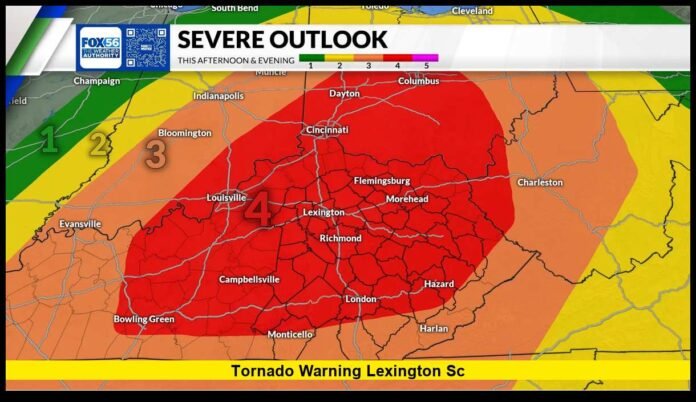

Tornado warning Lexington SC became a major weather alert for residents on March 12, 2026, as strong thunderstorms moved through central South Carolina and prompted emergency warnings across Lexington County and nearby communities. Meteorologists issued the alert after weather radar detected rotating storm activity capable of producing a tornado. Residents in Lexington, West Columbia, and surrounding parts of the Midlands received emergency notifications urging them to seek immediate shelter while the storms moved through the area.
Severe weather systems across the Southeast created unstable atmospheric conditions that allowed thunderstorms to intensify quickly. Emergency officials encouraged residents to remain indoors and closely monitor weather updates as the situation developed.
Severe Storm System Moves Into Lexington County
Storm activity began building earlier in the day across South Carolina as a strong weather system traveled through the region. Warm, humid air near the surface combined with powerful winds higher in the atmosphere.
This combination created an environment favorable for severe thunderstorms.
Meteorologists monitoring radar noticed storms strengthening west of Lexington County before they moved toward the Columbia metropolitan area. As these storms intensified, radar detected rotation within one of the storm cells.
That rotation prompted forecasters to issue a tornado warning covering portions of Lexington County and surrounding communities.
Residents quickly received emergency alerts on mobile devices and weather notification systems.
Communities Affected by the Tornado Warning
The tornado warning covered several populated areas across Lexington County and parts of the Midlands region.
Communities impacted by the warning included:
- Lexington
- West Columbia
- Cayce
- Red Bank
- Oak Grove
- Seven Oaks
- Irmo
- Portions of Richland County near Columbia
These communities lie within the central South Carolina Midlands, an area where severe storms often develop during active weather periods.
Local authorities reminded residents that storm conditions can change quickly, especially when rotating thunderstorms move through the region.
Timeline of the Severe Weather Event
Weather conditions evolved throughout the day before the tornado warning Lexington SC alert was issued.
Meteorologists tracked thunderstorms forming west of the Midlands before they strengthened and moved toward Lexington County.
Storm Timeline – March 12, 2026
| Time | Event |
|---|---|
| Morning | Severe weather outlook issued for central South Carolina |
| Early Afternoon | Thunderstorms developed west of Lexington County |
| Mid-Afternoon | Radar detected storm rotation and tornado warning issued |
| Evening | Storms continued moving east across the Midlands |
This sequence shows how rapidly weather systems can intensify during severe storm outbreaks.
What a Tornado Warning Means
A tornado warning signals that dangerous weather conditions are actively occurring or about to occur.
Meteorologists issue this warning when radar detects strong rotation inside a thunderstorm or when trained observers report a tornado.
Residents must take immediate protective action when this type of warning appears.
A tornado warning differs from a tornado watch.
A tornado watch indicates that conditions could allow tornadoes to develop. A tornado warning means the threat is happening or about to happen.
Emergency officials strongly advise residents to seek shelter as soon as the warning is issued.
Storm Conditions Observed Across Lexington County
Residents across Lexington County reported intense weather conditions while the warning remained active.
Strong thunderstorms produced several hazardous weather conditions throughout the Midlands.
Storm conditions included:
- Heavy rainfall reducing road visibility
- Frequent lightning and thunder
- Strong wind gusts capable of damaging trees
- Rapid shifts in storm intensity
These conditions often accompany thunderstorms that contain rotation or potential tornado development.
Emergency management officials encouraged residents to remain indoors while storms passed through the region.
Emergency Alerts Reached Residents Quickly
Modern emergency alert technology allows warnings to reach residents almost instantly.
During the tornado warning Lexington SC event, alerts appeared across several communication systems.
Residents received notifications through:
- Wireless Emergency Alerts on smartphones
- Weather radio broadcasts
- Local television weather alerts
- Mobile weather applications
- Outdoor siren systems in certain communities
These systems help ensure residents receive warnings even if they are not actively monitoring the weather.
Early notification allows families to move to safe shelter before severe weather reaches their location.
Safety Guidelines During Tornado Warnings
Emergency management agencies across Lexington County reminded residents to follow safety procedures during the storm.
Recommended safety steps include:
- Move to the lowest floor of a building
- Stay inside an interior room or hallway
- Avoid windows and exterior walls
- Use basements if available
- Protect your head and neck with blankets or pillows
Residents living in mobile homes or temporary structures were encouraged to move to stronger shelter when possible.
Taking immediate action can significantly reduce injury risk during severe weather events.
Why Severe Storms Develop in Lexington County
Lexington County sits within a region of the southeastern United States that often experiences powerful thunderstorms.
Several atmospheric ingredients combine to produce severe weather.
Important factors include:
- Warm moisture flowing north from the Gulf of Mexico
- Cooler air masses moving across the Southeast
- Strong wind patterns higher in the atmosphere
- Unstable atmospheric conditions
When these ingredients align, thunderstorms can rotate and occasionally produce tornadoes.
Meteorologists monitor these patterns closely during spring and early summer storm seasons.
Spring Storm Season in South Carolina
Spring marks one of the most active times for severe weather across South Carolina.
Weather systems moving across the country frequently interact with warm southern air masses during this season.
These conditions often produce strong thunderstorms across the Midlands.
Many severe storms occur during the afternoon or evening when the atmosphere becomes more unstable.
Residents in Lexington County often keep a close eye on weather forecasts during this period.
How Weather Radar Detects Tornado Threats
Modern radar technology plays an important role in protecting communities during severe weather.
Doppler radar allows meteorologists to analyze wind movement within storms.
Radar can detect circular wind patterns that signal rotation inside a thunderstorm.
When meteorologists observe this rotation, they issue warnings for communities in the storm’s path.
This early detection system provides valuable time for residents to seek shelter.
Those minutes can make a critical difference during fast-moving storms.
Travel Conditions During Severe Storms
Heavy storms across Lexington County also created challenging travel conditions.
Rainfall reduced visibility for drivers on several major roads in the Columbia metropolitan area.
Strong winds and lightning added additional hazards for motorists.
Public safety officials recommended avoiding unnecessary travel while storms remained active.
Severe storms can also create road hazards such as:
- Fallen tree limbs
- Flooded intersections
- Debris scattered across roadways
Drivers were urged to use caution and remain alert while traveling during the storm.
Importance of Weather Preparedness
Emergency management officials encourage residents to prepare before severe weather develops.
Preparation allows families to respond quickly when warnings appear.
Recommended preparation steps include:
- Identifying a safe shelter location inside the home
- Keeping emergency supplies available
- Monitoring weather forecasts regularly
- Creating a communication plan for family members
Prepared households can react quickly when severe weather alerts are issued.
Community Awareness During the Storm
Residents across Lexington County remained alert while the storm moved through the region.
Many individuals monitored weather radar and shared updates with neighbors and family members.
Community awareness helps ensure that people receive important safety information during severe weather.
Local emergency services also stayed prepared to respond if storm damage occurred.
Authorities continued monitoring conditions until the storm system moved out of the Midlands.
Storm Monitoring Continues Across the Region
Meteorologists continued tracking storms after the initial warning period ended.
Storm systems often weaken as they move east, but weather officials remain cautious until severe weather risks fully pass.
Radar monitoring allows meteorologists to detect new storm cells that may develop later in the evening.
Residents across Lexington County continued checking weather updates while storms passed through central South Carolina.
The tornado warning Lexington SC alert highlights how quickly severe weather can develop in the Southeast and why early warnings remain essential for community safety.
Did you experience the storm in Lexington today? Share your observations and stay informed as weather conditions continue to evolve across South Carolina.