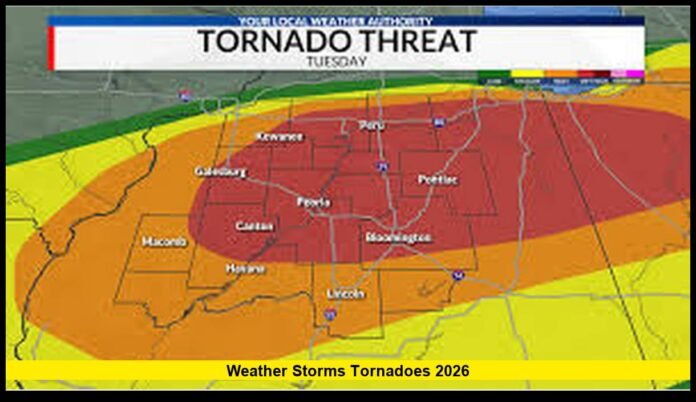

Weather storms tornadoes are already drawing national attention in early 2026 as severe weather systems begin developing across several regions of the United States. Meteorologists continue monitoring powerful storm patterns capable of producing tornadoes, damaging winds, large hail, and heavy rainfall. These conditions typically intensify during the spring months, which mark the beginning of the most active tornado season in the country.
Communities across the central and southern United States are entering a period when powerful thunderstorms often increase in frequency. States such as Texas, Oklahoma, Kansas, Arkansas, Missouri, Mississippi, and Alabama regularly face heightened severe weather risks during this time of year. Forecasting systems and emergency management agencies are closely tracking developing weather systems as temperatures begin to rise.
Why the United States Experiences Frequent Tornadoes
The United States records more tornadoes each year than any other nation. Several geographic and atmospheric conditions combine to create an ideal environment for severe thunderstorms.
Four major air masses often collide across North America:
- Warm, humid air moving north from the Gulf of Mexico
- Cold air descending from Canada
- Dry air flowing east from the Rocky Mountains
- Warm air masses traveling across the Great Plains
These air masses frequently meet across the central portion of the country. When they interact, strong instability can develop in the atmosphere. This instability allows thunderstorms to grow rapidly and sometimes produce tornadoes.
Flat terrain across the central United States also allows storms to develop and travel long distances without major geographic barriers.
Understanding the Structure of Severe Thunderstorms
Many tornadoes originate from a specific type of storm known as a supercell thunderstorm. Supercells are powerful rotating storms that can produce long-lasting severe weather.
These storms contain several defining features:
- A rotating updraft known as a mesocyclone
- Intense lightning activity
- Strong vertical wind currents
- Large hail formation
- Potential tornado development
Supercells can remain active for several hours and travel across multiple counties or states.
Meteorologists carefully monitor these storms because they have the greatest potential to produce damaging tornadoes.
How Tornadoes Form During Severe Storms
Tornado formation involves a complex series of atmospheric events. It usually begins when strong wind patterns change with height in the atmosphere.
The process generally follows these steps:
- Warm air rises rapidly within a developing thunderstorm.
- Winds moving at different speeds and directions create horizontal rotation.
- Powerful updrafts tilt this rotating air vertically.
- The rotating column tightens inside the storm.
- A funnel-shaped vortex may extend toward the ground.
When this rotating column reaches the ground, a tornado forms.
Not every rotating storm produces a tornado. However, when atmospheric conditions remain favorable, tornadoes can develop quickly.
Regions Most Affected by Tornado Activity
Two major regions in the United States experience the highest tornado frequency.
Tornado Alley
Tornado Alley refers to a large region across the central Plains. This area includes parts of:
- Texas
- Oklahoma
- Kansas
- Nebraska
- South Dakota
Spring and early summer bring the most intense tornado outbreaks to this region.
The flat landscape allows storms to form easily and move rapidly across long distances.
Dixie Alley
The southeastern United States also experiences significant tornado activity.
This region, often called Dixie Alley, includes states such as:
- Alabama
- Mississippi
- Louisiana
- Tennessee
- Georgia
Tornadoes in this region often occur during nighttime hours. Dense forests and hilly terrain sometimes make these storms more dangerous because they are harder to see approaching.
Typical Tornado Season in the United States
Tornado activity occurs year-round, but most storms follow a seasonal pattern.
Peak tornado months vary by region.
| Region | Peak Tornado Months |
|---|---|
| Gulf Coast States | March to April |
| Central Plains | May to June |
| Northern Plains | June to July |
Spring brings warm, moist air northward from the Gulf of Mexico. When this warm air collides with cooler northern air masses, severe storms become more likely.
The transition from winter to summer often creates the most unstable weather conditions.
Storm Hazards Beyond Tornadoes
Although tornadoes often receive the most attention, severe thunderstorms can produce several other dangerous hazards.
Common storm threats include:
- Damaging straight-line winds exceeding 70 miles per hour
- Large hailstones capable of damaging vehicles and buildings
- Flash flooding caused by heavy rainfall
- Frequent lightning strikes
These hazards can sometimes cause more widespread damage than tornadoes themselves.
Large storm systems may impact multiple states during a single event.
Measuring Tornado Strength
Meteorologists classify tornado intensity using the Enhanced Fujita Scale, often abbreviated as the EF Scale.
This scale estimates wind speeds based on damage observed after a tornado passes.
| EF Rating | Estimated Wind Speed | Typical Damage |
|---|---|---|
| EF0 | 65–85 mph | Minor roof or tree damage |
| EF1 | 86–110 mph | Moderate structural damage |
| EF2 | 111–135 mph | Major roof and building damage |
| EF3 | 136–165 mph | Severe destruction of homes |
| EF4 | 166–200 mph | Devastating structural damage |
| EF5 | Over 200 mph | Extreme destruction |
Most tornadoes fall within the EF0 or EF1 categories. The strongest EF4 and EF5 tornadoes occur far less frequently but can cause catastrophic destruction.
Advances in Storm Detection Technology
Meteorologists rely on advanced technology to track severe storms and issue warnings.
Several systems help detect dangerous weather patterns.
Doppler Radar
Doppler radar can identify rotation within thunderstorms. This technology helps meteorologists detect developing tornadoes even before they reach the ground.
Weather Satellites
Satellites provide large-scale images of storm systems across the country. These images help meteorologists track storm movement and development.
Computer Forecast Models
Modern forecasting models analyze vast amounts of atmospheric data. These models help predict where severe weather conditions may develop days in advance.
Together, these tools have significantly improved tornado warning systems.
Difference Between Severe Weather Watches and Warnings
Understanding weather alerts helps communities respond quickly during dangerous conditions.
Tornado Watch
A tornado watch means conditions are favorable for tornado formation. Storms capable of producing tornadoes may develop.
Residents should monitor weather updates and prepare for possible warnings.
Tornado Warning
A tornado warning indicates a tornado has been detected by radar or spotted by observers.
People should seek shelter immediately when a warning is issued.
Modern warning systems deliver alerts through several channels:
- Smartphone emergency alerts
- Television and radio broadcasts
- NOAA weather radios
- Local emergency management systems
These alerts provide crucial time for residents to move to safe locations.
Community Preparedness for Severe Weather
Cities and counties across tornado-prone regions invest heavily in emergency preparedness.
Preparedness efforts include:
- Community storm shelters
- Emergency alert systems
- Public safety drills
- School emergency plans
Local governments also coordinate with meteorologists and emergency responders to ensure rapid response during severe weather events.
Preparedness programs help reduce injuries and improve public awareness.
Personal Safety During Tornado Threats
Individuals can take several steps to protect themselves during severe weather.
Safety experts recommend seeking shelter in:
- A basement or storm cellar
- An interior room on the lowest floor of a building
- A reinforced storm shelter
People should stay away from windows and protect their heads from debris.
Mobile homes and vehicles offer little protection during tornadoes. Residents in these locations should move to stronger structures if possible.
Preparedness plans can help families respond quickly when warnings occur.
Economic Impact of Severe Storms
Severe weather can cause significant economic damage across communities.
Storm-related impacts often include:
- Structural damage to homes and businesses
- Power outages affecting thousands of residents
- Transportation disruptions
- Agricultural losses
Recovery efforts may require months of rebuilding depending on the severity of the storm.
Emergency responders, volunteers, and community organizations often play a critical role in helping affected areas recover.
Ongoing Research on Severe Weather
Scientists continue studying severe weather patterns to better understand how tornadoes develop.
Research areas include:
- Atmospheric instability patterns
- Storm rotation dynamics
- Long-term climate influences on severe storms
Improved understanding of these factors helps meteorologists refine forecasting techniques.
Advances in weather science continue to improve public safety during severe weather outbreaks.
Looking Ahead to the 2026 Tornado Season
As spring progresses, meteorologists expect storm activity to increase across several regions of the United States.
Warmer temperatures and shifting air masses often create the conditions needed for powerful thunderstorms.
The coming months will likely bring additional monitoring of weather storms tornadoes as forecasting centers track developing storm systems across the country.
Preparedness and awareness remain essential tools for communities facing severe weather risks.
Have severe storms ever impacted your community? Share your experiences and join the discussion about how people prepare for tornado season.