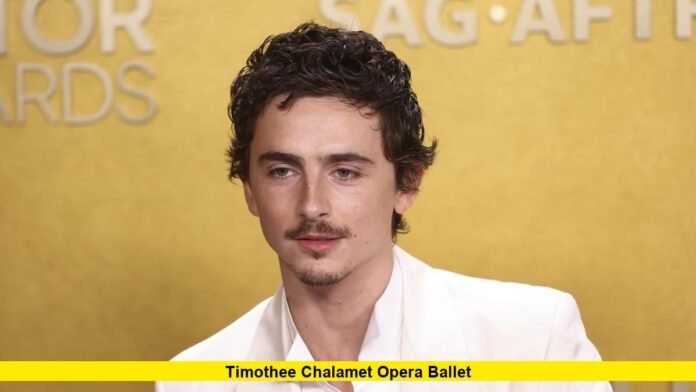

Actor Timothée Chalamet has unexpectedly found himself at the center of a cultural debate after remarks about traditional performing arts sparked strong reactions across the opera and ballet communities. The timothee chalamet opera ballet discussion quickly spread across social media and the arts world, drawing responses from major institutions, performers, and fans who defended the enduring influence of classical performance.
The controversy began after Chalamet participated in a public conversation about the future of cinema and entertainment. During the discussion, the Oscar-nominated actor compared the challenges of keeping movie theaters relevant with traditional art forms such as opera and ballet. His comments, which suggested these art forms struggle to maintain mainstream attention, triggered a wave of responses from artists and cultural organizations.
If you enjoy entertainment stories that explain the real conversations shaping Hollywood and the arts, share this article with friends who follow pop culture and film.
How the Comments Sparked the Timothee Chalamet Opera Ballet Debate
The moment occurred during a town-hall style discussion in February 2026 featuring Chalamet and fellow actor Matthew McConaughey. The conversation focused on how audiences engage with movies in an era dominated by streaming platforms and rapidly changing viewing habits.
While discussing the pressure to “keep cinema alive,” Chalamet made an off-the-cuff remark comparing the situation to art forms such as opera and ballet. He suggested that those disciplines often face calls for preservation even when mainstream attention appears limited.
Although the actor added a respectful acknowledgment toward performers in those fields, the comment quickly circulated online. Within days, clips of the exchange spread widely, triggering strong reactions from the performing arts community.
Opera and Ballet Institutions Respond Publicly
Major cultural institutions responded swiftly.
The Metropolitan Opera in New York shared a social media video highlighting the craftsmanship behind its productions. The video showcased musicians, stage designers, costume creators, and performers working behind the scenes. The caption referenced Chalamet directly, turning the moment into a public defense of opera’s ongoing relevance.
Across the Atlantic, the Royal Ballet and Opera in London also joined the conversation. Their response emphasized the enthusiasm of live audiences and invited the actor to experience a performance firsthand.
Other companies around the world echoed similar messages. Several arts organizations used the viral moment to remind audiences that opera and ballet remain thriving cultural traditions with global audiences.
Interestingly, the discussion even reached the Pacific Northwest. One opera company responded with a playful promotion offering discounted tickets using a code referencing Chalamet’s name, turning the controversy into a creative marketing opportunity.
Artists and Performers Speak Out
Many professional singers, dancers, and actors weighed in on the debate.
Some performers criticized the remark as dismissive of centuries-old artistic traditions that continue to inspire audiences and influence modern storytelling. Opera singers and ballet dancers posted responses online highlighting the passion, discipline, and artistry required in their fields.
Others pointed out that opera and ballet have survived for hundreds of years precisely because audiences continue to value them. Performers argued that classical arts still attract dedicated communities, packed theaters, and new generations of talent.
At the same time, a few voices offered a more nuanced interpretation. Some observers suggested Chalamet may have been commenting on the broader cultural challenge of keeping traditional art forms visible in a fast-moving digital entertainment landscape.
Why the Moment Resonated So Widely
Part of the reason the timothee chalamet opera ballet debate gained so much traction lies in Chalamet’s own background.
The actor grew up in New York City in a family closely connected to the performing arts. His mother is a trained dancer and former Broadway performer, and his sister has also worked in ballet. That connection led some critics to say his comments felt especially surprising given his personal ties to the art world.
Chalamet himself attended the prestigious Fiorello H. LaGuardia High School of Music & Art and Performing Arts, where he studied acting before launching his film career.
Because of that artistic upbringing, many people expected him to be particularly supportive of traditional performance disciplines.
Chalamet’s Rising Hollywood Influence
The controversy comes during a major moment in Chalamet’s career.
The actor, now 30, has become one of Hollywood’s most prominent stars. His performance in the film Marty Supreme earned widespread praise and several major award nominations. The role also helped solidify his reputation as one of the most influential actors of his generation.
Chalamet has also received recognition at major awards ceremonies, including wins at prominent film awards earlier in the season. With multiple nominations across film institutions, he remains a central figure in this year’s awards conversation.
That high profile likely amplified the reaction to his remarks. When an actor with global influence comments on the arts, the statement carries weight far beyond a single interview.
A Larger Conversation About the Future of the Arts
Beyond the celebrity headlines, the debate has sparked a larger conversation about how audiences engage with traditional art forms in the modern era.
Opera and ballet companies have faced challenges in recent decades as entertainment habits evolve. However, many institutions have also embraced new audiences through digital streaming, innovative staging, and collaborations with contemporary artists.
Supporters argue that classical arts remain foundational to global culture. Opera has shaped film scoring and musical theater, while ballet continues to influence modern dance, fashion, and visual storytelling.
In that sense, the controversy may have unexpectedly helped spotlight the continuing vitality of these disciplines.
What Happens Next
So far, the discussion shows no sign of fading quickly. Fans, artists, and cultural organizations continue to debate the role of traditional performance in today’s entertainment landscape.
For opera houses and ballet companies, the viral moment may ultimately bring more visibility to their work. For Chalamet, it serves as another reminder that even casual remarks can spark global conversations when spoken by one of Hollywood’s biggest stars.
What do you think about the debate surrounding opera, ballet, and modern entertainment? Share your thoughts and stay tuned for more updates as the conversation continues.