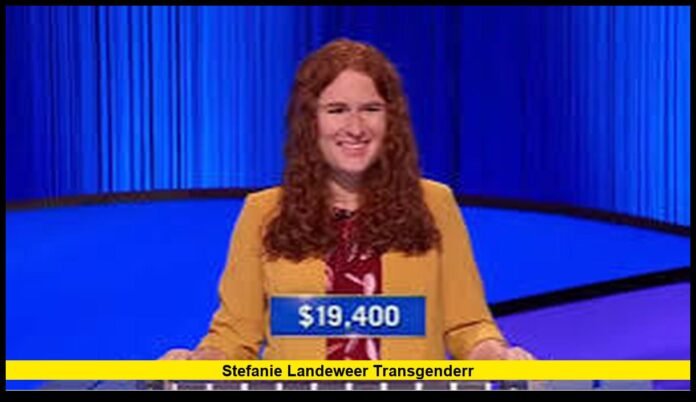

The search phrase stefanie landeweer transgender has drawn attention as chemistry professor Stefanie Landeweer gains national recognition through her appearances on Jeopardy!. While online discussions have raised questions about her gender identity, the publicly available professional information reviewed for this article does not independently confirm her transgender status. Her documented academic career, scientific research, and television success provide a factual starting point for understanding the interest surrounding her name.
Why Stefanie Landeweer Is Trending Online
Stefanie Landeweer has attracted increased online attention following her appearances on Jeopardy! in October 2026. Her participation in the popular American quiz show introduced her to viewers who may not previously have been familiar with her professional work in chemistry and higher education. As audiences search for information about contestants, Landeweer’s academic credentials, research interests, and personal background have become subjects of curiosity.
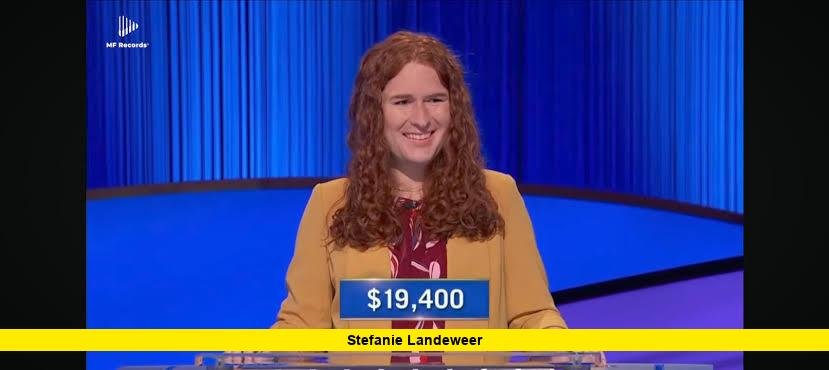
One factor that distinguishes Landeweer from many television contestants is her reported career as a college chemistry professor. Her scientific background reflects years of specialized education and experience in a field that requires analytical thinking, precision, and problem-solving skills. Her appearance on a nationally televised program has consequently attracted interest from viewers interested in both her professional achievements and her performance in the competition.
Landeweer is associated with Lexington Park, Maryland, which has also contributed to searches about her background. Some online queries concern her gender identity, extending public interest beyond her academic qualifications and game-show results. However, the popularity of a search does not establish the accuracy of the claims behind it. Understanding her story requires distinguishing documented information from speculation and respecting the boundaries of what is publicly known.
What Is Confirmed About Stefanie Landeweer’s Gender Identity?
Questions about Stefanie Landeweer’s gender identity have appeared in online searches, but such interest should not be confused with verified information. The professional information described in her academic biography does not explicitly establish whether she identifies as transgender. Therefore, it would be inappropriate to make a definitive claim about her gender identity without reliable confirmation.
Her institutional profile reportedly lists her pronouns as she/her/hers. These pronouns indicate how she is referred to in her professional setting, but they do not independently establish whether someone is transgender. People with different gender identities may use the same pronouns, making it important not to draw conclusions beyond what the information supports.
Gender identity is a personal matter that cannot reliably be determined from photographs, voice, clothing, physical appearance, or assumptions about someone’s background. A responsible answer should rely on a direct public statement from the individual or credible reporting that clearly establishes the relevant facts.
The absence of public confirmation should not be interpreted as proof either for or against a particular identity. Until reliable evidence becomes available, the most accurate approach is to acknowledge that the question remains unconfirmed by the information discussed here.
A Look at Her Academic Background
Stefanie Landeweer’s academic background is one of the most substantial documented aspects of her professional biography. She is identified as a visiting assistant professor in the Chemistry and Biochemistry Department at St. Mary’s College of Maryland. Her work connects higher education with scientific research, particularly in analytical chemistry and environmental science.
Her educational history includes a bachelor’s degree in chemistry and German from Illinois Wesleyan University in 2017. She subsequently pursued graduate education at Florida International University, earning a master’s degree in chemistry in 2022 and a Ph.D. in environmental chemistry in 2023.
These qualifications reflect an extended commitment to scientific study and research. Graduate-level chemistry programs typically involve advanced coursework, laboratory investigations, data analysis, and the development of specialized research skills. Environmental chemistry applies these methods to questions involving chemical substances and their behavior in natural environments.
Landeweer’s professional biography also identifies an affiliation with the University of Maryland Center for Environmental Science. Together, these academic connections provide context for understanding her career beyond television. They demonstrate why her scientific expertise is an important part of her public profile, independently of questions about her personal identity or her performance on Jeopardy!.
What Does Stefanie Landeweer Research?
Stefanie Landeweer’s reported research interests include analytical chemistry, environmental contaminants, and ultraviolet-filter chemicals in marine environments. This area of scientific investigation examines substances that can enter aquatic ecosystems through the use of consumer products and other human activities.
Ultraviolet filters are ingredients used in products designed to protect people from the sun’s radiation. Some compounds used for this purpose can reach rivers, coastal waters, and marine environments. Researchers investigate their presence, concentrations, and distribution to better understand how these substances move through natural systems.
Analytical chemistry provides the methods scientists use to identify and measure chemical compounds in environmental samples. One important technique in this field is mass spectrometry, which analyzes ions according to their mass-to-charge ratios. Combined with other laboratory methods, it can help researchers detect and quantify substances present at low concentrations.
Landeweer’s research interests illustrate the connection between chemistry and environmental questions. Her work also provides context for her teaching specializations, which reportedly include analytical and environmental chemistry. These fields help students develop an understanding of laboratory techniques, chemical measurements, and the scientific processes used to investigate environmental conditions. Her research background offers a meaningful perspective on her professional accomplishments beyond her television appearances.
Stefanie Landeweer’s Recent Jeopardy! Success
Stefanie Landeweer’s appearances on Jeopardy! in October 2026 have helped introduce her to a broader audience. According to the results provided for her appearances, she won her first reported game on October 28, collecting $19,400. She returned for another game on October 29 and secured a second victory, earning an additional $10,600.
Her reported winnings across those two games totaled $30,000. Consecutive victories can generate considerable interest because viewers often want to learn more about contestants who demonstrate strong knowledge across a variety of subjects.
The competition requires more than familiarity with a particular academic discipline. Contestants must respond quickly to clues, recall information across multiple categories, manage their wagers, and make strategic decisions during the game. These demands create a distinctive challenge even for participants with advanced educational qualifications.
Landeweer’s chemistry background may be one reason viewers have become interested in her professional life, but academic expertise alone does not explain success on a general-knowledge quiz show. Her television appearances have created an opportunity for audiences to discover her work outside the classroom. Her game results and her personal identity, however, remain separate subjects and should not be treated as evidence of one another.
How Online Searches Can Create Confusion
Online searches can help readers discover information about public figures, but they can also make it difficult to distinguish verified facts from speculation. This problem becomes particularly noticeable when searches concern personal matters that may not have been publicly discussed by the individual involved.
A webpage may repeat a claim from another website without independently verifying it. When several pages publish similar wording, readers might assume that multiple sources have confirmed the information. In reality, those pages may all rely on the same original statement or an unsupported assumption.
Social media can amplify the problem by circulating partial quotations, misleading interpretations, or claims without sufficient context. The number of posts discussing a subject does not establish whether those posts are accurate.
When researching Stefanie Landeweer, readers should distinguish between information that can be established through an academic biography and claims that require separate confirmation. Her qualifications, professional position, and research interests can help explain her career, but they do not automatically answer questions about her private life.
The most reliable approach is to look for direct statements, credible reporting, and clear evidence. If that evidence is unavailable, acknowledging uncertainty is more accurate than presenting speculation as fact.
Why Responsible Reporting Matters
Public attention following a television appearance can create curiosity about many aspects of a contestant’s life. Nevertheless, becoming recognizable through entertainment does not mean that every personal detail is publicly established or should be treated as a matter of speculation.
Gender identity is a personal aspect of an individual’s life. Reporting about it should be based on information the person has shared publicly or on reliable evidence that supports the specific claim being made. When such evidence is absent, journalists should avoid definitive statements.
It is also important to understand that gender identity and sexual orientation are different concepts. Gender identity concerns a person’s understanding of their own gender, while sexual orientation concerns patterns of romantic or sexual attraction. Neither can be reliably inferred from someone’s occupation, academic qualifications, television performance, or outward appearance.
In Landeweer’s case, her professional biography and reported Jeopardy! results provide useful information about her public activities. Those facts do not independently establish her gender identity.
Responsible reporting means explaining what is known, identifying what remains uncertain, and avoiding unnecessary assumptions. This approach protects readers from misinformation while ensuring that the individual being discussed is represented fairly. Accuracy is especially important when an online topic concerns personal identity rather than a publicly documented professional achievement.
What Readers Should Know About Stefanie Landeweer
Stefanie Landeweer is a chemistry academic whose reported research interests include environmental contaminants and analytical methods used to study chemical substances. Her educational background includes degrees from Illinois Wesleyan University and Florida International University, followed by an academic role at St. Mary’s College of Maryland. Her appearances on Jeopardy! in October 2026 have brought additional attention to her professional biography.
Her reported consecutive victories and combined winnings of $30,000 have encouraged viewers to look beyond the television competition and learn more about her career. Searches have also raised questions about her gender identity, but the professional information discussed in this article does not independently establish whether she is transgender.
Readers should therefore distinguish between documented biographical details and personal claims that have not been reliably confirmed. Her academic credentials and research interests provide meaningful information about her professional life, while her pronouns alone do not determine her gender identity.
Ultimately, the most useful account of Landeweer’s public profile focuses on the information that can be supported. As interest in her continues, accurate reporting should prioritize verified facts, avoid repeating unsupported assumptions, and respect her privacy. This approach allows audiences to understand her academic accomplishments and television success without confusing online curiosity with established information.
What are your thoughts on responsible reporting about public figures? Share your views respectfully in the comments and follow verified developments as more reliable information becomes available.