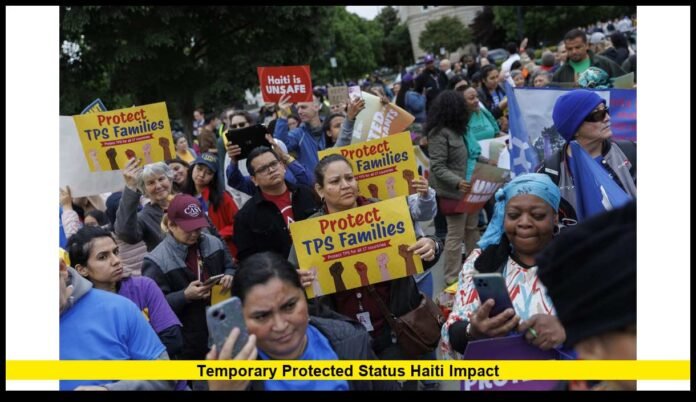

The Temporary Protected Status Haiti impact is reaching far beyond immigration status, affecting the livelihoods of Haitian immigrants, their families, American employers, and communities that rely on their work. Haiti’s TPS designation officially ended in July 2026, leaving many former beneficiaries facing questions about employment authorization, immigration options, family stability, and their future in the United States.
For years, TPS allowed eligible Haitian nationals to remain temporarily in the country and obtain employment authorization because conditions in Haiti made safe return difficult. Many beneficiaries used the protection to build careers, support children, pay rent or mortgages, and establish long-term connections to American communities.
The termination has changed the legal circumstances for people who depended on the program. It has also raised concerns among employers in healthcare, home care, hospitality, transportation, food services, and other industries that have Haitian employees.
The effects are not limited to immigration policy. The loss of TPS can influence household finances, workforce availability, local business activity, school communities, and access to caregiving services. The consequences will vary according to each person’s immigration circumstances and the local economy, but the change represents a significant disruption for many Haitian families.
What Temporary Protected Status Means for Haitian Immigrants
Temporary Protected Status is a humanitarian immigration program established to provide temporary protection to eligible nationals of countries facing extraordinary conditions, such as armed conflict, environmental disasters, or other circumstances that make returning unsafe.
TPS can allow eligible individuals to:
- Remain temporarily in the United States without being removed solely because of their lack of immigration status.
- Apply for employment authorization.
- Obtain certain immigration-related protections while the designation remains in effect.
- Maintain employment and support their families while conditions in their home country remain dangerous.
However, TPS is not permanent immigration status. It does not automatically provide a green card, citizenship, or permanent legal residence.
Haiti’s TPS designation was originally connected to serious conditions in the country, including insecurity, political instability, humanitarian challenges, and difficulties affecting the safety and well-being of residents.
For Haitian beneficiaries, TPS became an important foundation for daily life. Many had been living in the United States for extended periods, working in essential industries and raising children who were born in or educated in the country.
The program’s termination has therefore created a major transition for individuals who had relied on TPS for both legal protection and employment authorization.
Latest Haiti TPS Update: Termination Took Effect in July 2026
The federal government announced the termination of Haiti’s TPS designation after determining that Haiti no longer met the statutory conditions for the program.
The termination process experienced legal complications. A federal district court initially blocked the termination from taking effect, allowing TPS beneficiaries to retain protection and employment authorization while litigation continued.
Subsequent court developments, including a Supreme Court decision in June 2026 and further proceedings in the lower courts, changed the legal position.
Haiti’s TPS designation was terminated effective July 27, 2026.
Federal guidance issued after the termination stated that employment authorization documents issued under Haiti’s TPS designation with categories A12 or C19 were no longer valid under the terminated program.
The legal history is important because TPS beneficiaries and employers received different instructions at various stages of the litigation. Temporary extensions and court orders that previously preserved employment authorization were not necessarily valid after the termination became effective.
For the current federal program information, readers can review the official USCIS Temporary Protected Status information.
How the TPS Termination Is Affecting Haitian Workers
The employment consequences are among the most immediate effects of the Haiti TPS termination.
Many Haitian TPS beneficiaries were employed in jobs that required valid employment authorization. When TPS-based authorization ended, individuals who did not have another valid basis for employment authorization could no longer legally continue working.
This created uncertainty for employees and employers alike.
Workers may lose their regular income, while businesses may suddenly need to replace experienced employees. The effects can be particularly difficult for people who have worked at the same company for years and have developed valuable skills.
Healthcare Workers Face Employment Uncertainty
Haitian immigrants have contributed to healthcare operations in a variety of positions, including nursing assistants, home health aides, hospital support workers, patient-care assistants, and other roles.
The loss of employment authorization can affect workers who help hospitals, nursing homes, and home-care agencies maintain daily operations.
Healthcare providers may need to recruit replacements, adjust schedules, or increase workloads for remaining staff.
For patients, particularly older adults and people with disabilities, staffing changes can create uncertainty about the availability of assistance and continuity of care.
Home Health Care Could Experience Disruptions
Home-care services often depend on workers who provide consistent support to patients in their own homes.
A caregiver may assist a patient with bathing, dressing, meal preparation, mobility, medication reminders, transportation, and other everyday activities.
When a caregiver can no longer legally work, the patient may need to find a replacement. That transition can be difficult when the patient has established a relationship with a trusted worker over months or years.
Families may also face additional costs if they need to arrange alternative care or take time away from work to provide assistance.
Nursing Homes and Assisted-Living Facilities
Facilities that provide long-term care may also face staffing challenges.
Haitian workers may be employed in nursing assistance, housekeeping, food preparation, laundry, maintenance, and other operational positions.
A loss of workers can create scheduling difficulties and increase pressure on employees who remain.
The severity of the impact will depend on each facility’s staffing structure, the number of affected workers, and its ability to recruit replacements.
Restaurants, Hotels and Hospitality Businesses
Haitian workers are also employed in restaurants, hotels, tourism-related businesses, and other service industries.
Businesses may face challenges when experienced workers are no longer available. Replacing employees can require advertising, interviewing, onboarding, training, and additional payroll expenses.
Restaurants may need to adjust operating hours or shift schedules. Hotels may face difficulties filling housekeeping and other operational roles. Businesses with limited staff may experience delays or reduced services.
These challenges could be more noticeable in communities where employers have a larger number of Haitian employees.
Temporary Protected Status Haiti Impact on Household Finances
The termination of TPS can create financial uncertainty for families whose household income depends on a TPS beneficiary.
For many people, the consequences begin with the loss of wages. Once income becomes uncertain, families may have to reconsider how they pay for basic expenses.
Rent and Mortgage Payments
Housing is one of the biggest financial concerns.
A family that relies on one or two workers may struggle to pay rent or a mortgage if employment authorization ends and income is interrupted.
Some households may need to move to less expensive housing, share accommodation with relatives, or relocate to another community.
Homeowners may face challenges meeting mortgage payments, property taxes, insurance, utilities, and maintenance costs.
Groceries and Everyday Expenses
Reduced income can affect food purchases, transportation, clothing, childcare, school expenses, and other necessities.
Families may reduce discretionary spending and postpone purchases that are not immediately essential.
The economic pressure may be particularly severe for households with children, elderly relatives, or family members who require medical care.
Debt and Credit Obligations
Financial uncertainty can also make it harder to keep up with credit cards, auto loans, personal loans, and other obligations.
Missed payments may result in additional fees or damage to credit histories.
Families that previously had stable income may need to use savings or borrow money to cover expenses while they evaluate their immigration options and employment circumstances.
How Haitian TPS Termination Could Affect U.S. Communities
The effects of the TPS termination may extend into the communities where Haitian immigrants live and work.
Haitian workers are not only employees. They are also customers, renters, homeowners, parents, business owners, taxpayers, and participants in local community life.
When household income falls, local businesses may lose customers. Employers may face higher recruitment costs. Healthcare providers may experience staffing difficulties. Schools may need to support families dealing with financial and immigration-related uncertainty.
The impact will depend on the size of the Haitian community in a particular area and how heavily local businesses and institutions rely on Haitian workers.
State-by-State Impact: Where Haitian Communities May Feel the Effects
The termination is likely to be more noticeable in states with larger Haitian populations and established Haitian communities.
Florida
Florida is home to one of the country’s largest Haitian communities.
South Florida, particularly areas in Miami-Dade and Broward counties, has strong Haitian cultural, social, and economic connections.
Haitian workers are employed in healthcare, home care, restaurants, hospitality, transportation, retail, schools, and other sectors.
The TPS termination may affect household finances and employers in these communities, especially businesses that rely on experienced Haitian employees.
New York
New York has a substantial Haitian population, particularly in New York City and surrounding communities.
Former TPS beneficiaries may work in healthcare, home care, transportation, food services, hospitality, retail, and other industries.
The termination could create financial uncertainty for households while also affecting employers that need to maintain staffing levels.
Massachusetts
Haitian communities in Massachusetts include residents who work in healthcare, elder care, transportation, service industries, and small businesses.
Employers may face challenges replacing workers who have developed experience and skills in their positions.
Families may also face increased pressure related to housing costs, childcare, transportation, and other expenses.
New Jersey
New Jersey’s Haitian community includes workers in healthcare, hospitality, transportation, restaurants, retail, and other sectors.
The TPS termination could affect workers and employers in areas where Haitian immigrants are an important part of the local labor force.
Ohio
Haitian immigrant communities in Ohio contribute to healthcare, service industries, local businesses, and other areas of the economy.
The consequences may vary by city, employer, and the number of affected workers in particular industries.
Other States
Haitian TPS beneficiaries also live in communities across Pennsylvania, Georgia, Connecticut, and other states.
The effects may be less visible in areas with smaller Haitian populations, but individual households and employers can still experience significant disruption.
The Impact on Children and American Schools
The TPS termination can affect children even when they have their own immigration status or are U.S. citizens.
Parents who lose employment authorization may experience financial stress, uncertainty about their future, or concerns about immigration enforcement.
These circumstances can affect children’s emotional well-being, school attendance, housing stability, and access to activities.
Families may also face difficult decisions about whether to remain in the United States, relocate to another state, or consider returning to Haiti.
For children who have spent most of their lives in the United States, moving abroad may involve major educational, social, and cultural changes.
Schools may also experience indirect effects if Haitian employees work in transportation, cafeteria services, maintenance, classroom support, or other positions.
Could Employers Face Staffing Shortages?
The potential workforce impact is a major concern for employers.
Businesses that employed Haitian TPS beneficiaries may need to find replacements, but recruitment is not always immediate or inexpensive.
Some employers may face:
- Increased recruitment expenses
- Higher training costs
- Difficulties filling vacant shifts
- Overtime costs for remaining employees
- Reduced productivity
- Service delays
- Changes to operating schedules
Small businesses may be particularly vulnerable because they often have fewer employees and less financial flexibility.
For example, a home-care company that loses multiple caregivers may have difficulty maintaining existing patient schedules. A restaurant may need to reduce hours if it cannot replace workers. A hotel may have to reorganize staffing to cover essential operations.
The impact will depend on local labor-market conditions and whether employers can find workers with the required qualifications and availability.
What Happens to Former Haitian TPS Beneficiaries Now?
The end of Haiti’s TPS designation does not mean that every affected person has the same immigration outcome.
Some former beneficiaries may have another immigration status, a pending application, or eligibility for a separate form of immigration relief. Others may not have another legal pathway available.
The circumstances of each individual matter.
A former TPS holder’s options may depend on:
- Immigration history and previous entries into the United States
- Whether the person has a pending immigration application
- Family relationships and possible family-based eligibility
- Employment qualifications and potential employment-based options
- Previous immigration proceedings
- Eligibility for asylum or other humanitarian protection
- Other legal circumstances that may affect eligibility
TPS termination does not automatically grant permanent residency, and it does not automatically mean that every individual will be deported. The person’s broader immigration situation must be evaluated separately.
Possible Immigration Options After TPS Ends
Some Haitian immigrants may be able to explore other immigration pathways, depending on their circumstances.
Family-Based Immigration
Certain individuals may qualify for immigration benefits through eligible family members, including spouses, parents, children, or other qualifying relatives.
However, family relationships alone do not guarantee eligibility. Immigration history, legal requirements, and other factors may affect whether a person can apply for permanent residence or another benefit.
Employment-Based Immigration
Some former TPS beneficiaries may qualify for employment-based immigration options through employers.
These pathways can involve specific qualifications, sponsorship requirements, visa categories, and other legal conditions.
An individual should not assume that having a job or an employer willing to sponsor them automatically makes them eligible.
Asylum or Other Humanitarian Protection
Some people may have separate humanitarian protection options if they meet the legal requirements.
These options can involve complex eligibility standards, deadlines, evidence, and immigration-history considerations.
A person should seek qualified legal advice before filing an application or making a decision that could affect their immigration status.
Adjustment of Status
Some former TPS holders may potentially qualify to apply for adjustment of status to permanent residence, depending on the applicable immigration rules and their individual circumstances.
Eligibility can be complicated, especially when a person’s immigration history includes prior entries, departures, or other legal issues.
It is important to obtain professional guidance rather than assuming that a previous TPS approval makes someone eligible for a green card.
What Former TPS Holders Should Do to Protect Their Interests
People affected by the termination should take practical steps to understand their current legal circumstances.
1. Organize Immigration Documents
Gather and keep copies of:
- TPS approval notices
- Employment authorization documents
- Immigration application receipts
- Notices from USCIS
- Passport and identity records
- Previous immigration applications
- Immigration court documents, if applicable
Organizing these records can help an attorney or accredited representative assess the situation more efficiently.
2. Obtain Qualified Immigration Advice
Former TPS holders should consider speaking with an immigration attorney or a DOJ-accredited representative.
An immigration professional can help determine whether another legal option may be available and explain potential consequences involving employment, travel, or immigration proceedings.
3. Confirm Employment Authorization
Individuals should not assume that an old employment authorization document remains valid simply because it was previously extended under a court order.
Employment authorization depends on the person’s current legal circumstances and the applicable federal rules.
Workers and employers should verify current documentation rather than relying on notices issued during earlier stages of the litigation.
4. Avoid Unplanned International Travel
Travel outside the United States can have serious immigration consequences.
Former TPS holders should seek individualized legal advice before leaving the country. Departure may affect the ability to return or may create other immigration complications.
5. Be Careful About Immigration Scams
People facing uncertainty may become targets of scammers who promise guaranteed green cards, work permits, or protection from deportation.
Individuals should be cautious of anyone who:
- Guarantees immigration approval
- Requests unusually large payments without clear documentation
- Claims to have special connections with government officials
- Advises applicants to submit false information
- Offers legal services without proper qualifications
The Department of Justice provides information about recognized immigration organizations and accredited representatives through its official immigration legal assistance directory.
What Employers Need to Know About Haiti TPS Termination
Employers that previously hired Haitian TPS beneficiaries should review their employment eligibility records and follow applicable federal requirements.
The termination of Haiti’s TPS designation means that TPS-based employment authorization associated with the terminated program is no longer generally valid.
Employers must determine whether affected employees have another valid basis for employment authorization.
Businesses should avoid making decisions based only on an employee’s nationality or previous immigration status. Employment verification must be handled in accordance with federal requirements.
Employers that need guidance on employment verification can review official Form I-9 information and related instructions through the federal government’s E-Verify and employment eligibility verification resources.
The termination also highlights the importance of keeping employment records current and following the appropriate reverification procedures when required.
Why the Haiti TPS Decision Has Generated Debate
The decision to terminate Haiti’s TPS designation has generated debate over humanitarian policy, immigration law, economic consequences, and the role of temporary immigration protections.
Supporters of termination argue that TPS is intended to be temporary and that the federal government must periodically assess whether a country continues to meet the legal requirements for designation.
Critics argue that Haiti continues to experience serious problems that may make return difficult or dangerous for some individuals. They also point to the consequences for families who have lived in the United States for years and have established homes, jobs, and community relationships.
The debate also involves the effects on employers, healthcare providers, schools, and local economies.
The legal proceedings surrounding the termination demonstrate how court decisions can affect immigration programs and employment authorization. The original federal termination notice can be reviewed through the Federal Register publication concerning Haiti’s TPS designation.
What Could Happen Next?
The effects of the TPS termination will continue to develop.
Several issues remain important for former beneficiaries and their families:
- Whether affected individuals qualify for other immigration benefits
- Whether new court decisions or legal developments change the situation
- How employers respond to workforce losses
- Whether healthcare and home-care providers experience staffing difficulties
- How families manage income, housing, and education
- Whether Haitian communities experience changes in local economic activity
- What immigration policy developments may affect the broader TPS program
The legal situation can change, so people affected should monitor official information and seek individualized advice instead of relying on older notices or social media posts.
Conclusion
The Temporary Protected Status Haiti impact is becoming a significant issue for families, workers, employers, and communities across the United States. The termination of Haiti’s TPS designation has changed the legal circumstances for people who previously depended on the program to remain in the country and work.
For affected families, the consequences may involve employment uncertainty, reduced household income, housing challenges, concerns about children, and difficult immigration decisions. For employers, the termination may create recruitment challenges and workforce disruptions. For communities, the effects may extend to healthcare services, local businesses, schools, and the broader economy.
The future will depend partly on individual immigration circumstances, available legal pathways, employer responses, and any further legal or policy developments.
How do you think the end of Haiti’s TPS designation will affect Haitian families and American communities? Share your thoughts and stay informed as new developments emerge.