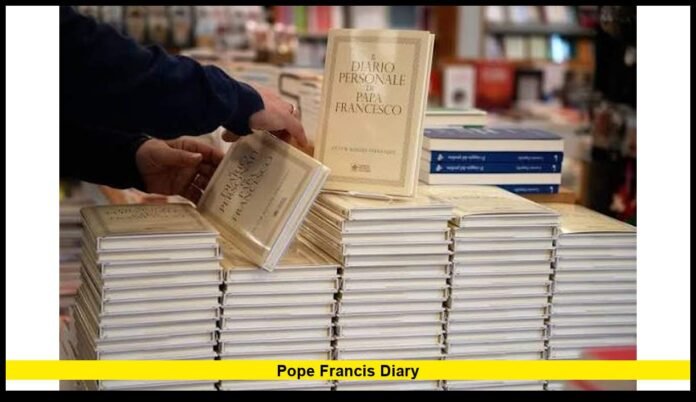

The Pope Francis diary is drawing worldwide attention following the release of The Private Diary of Pope Francis, a new book offering readers an intimate look at the late pontiff’s spiritual life, personal struggles, prayers, doubts, and reflections. Published on November 24, 2026, the book presents selected writings from a diary Pope Francis kept over more than three decades, revealing a side of the former pope that was rarely visible during his public ministry.
The newly published diary provides insight into the thoughts of Jorge Mario Bergoglio, the man who became Pope Francis in March 2013 and led the Catholic Church until his death on April 21, 2025. Rather than concentrating exclusively on Vatican politics, official speeches, or major Church events, the book focuses on the personal and spiritual experiences that shaped his life.
Among the most striking revelations are Francis’ descriptions of periods of spiritual anguish, his struggles with the responsibility of leadership, his reflections on death and personal weakness, and his reliance on prayer during difficult moments. The publication is particularly significant because private writings from a pope are rarely made available in such a direct and personal form.
For American readers interested in religion, biography, Catholic history, and the legacy of Pope Francis, the diary offers a new opportunity to understand the late pontiff beyond the public image he presented throughout his papacy.
What Is the Pope Francis Diary?
The Pope Francis diary refers to personal notes and reflections written by Jorge Mario Bergoglio over a period spanning more than 30 years. The writings begin in December 1992 and continue through August 18, 2024, covering significant periods of his religious life, his years in Argentina, and his time as head of the Catholic Church.
The material is presented in The Private Diary of Pope Francis, a book prepared by Cardinal Víctor Manuel Fernández, who served as a close collaborator of Francis and is the prefect of the Vatican’s Dicastery for the Doctrine of the Faith.
The publication is not simply a chronological account of papal events. It offers an interpretation of Francis’ inner life through selected diary passages, accompanied by commentary and context from Fernández.
The book provides readers with a glimpse into questions that a public religious leader may rarely discuss openly, including:
- Personal doubts and moments of uncertainty
- Spiritual struggles and temptations
- Reflections on prayer and faith
- The pressures associated with Church leadership
- Experiences of illness and suffering
- Thoughts about death, humility, and human weakness
- His relationship with God during periods of crisis
- His reflections on Church controversies and difficult decisions
The diary’s importance lies in its emphasis on the human dimension of Pope Francis. It portrays a religious leader who experienced fear, emotional difficulty, self-questioning, and spiritual uncertainty while continuing to carry the responsibilities of the papacy.
The Private Diary of Pope Francis Released on November 24
The book’s publication date is November 24, 2026, with editions released internationally in multiple languages. The publication is part of a coordinated international release involving Vatican publishing operations and major commercial publishers.
The English-language edition in North America is published by Image, an imprint of Penguin Random House’s Christian publishing group, in partnership with Libreria Editrice Vaticana, the Vatican Publishing House.
The book is also being released in Italian, Spanish, Portuguese, and French, allowing readers in different countries to access the diary.
The worldwide publication is expected to attract attention from Catholics, historians, theologians, journalists, readers interested in Pope Francis’ legacy, and people who want to understand the spiritual life of a prominent religious figure.
The official publisher’s book information is available through the Penguin Random House book page.
Diary Entries Cover More Than Three Decades
One of the most notable aspects of the Pope Francis diary is the length of time covered by the writings. The notes reportedly begin on December 20, 1992, and conclude on August 18, 2024.
That timeline provides a view into Francis’ life before he became pope and during the years when he was responsible for leading the Catholic Church worldwide.
The early entries come from a period when Bergoglio was serving in Argentina and developing his spiritual and pastoral identity. Later material reflects the challenges associated with his responsibilities as a bishop, cardinal, and eventually pope.
The diary therefore offers a potentially valuable perspective on how his spiritual outlook evolved over time.
Rather than presenting Francis only through the decisions he made as pope, the publication allows readers to consider the private thoughts behind some of his public commitments, including his emphasis on humility, mercy, compassion, prayer, and the importance of serving people experiencing hardship.
Pope Francis’ Spiritual Crisis and Personal Struggles
One of the central subjects discussed in the newly released material is a period of profound spiritual difficulty experienced by Francis.
The diary reportedly describes a serious crisis beginning around 2021, during which he struggled with spiritual questions, the burdens of leadership, health challenges, and the pressures of governing the Church.
The writings reveal that Francis did not always feel confident in his ability to carry out the responsibilities placed upon him. His reflections show a willingness to acknowledge the emotional and spiritual weight associated with the papacy.
According to the material discussed in the book, the crisis involved questions about authority, personal responsibility, the temptation to believe that he alone could resolve every problem, and the challenge of remaining spiritually grounded while managing complicated Church matters.
The revelations are significant because Pope Francis was often publicly associated with confidence, pastoral warmth, and a willingness to confront major institutional issues.
The diary provides a more personal perspective, showing that his spiritual journey included difficult moments that were not necessarily visible to people watching him in public.
Reflections on Temptation, the Devil and Spiritual Warfare
Some of the diary’s most attention-grabbing passages involve Francis’ reflections on spiritual temptation and the Devil.
The newly released material reportedly includes descriptions of experiences that Francis interpreted through a spiritual lens, including frightening encounters and visions. These passages have generated considerable attention because they reveal the deeply personal way he understood certain moments of spiritual struggle.
Francis reportedly described experiences involving the Devil and intense spiritual fear. The diary also contains reflections about the power of prayer and the importance of maintaining faith during moments when a person feels overwhelmed.
These passages should be understood as the pope’s personal spiritual reflections and descriptions of experiences, rather than as independently verified supernatural events.
For readers, the revelations provide an unusual glimpse into the private spiritual language and beliefs of a religious leader whose public teachings frequently emphasized prayer, spiritual vigilance, and the struggle between good and evil.
The diary’s descriptions may also encourage readers to consider how religious leaders experience personal spiritual challenges while simultaneously serving as public figures.
The Chile Abuse Scandal and Francis’ Reflections
The diary also reportedly touches on one of the most difficult episodes of Francis’ papacy: the handling of allegations involving clerical sexual abuse in Chile.
During a 2018 visit to Chile, Francis initially defended a bishop accused of covering up abuse, criticizing the allegations and the lack of what he believed was sufficient evidence. The controversy later intensified after additional information emerged.
Francis subsequently acknowledged that he had been misled, apologized to victims, and initiated further investigations.
The diary reportedly contains reflections on the episode, including the emotional and spiritual impact of confronting the scale of the abuse crisis and the mistakes made during the initial response.
The subject is particularly important because it demonstrates that the diary is not limited to personal prayers or abstract spiritual reflections. It also contains material connected to major controversies and decisions during his leadership.
The writings may help readers understand how Francis viewed the failures, difficult choices, and painful consequences associated with Church governance.
Why the Diary Is Different From a Traditional Papal Biography
Traditional biographies of Pope Francis generally focus on his life history, public speeches, major decisions, relationships with other leaders, and the developments that shaped his papacy.
The private diary takes a different approach.
It offers a more personal and reflective perspective, allowing readers to examine thoughts that were not originally intended as public statements.
The distinction is important. A public speech is typically prepared for an audience, while a private diary may contain uncertainty, emotion, self-criticism, and unfinished thoughts.
The book presents selected diary entries and commentary, meaning readers are not necessarily receiving the complete original journal in its entirety. Instead, the publication offers a curated presentation of the writings considered relevant to understanding Francis’ spiritual journey.
That makes the book both a personal account and an editorially prepared work.
Readers should therefore keep in mind that the diary’s published form is shaped by the selection and presentation of the material.
Cardinal Víctor Manuel Fernández’s Role in Publishing the Diary
Cardinal Víctor Manuel Fernández plays an important role in bringing the diary to readers. He prepared the book and presents the writings with commentary designed to help readers understand the context and significance of Francis’ personal reflections.
Fernández is a prominent Vatican official and theologian who worked closely with Pope Francis. His involvement is particularly relevant because the diary contains private and deeply personal material that requires context.
The publication was not presented as a simple collection of unedited notebook pages. Fernández’s role includes explaining the significance of selected passages and helping readers understand the spiritual experiences and challenges reflected in the writings.
The Vatican’s official announcement provides additional information about the book’s international release and the diary’s timeline. Readers can review the announcement through Vatican News.
Pope Francis Diary Book Details for U.S. Readers
The English-language release is designed for readers in North America, including those who want to explore the book through print, digital, or audio formats.
| Book Detail | Information |
|---|---|
| Title | The Private Diary of Pope Francis |
| Publication date | November 24, 2026 |
| Diary period | December 20, 1992–August 18, 2024 |
| Featured figure | Pope Francis |
| Book presenter and commentator | Cardinal Víctor Manuel Fernández |
| English-language publisher | Image, an imprint of Penguin Random House Christian Publishing Group |
| Vatican publishing partner | Libreria Editrice Vaticana |
| Length | 160 pages |
| Available formats | Paperback, ebook, and audiobook |
| Languages announced | English, Italian, Spanish, Portuguese, and French |
| International distribution | 94 countries |
The U.S. edition is particularly relevant for readers who followed Francis’ papacy through American news coverage, Catholic publications, television interviews, and discussions about his approach to Church leadership.
The publisher’s announcement also confirms that the English-language book is being released across multiple formats. Additional details are available through the publisher’s official announcement.
What Readers May Learn About Pope Francis From the Diary
The diary offers several important areas of insight into Francis’ life and leadership.
His Humanity Beyond the Papal Office
The pope is one of the most recognizable religious leaders in the world, but the diary presents him as an individual who experienced fear, uncertainty, emotional challenges, and personal reflection.
This perspective may help readers better understand the difference between a public religious role and the private person responsible for carrying it out.
His Understanding of Prayer
Prayer appears to be an important theme throughout the writings. The diary reportedly reflects Francis’ reliance on prayer during periods of anxiety, difficulty, and uncertainty.
The entries may provide insight into how prayer functioned as a source of strength rather than simply a religious routine.
His Relationship With Authority
The writings reportedly reflect concerns about leadership and the temptation to believe that a leader must personally solve every problem.
This is a particularly relevant theme because Francis spent much of his papacy dealing with complex issues involving Church governance, institutional reform, global conflicts, and criticism from different sides of the Catholic community.
His Approach to Personal Weakness
The diary’s self-reflective nature is one of its most significant features. Francis reportedly acknowledged personal weaknesses, difficult emotions, and moments when he questioned himself.
For readers, these passages may provide a more complete understanding of his emphasis on humility and mercy.
His Experience of Suffering
The writings also reflect experiences connected to illness, spiritual distress, and the pressures of his responsibilities.
These reflections may be especially meaningful to readers who have experienced periods of uncertainty or hardship in their own lives.
Why the Pope Francis Diary Is Important After His Death
Pope Francis died on April 21, 2025, after serving as pope for more than 12 years. His death marked the end of a pontificate that had significantly influenced discussions about the Catholic Church’s relationship with modern society.
His public legacy includes his emphasis on mercy, care for migrants, environmental responsibility, dialogue, poverty, and the importance of reaching people who feel excluded from religious institutions.
The diary adds another dimension to that legacy.
Instead of evaluating Francis only through public speeches or official decisions, readers can now examine how he privately reflected on the spiritual and emotional challenges connected to his role.
The publication also arrives at a time when interest in his life continues through books, documentaries, historical accounts, and discussions about the direction of the Catholic Church under his successor.
The diary may therefore become an important resource for future researchers studying Francis’ spiritual life, personal beliefs, and the relationship between private reflection and public leadership.
The Diary Is a Selected Presentation, Not Necessarily the Entire Journal
An important distinction for readers is that The Private Diary of Pope Francis presents selected material from the late pope’s writings rather than necessarily reproducing every page of his original notebooks.
The published book includes commentary and context. Some private material may have been excluded, particularly passages involving sensitive information or individuals whose privacy could be affected.
This is common when personal writings are published after a public figure’s death. Editors and publishers may need to balance historical interest with privacy, context, and the potential consequences of revealing confidential information.
Readers should therefore approach the book as a curated presentation of Francis’ spiritual reflections rather than as a complete, unedited archive of every thought he recorded.
The publisher’s educational information about the edition is also available through the Penguin Random House Higher Education book listing.
How the Diary May Influence Understanding of Pope Francis’ Legacy
The release of the diary could influence how readers, historians, religious scholars, and Catholics interpret Francis’ legacy in the years ahead.
His papacy was marked by both admiration and disagreement. Supporters often praised his emphasis on compassion, humility, and social responsibility, while critics questioned some of his decisions, statements, and approaches to Church governance.
The private writings may help explain the motivations and spiritual considerations behind certain aspects of his leadership. They may also reveal the personal costs of carrying responsibilities that involved millions of Catholics and complex global issues.
The diary is not expected to resolve every debate about Francis’ papacy. However, it adds personal material that was previously unavailable to the general public and may help create a more nuanced understanding of the late pope.
What Makes the Pope Francis Diary Relevant to American Readers?
The publication has relevance beyond Catholic communities in the United States.
American readers may be interested in the diary for several reasons:
- Religious interest: Catholics and other Christians may want to understand the spiritual life of a major religious leader.
- Historical interest: The writings cover a period of major changes within the Catholic Church.
- Leadership lessons: The diary discusses questions involving authority, responsibility, personal weakness, and decision-making.
- Biography and memoir: Readers interested in personal accounts from influential figures may find the book particularly compelling.
- Mental and emotional resilience: The reflections on uncertainty, suffering, and spiritual crisis may resonate with people dealing with difficult personal circumstances.
- Church history: The diary provides another source for examining the events and challenges that shaped Francis’ papacy.
For American readers who followed Pope Francis through his visits to the United States, major religious events, public statements, and discussions about Church reform, the diary offers a more personal perspective on the man behind those moments.
What Readers Should Watch Following the Release
The publication of The Private Diary of Pope Francis may generate further discussion as readers, religious commentators, historians, and journalists examine the book’s contents.
Several areas are likely to receive particular attention:
- How the diary changes public understanding of Francis’ personal spirituality
- The significance of his reflections on Church leadership
- His descriptions of personal crises and spiritual struggles
- The relationship between his private thoughts and public teachings
- How historians incorporate the diary into future research about his papacy
- Discussions about the editorial decisions involved in publishing private writings after his death
The book’s international availability also means that interpretations may differ across religious communities and countries. Readers may focus on different aspects of the diary depending on their interests, experiences, and views of Pope Francis.
Frequently Asked Questions
Q1. When was the Pope Francis diary published?
The Private Diary of Pope Francis was released on November 24, 2026, with an international publication in multiple languages.
Q2. What is the title of the book?
The book is titled The Private Diary of Pope Francis.
Q3. Who prepared the Pope Francis diary for publication?
The book was prepared and presented by Cardinal Víctor Manuel Fernández, who provides commentary and context for the diary material.
Q4. What years does the diary cover?
The writings cover the period from December 20, 1992, through August 18, 2024.
Q5. What does the diary reveal?
The diary provides insight into Pope Francis’ personal spirituality, fears, prayers, doubts, struggles with leadership, reflections on suffering, and experiences of spiritual crisis.
Final Thoughts
The Pope Francis diary represents an important addition to the late pontiff’s published legacy. By revealing reflections spanning more than three decades, The Private Diary of Pope Francis offers readers a more personal view of a religious leader who frequently spoke about mercy, humility, faith, compassion, and the importance of recognizing human weakness.
The diary’s revelations about spiritual struggles, personal doubts, prayer, and the challenges of leadership make the book particularly significant. It presents Pope Francis not simply as the head of the Catholic Church, but as a person navigating profound spiritual questions while carrying extraordinary responsibilities.
For readers in the United States and around the world, the book provides an opportunity to revisit his legacy through a different lens—one that emphasizes the private thoughts and spiritual experiences behind his public ministry.
The release of Pope Francis’ diary opens a new chapter in understanding his life and legacy—share your thoughts on these revelations and stay tuned for further developments and insights.