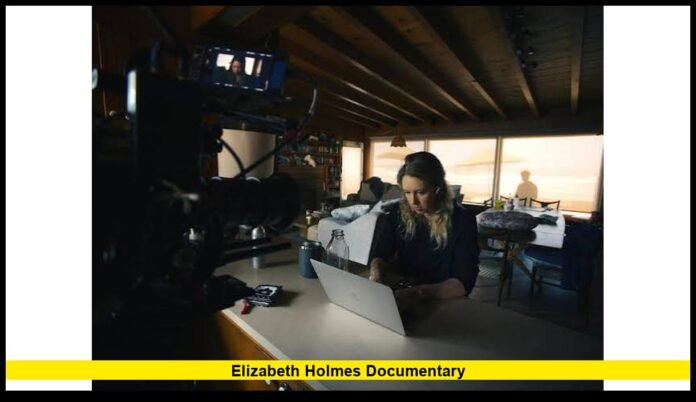

The Elizabeth Holmes documentary You Can See Everything has brought one of Silicon Valley’s most controversial figures back into the national conversation. Directed by Nathan Fielder and Lance Oppenheim, the documentary offers an unusually intimate look at Holmes, her family life, and the period immediately before she began serving her federal prison sentence for fraud.
Unlike traditional documentaries that rely primarily on archival footage, interviews, and investigative reporting, You Can See Everything takes a more unconventional approach. The filmmakers gained extensive access to Holmes and her household, documenting her life in the weeks leading up to incarceration and continuing the project over an extended period.
As of November 24, 2026, the documentary has moved beyond its theatrical release and is available for digital rental and purchase in the United States. The film has also generated renewed interest in the Theranos scandal, Holmes’ criminal conviction, the promises she made about blood-testing technology, and the broader questions surrounding accountability in the technology and healthcare industries.
Where to Watch the Elizabeth Holmes Documentary in the U.S.
The latest release information is particularly important for viewers searching for the documentary online. You Can See Everything is available through premium digital video-on-demand platforms, allowing audiences to watch it at home without waiting for a subscription-streaming release.
| Viewing option | Current availability |
|---|---|
| Theatrical release | Released October 16, 2026 |
| Digital rental | Available |
| Digital purchase | Available |
| Prime Video | Rent or buy |
| Apple TV | Digital availability reported |
| Subscription streaming | No confirmed subscription release date |
| Expected HBO Max availability | Possible future release, but no official date confirmed |
The documentary is available through Prime Video for digital rental or purchase. The listed prices are $19.99 to rent and $24.99 to buy, although prices and availability can change.
A rental generally provides a limited viewing period, while a digital purchase allows the viewer to retain access through the purchasing platform according to its terms.
The film’s theatrical release began on October 16, 2026, and its digital release has now made it easier for viewers who missed cinema screenings to watch the documentary from home.
Is the Documentary Available on Netflix or Hulu?
At present, viewers should not assume You Can See Everything is available through Netflix or Hulu’s regular subscription libraries. The current home-viewing availability is through digital rental and purchase services.
A subscription-streaming release could happen later, but a confirmed date has not been announced. Reports have suggested that HBO Max could eventually become a streaming destination because of A24’s distribution arrangements, but any projected date should be treated as an estimate rather than an official announcement.
For viewers who want another production about Holmes, Hulu’s scripted series The Dropout remains a separate option. The series dramatizes the rise and collapse of Theranos, with Amanda Seyfried portraying Holmes. Viewers can explore the series through the official Hulu page for The Dropout.
The distinction is important: You Can See Everything is a documentary built around real footage and direct access, while The Dropout is a scripted dramatization of events.
What Is “You Can See Everything” About?
You Can See Everything follows Elizabeth Holmes during the period immediately before she reported to federal prison in 2023. The project began with the filmmakers gaining access to Holmes approximately 34 days before she was scheduled to begin her prison sentence.
The documentary focuses on the personal and emotional environment surrounding Holmes as she prepared for a major transition in her life. Instead of presenting the Theranos story exclusively through business records, court proceedings, and interviews with former employees, the film allows viewers to observe Holmes in her private surroundings.
The film also follows her relationship with her partner, Billy Evans, and aspects of their family life. This approach creates a different perspective from the investigative reporting that originally exposed the company’s problems.
The documentary’s central tension comes from the contrast between Holmes’ personal presentation and the established record of what happened at Theranos. Viewers are given access to conversations, interactions, and scenes from her life, but the film does not automatically resolve every question about her motivations, beliefs, or understanding of the events that led to her conviction.
That ambiguity is one of the reasons the documentary has attracted significant attention.
Who Directed the Elizabeth Holmes Documentary?
The film was directed by Nathan Fielder and Lance Oppenheim, two filmmakers whose approaches are different from those traditionally associated with straightforward investigative documentaries.
Nathan Fielder is known for projects that blend comedy, uncomfortable social interactions, experimentation, and unconventional storytelling. His work frequently places him in situations where the boundary between performance and reality becomes difficult to identify.
Lance Oppenheim is known for documentary filmmaking that explores unusual personalities, environments, and human behavior through observational filmmaking.
Together, the directors take a distinctive approach to Holmes’ story. Their documentary does not simply attempt to summarize the Theranos scandal from beginning to end. Instead, it places the audience inside an environment where the filmmakers themselves are interacting with Holmes and trying to understand the person they are documenting.
The result is a film that combines documentary observation with an unusually personal and sometimes unsettling atmosphere.
Why Did Elizabeth Holmes Agree to Participate?
Holmes’ participation is one of the documentary’s most significant elements. The former Theranos executive has spent years dealing with the consequences of her company’s collapse, criminal prosecution, conviction, and imprisonment.
Allowing a documentary crew to record her private life created a different type of public exposure.
Holmes has continued to maintain that she is innocent of the criminal conduct for which she was convicted. The documentary provides an opportunity for audiences to see her directly rather than relying exclusively on previous interviews, courtroom appearances, or portrayals by actors.
However, participation in a documentary does not mean that every statement made by a subject is independently verified or that the filmmaker necessarily accepts the subject’s version of events.
For audiences, the most important approach is to watch the film critically. Holmes’ statements should be considered alongside the documented history of Theranos, evidence presented during her criminal trial, reporting by investigative journalists, and the legal findings in her case.
Elizabeth Holmes and the Theranos Scandal: What Happened?
To understand why the Elizabeth Holmes documentary is attracting attention, it is necessary to understand the company at the center of her story.
Holmes founded Theranos in 2003, with the ambition of transforming laboratory testing. The company promoted technology that it claimed could perform a wide range of blood tests using only a small amount of blood, potentially collected through a finger prick.
The idea was appealing to consumers and investors.
Traditional blood testing can require venous blood draws, laboratory equipment, and a network of medical facilities. Theranos promised that its technology could make testing faster, more convenient, and potentially less expensive.
Holmes became one of the most prominent figures in Silicon Valley. Her public image, distinctive style, and ambitious vision helped attract attention from investors, business leaders, and major media organizations.
The company’s claims eventually came under intense scrutiny.
Investigative reporting raised questions about whether Theranos’ technology could reliably perform the tests it advertised. Concerns also emerged regarding the company’s testing practices, the reliability of results, and the extent to which it used conventional laboratory equipment instead of its own technology.
The controversy eventually led to regulatory investigations, lawsuits, the company’s collapse, and criminal proceedings against Holmes and former company executive Ramesh Balwani.
How Theranos Became a Major U.S. Business Scandal
The Theranos story became more than a controversy about a technology startup. It raised questions about the relationship between innovation, investor confidence, corporate secrecy, and the medical industry’s responsibility to protect patients.
Several factors contributed to the scandal’s significance.
The promise of disruptive technology: Theranos presented a vision of healthcare that could potentially make blood testing more convenient and accessible.
Investor enthusiasm: The company attracted substantial investment and influential supporters, helping Holmes become a prominent technology entrepreneur.
Limited transparency: Critics and former employees raised concerns about the company’s internal practices and the lack of independent verification for some of its claims.
Healthcare implications: Unlike many technology products, blood-testing systems can directly affect medical decisions. Incorrect or unreliable results can have consequences for diagnosis, treatment, and patient health.
Corporate accountability: The Theranos case became a major example of how ambitious business claims can create serious legal and financial consequences when those claims are not supported by the underlying technology.
The documentary’s personal perspective makes these broader issues especially relevant because the audience is not simply watching a company collapse. It is also observing the individual at the center of that collapse.
What Was Elizabeth Holmes Convicted Of?
Elizabeth Holmes was convicted in federal court in January 2022 on charges involving fraud against investors in Theranos.
The criminal case focused on allegations that she misrepresented the company’s technology, capabilities, financial condition, and business prospects to investors.
Holmes was found guilty on multiple counts related to investor fraud. However, she was not convicted on every charge brought against her.
The legal outcome was significant because Theranos had once been viewed as a potentially transformative healthcare company. Holmes’ conviction demonstrated that executives could face criminal accountability when investors were allegedly misled about important aspects of a company’s operations and technology.
The case also highlighted the difference between an unsuccessful business and criminal fraud. Companies can fail for many reasons, including technical challenges, market conditions, management mistakes, and financial difficulties. Criminal fraud cases involve allegations and proof of specific unlawful conduct.
For readers interested in the legal record, the official federal court and prosecution information provides additional background through the U.S. Department of Justice.
Elizabeth Holmes’ Prison Sentence and Legal Status
Holmes was sentenced in 2022 after her conviction. Her sentence was reported as more than 11 years in federal prison, with the precise length commonly reported as 11 years and three months.
She reported to federal prison in May 2023.
The sentence became another major chapter in the Theranos story, turning Holmes from a celebrated startup founder into a convicted executive serving a federal prison term.
The documentary begins in the period before her incarceration, making the preparations for prison an important part of the film’s narrative.
The filmmakers’ access allows viewers to observe the personal consequences of the criminal case in a way that courtroom footage alone cannot provide. However, the documentary does not change the legal outcome of the case, and its personal portrayal should be understood separately from the findings established through the criminal proceedings.
For readers seeking official information about federal criminal proceedings, the U.S. justice system’s public resources provide a starting point for understanding the legal framework surrounding fraud prosecutions.
What Makes This Documentary Different From Other Elizabeth Holmes Productions?
Elizabeth Holmes has already been the subject of books, investigative reports, television programs, podcasts, and dramatizations. You Can See Everything distinguishes itself by offering access to her personal environment rather than relying primarily on historical reconstruction.
1. It Uses Direct Access Instead of Only Interviews
Many documentaries about Theranos depend on interviews with former employees, journalists, investors, medical professionals, and people who were involved in the company’s operations.
This film takes a different route by documenting Holmes directly. That access provides a more immediate perspective, but it also creates a complicated viewing experience because the audience must interpret what it sees.
2. It Examines Holmes as a Person, Not Only a Business Executive
The Theranos scandal is often discussed through financial losses, laboratory technology, corporate leadership, and criminal charges.
The documentary shifts some of that attention toward Holmes’ personal life, relationships, family environment, and the period before incarceration.
That change in focus does not erase the company’s history. Instead, it creates a more complicated portrait of the person who became the public face of the scandal.
3. The Filmmakers Become Part of the Story
Nathan Fielder’s presence is an important part of the film’s identity. Rather than remaining entirely behind the camera, he participates in the environment he is documenting.
This approach creates interactions that may feel uncomfortable, unusual, or difficult to interpret. The audience is not simply watching Holmes respond to a traditional interviewer. It is observing a longer relationship between the subject and the filmmakers.
4. The Documentary Avoids a Conventional Investigative Structure
A standard documentary about Theranos might begin with Holmes’ early life, move through the company’s founding and growth, explain the technology controversy, and finish with the criminal trial.
You Can See Everything is more focused on the period surrounding her imprisonment. That narrower time frame allows the film to concentrate on personal observation while leaving much of the company’s history to other productions and investigative reporting.
How Long Is “You Can See Everything”?
The documentary runs approximately 2 hours and 54 minutes, making it a substantial viewing commitment.
The length reflects the film’s observational approach and the amount of material collected during the documentary project. Viewers expecting a short news-style investigation may find the runtime longer than anticipated.
Because the film is nearly three hours, audiences watching at home may want to plan accordingly. Its style relies heavily on scenes, interactions, atmosphere, and the unfolding relationship between the filmmakers and their subject.
The extended runtime also gives the documentary room to explore the tension surrounding Holmes’ situation without relying exclusively on rapid narration or a conventional timeline.
Why Is the Film Generating So Much Attention?
The renewed interest in Holmes comes from several overlapping factors.
The Theranos story remains culturally relevant. The scandal continues to be discussed because it involved healthcare technology, startup culture, investor enthusiasm, and the consequences of corporate deception.
The documentary offers unusual access. Holmes’ willingness to participate in a project documenting her private life has attracted attention from audiences interested in seeing how she presents herself outside a courtroom.
Nathan Fielder brings a different audience. His existing reputation for unconventional comedy and documentary-style projects has helped generate interest beyond viewers who followed the Theranos scandal.
The film’s style has generated discussion. Its unusual approach makes it different from a traditional crime documentary, encouraging viewers to debate what they are seeing and how the filmmakers interpret their subject.
The story remains emotionally complicated. Holmes’ conviction is established, but audiences continue to have questions about her personality, motivations, public image, and the circumstances surrounding Theranos.
Where Does “The Dropout” Fit Into the Elizabeth Holmes Story?
For viewers who want to understand the Theranos scandal before watching You Can See Everything, The Dropout is one of the most recognizable productions about Holmes.
The Hulu series stars Amanda Seyfried and dramatizes the development of Theranos, Holmes’ rise in Silicon Valley, the company’s internal problems, and the events that eventually led to its collapse.
The series is different from the new documentary in several important ways.
| Production | Format | Main focus |
|---|---|---|
| You Can See Everything | Documentary | Holmes’ life before prison and the filmmakers’ direct access |
| The Dropout | Scripted television series | Dramatic reconstruction of the Theranos story |
| The Inventor: Out for Blood in Silicon Valley | Documentary | Theranos, its technology claims, and the scandal |
| Investigative books and reporting | Journalism | Evidence, corporate history, whistleblowers, and legal developments |
The scripted series can help viewers understand the timeline and major events, while the new documentary offers a different perspective by recording Holmes herself.
Neither production should be treated as a substitute for the legal record or comprehensive investigative reporting.
What Viewers Should Know Before Watching
The Elizabeth Holmes documentary may be especially interesting to viewers who followed the Theranos scandal, but there are several considerations worth keeping in mind.
The film is not a courtroom documentary. It focuses on personal access and observation rather than presenting every legal detail of Holmes’ case.
Holmes is the central subject. The documentary’s perspective is shaped by the filmmakers’ access to her and her household. Viewers interested in the experiences of patients, former employees, investors, and whistleblowers may want to explore other productions as well.
Direct access does not equal independent verification. A camera recording a person does not automatically establish the accuracy of everything that person says.
The Theranos scandal involved real consequences. The company’s claims and collapse affected investors, employees, patients, and the broader healthcare and technology communities.
The film’s unconventional style may not appeal to everyone. Its extended runtime and unusual storytelling approach differ from the straightforward structure of many investigative documentaries.
Where to Find the Official Film Information
The official film information, trailer, theatrical details, and production information are available through the film’s distributor.
The official A24 page for You Can See Everything provides information about the film, its directors, trailer, and release details.
Viewers who want to watch the film at home can also check their preferred digital platforms for current rental and purchase availability.
Frequently Asked Questions
Q1. What is the new Elizabeth Holmes documentary called?
The documentary is called You Can See Everything. It was directed by Nathan Fielder and Lance Oppenheim and follows Holmes during the period leading up to her imprisonment, with the project continuing over an extended period.
Q2. Where can I watch the Elizabeth Holmes documentary?
As of November 24, 2026, You Can See Everything is available for digital rental and purchase in the United States through services including Prime Video and Apple TV.
Q3. Is You Can See Everything on Netflix?
There is no confirmed Netflix subscription release for the documentary. It is currently available through premium digital rental and purchase platforms.
Q4. Is the Elizabeth Holmes documentary available on Hulu?
The new documentary You Can See Everything is not currently confirmed as part of Hulu’s subscription library. Hulu does offer the scripted series The Dropout, which dramatizes the Theranos scandal.
Q5. How long is You Can See Everything?
The film runs approximately 2 hours and 54 minutes, or 174 minutes.
Final Takeaway
The Elizabeth Holmes documentary You Can See Everything offers a different perspective on the Theranos scandal by moving beyond the company’s rise and collapse to examine Holmes herself during a major turning point in her life. Its direct access, unconventional filmmaking style, and nearly three-hour runtime make it a distinctive addition to the growing collection of films and series about one of America’s most prominent corporate fraud cases.
With its digital release now available, viewers can explore the documentary at home and compare its personal perspective with the investigative reporting, courtroom evidence, and other productions that have examined the Theranos controversy. Have you watched You Can See Everything, or do you think Elizabeth Holmes’ story still has unanswered questions? Share your thoughts and stay tuned for the latest updates on the documentary and the Theranos case.