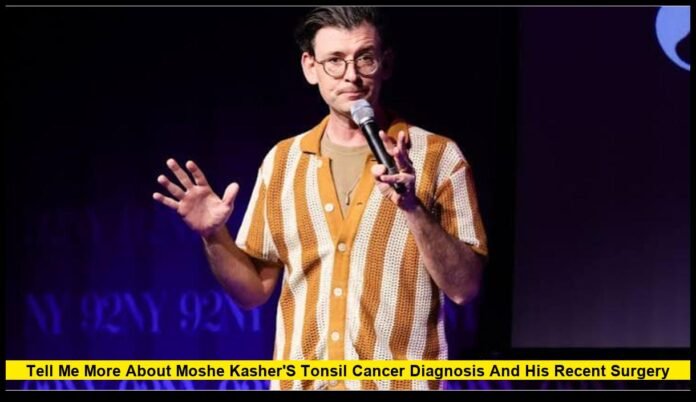

Tell me more about Moshe Kasher’s tonsil cancer diagnosis and his recent surgery has become a widely searched topic after the comedian revealed that he is recovering from treatment for HPV-positive tonsil cancer. The actor, writer, and stand-up performer recently opened up about his diagnosis, the major operation he underwent, and the challenges he has faced during recovery. His announcement sparked conversations across the entertainment world and brought renewed attention to a form of cancer that has become increasingly common in the United States.
Kasher’s decision to publicly discuss his health condition was both emotional and informative. Known for his sharp humor and candid storytelling, he chose to share details about a deeply personal medical battle while reassuring supporters that doctors remain optimistic about his recovery.
As of June 2026, Kasher continues healing after surgery and is awaiting the next steps in his treatment plan. His openness has inspired fans and helped raise awareness about HPV-related cancers.
Who Is Moshe Kasher?
Moshe Kasher has built a successful career as a comedian, actor, author, and podcast host. Over the years, he has become a familiar face in American entertainment through stand-up specials, television appearances, books, and podcasts.
His unique storytelling style often draws from his unconventional upbringing and personal experiences. Audiences have long appreciated his honesty, humor, and willingness to discuss difficult topics.
In recent years, Kasher has remained active in television and film projects while continuing to perform stand-up comedy across the country. His reputation as a fearless storyteller made his recent health announcement especially impactful.
Rather than hiding his diagnosis, he chose transparency.
That decision quickly resonated with fans who admired his willingness to discuss a life-changing medical challenge.
The Discovery That Changed Everything
Kasher revealed that the journey began when he noticed something unusual in his throat.
At first, the issue appeared minor. Like many people, he did not immediately assume the problem could be cancer.
However, further medical evaluations led doctors to identify a tumor on one of his tonsils.
The diagnosis came as a shock.
Cancer is often associated with dramatic symptoms, but many patients first discover HPV-positive tonsil cancer through subtle warning signs.
In Kasher’s case, what started as a seemingly small concern ultimately led to a major medical diagnosis.
The experience serves as a reminder of the importance of paying attention to changes in the body and seeking professional evaluation when something feels unusual.
Understanding HPV-Positive Tonsil Cancer
The cancer diagnosed in Kasher’s case is HPV-positive tonsil cancer.
HPV stands for human papillomavirus, a common virus that affects millions of Americans.
Most HPV infections do not lead to cancer. In many cases, the body clears the virus naturally.
However, certain high-risk strains can contribute to the development of several cancers, including cancers affecting the throat, tonsils, and base of the tongue.
Medical professionals have observed a significant rise in HPV-related throat cancers during the past two decades.
Many patients diagnosed with HPV-positive tonsil cancer do not fit traditional expectations associated with head and neck cancers.
As a result, awareness has become increasingly important.
Common symptoms may include:
- A lump in the neck
- Persistent throat discomfort
- Difficulty swallowing
- Ear pain
- Swollen lymph nodes
- A visible growth on a tonsil
- Voice changes
Because symptoms can appear mild at first, early diagnosis often depends on careful medical evaluation.
Receiving the Diagnosis
Learning that he had cancer brought uncertainty and fear.
Kasher later described the months following his diagnosis as some of the most challenging of his life.
Like many cancer patients, he faced a series of medical appointments, scans, consultations, and treatment discussions.
The emotional impact extended beyond physical health.
A cancer diagnosis affects family relationships, professional responsibilities, future plans, and everyday routines.
For someone whose career depends heavily on communication and public appearances, the diagnosis carried additional concerns.
Yet Kasher approached the situation with honesty.
He acknowledged the fear while also maintaining hope.
That balance became a central theme throughout his public updates.
The Five-Hour Surgical Procedure
One of the most significant milestones in Kasher’s treatment journey was a major operation designed to remove the cancer.
The surgery reportedly lasted approximately five hours.
Doctors used advanced robotic-assisted surgical techniques during the procedure.
Robotic surgery has become increasingly common in the treatment of certain throat cancers because it allows surgeons to access difficult areas with greater precision.
The operation involved multiple components.
Key Elements of the Procedure
| Treatment Step | Purpose |
|---|---|
| Tumor Removal | Remove the primary cancer site |
| Robotic Surgical Assistance | Increase precision during surgery |
| Neck Dissection | Remove potentially affected lymph nodes |
| Tissue Analysis | Evaluate cancer spread |
| Postoperative Monitoring | Track healing and recovery |
Removing cancer from the throat and neck region requires extensive planning because these areas contain structures critical for speaking, swallowing, breathing, and eating.
Surgeons worked carefully to remove cancerous tissue while preserving essential functions.
The procedure represented a major step toward eliminating the disease.
Life Immediately After Surgery
Recovery began almost immediately after the operation.
Kasher described the days following surgery as physically demanding.
Swelling affected his tongue and throat.
Speaking became difficult.
Eating and swallowing also presented challenges.
These issues are common after major procedures involving the tonsils and surrounding tissues.
Patients often experience temporary limitations while the body heals.
Pain management, hydration, nutrition, and rest become critical parts of recovery.
Kasher openly discussed these difficulties rather than presenting an unrealistic picture of healing.
His honesty helped people understand the realities many cancer patients face after surgery.
The Visible Impact of Treatment
One of the most noticeable results of the operation was a significant scar on Kasher’s neck.
He spoke openly about this aspect of recovery.
Many patients who undergo neck dissections experience visible surgical scars.
Although these marks can serve as reminders of a difficult experience, they also represent successful treatment efforts.
Kasher approached the topic with his trademark humor.
Even while discussing serious medical issues, he found ways to joke about the changes to his appearance.
This combination of vulnerability and humor helped many supporters connect with his story.
Rather than focusing solely on fear, he emphasized resilience.
The Emotional Side of Cancer Recovery
Physical healing is only one part of recovering from cancer.
Mental and emotional recovery often requires just as much attention.
Kasher discussed how the diagnosis affected his perspective on life.
The experience forced him to slow down and reflect on priorities.
Many cancer survivors describe a similar shift.
Serious illness often changes how people view relationships, work, family, and personal goals.
Kasher’s comments revealed a deeper appreciation for everyday moments and the people closest to him.
He also acknowledged the uncertainty that accompanies cancer treatment.
Waiting for test results and treatment decisions can be emotionally exhausting.
Even after surgery, patients often face weeks of additional evaluations.
Those waiting periods can create anxiety and stress.
Kasher’s willingness to discuss these realities added authenticity to his public message.
The Importance of Family Support
Throughout his recovery, family has played a central role.
Kasher frequently expressed gratitude for the support he received from loved ones.
His wife, comedian Natasha Leggero, has remained by his side during treatment.
Their daughter has also served as a source of motivation.
In sharing his story, Kasher highlighted how family support can make a tremendous difference during a health crisis.
Many cancer patients rely on loved ones for practical assistance, emotional encouragement, and strength during difficult moments.
For Kasher, fatherhood became an especially powerful reason to remain focused on recovery.
His desire to be present for his family shaped much of his outlook during treatment.
Support From the Entertainment Community
News of Kasher’s diagnosis prompted an outpouring of support from fellow entertainers.
Comedians, actors, writers, and industry colleagues offered encouraging messages.
The response reflected the respect Kasher has earned throughout his career.
Many people praised his courage for discussing the diagnosis publicly.
Others admired his ability to maintain humor despite facing a serious illness.
Support from colleagues can be meaningful during recovery because it reminds patients they are not facing challenges alone.
Kasher’s announcement generated exactly that kind of response.
Why HPV Awareness Matters
One reason Kasher’s story attracted national attention involves the broader discussion surrounding HPV-related cancers.
Public health experts have worked for years to increase awareness about HPV and its connection to several forms of cancer.
Although awareness has improved, many Americans remain unfamiliar with the link between HPV and throat cancer.
Stories from public figures often help bring attention to important health topics.
Kasher’s experience has encouraged conversations about:
- Cancer prevention
- HPV awareness
- Early detection
- Routine health screenings
- Medical follow-up for unusual symptoms
Greater awareness can help individuals recognize warning signs and seek medical evaluation sooner.
What Doctors Are Evaluating Next
Following surgery, doctors typically review detailed pathology results.
These findings help determine whether additional treatment may be necessary.
Several factors influence that decision.
They include:
- Tumor characteristics
- Lymph node involvement
- Surgical margins
- Overall treatment response
Kasher has publicly indicated that doctors are evaluating the next phase of care.
As of the latest confirmed updates, his medical team continues assessing whether further treatment will be required.
The outcome of those evaluations will help shape the remainder of his recovery journey.
A Positive Outlook Despite Challenges
One of the most encouraging aspects of Kasher’s story is his optimism.
Although he has acknowledged the seriousness of the diagnosis, he has consistently expressed confidence in his recovery.
That optimism stems from successful surgery, advances in cancer treatment, and encouraging medical expectations.
HPV-positive tonsil cancers often respond well to treatment when detected and managed appropriately.
Kasher has emphasized that doctors remain hopeful about his prognosis.
His positive attitude has provided reassurance to supporters following his health updates.
What His Story Means for Others
Cancer stories often resonate because they remind people that serious illness can affect anyone.
Kasher’s experience highlights the importance of paying attention to health concerns and seeking timely medical care.
His willingness to discuss the diagnosis publicly has also helped reduce stigma around cancer conversations.
Many patients hesitate to speak openly about health challenges.
Kasher chose a different approach.
By sharing both the difficult moments and hopeful developments, he offered a realistic picture of what cancer treatment can involve.
His story has become one of resilience, determination, and gratitude.
Looking Ahead
Tell me more about Moshe Kasher’s tonsil cancer diagnosis and his recent surgery continues to draw interest because it combines a personal health battle with an important public health message. After discovering a tumor, receiving an HPV-positive tonsil cancer diagnosis, and undergoing a complex five-hour operation, Kasher now focuses on recovery and the next stage of treatment planning.
While challenges remain, his outlook remains positive. Support from family, friends, colleagues, and fans continues to play a vital role as he moves forward. His candid updates have helped educate the public about HPV-related cancers while demonstrating the strength required to face a serious diagnosis with honesty and determination.
What are your thoughts on Moshe Kasher’s recovery journey? Share your views in the comments and check back for future updates on his health and career.