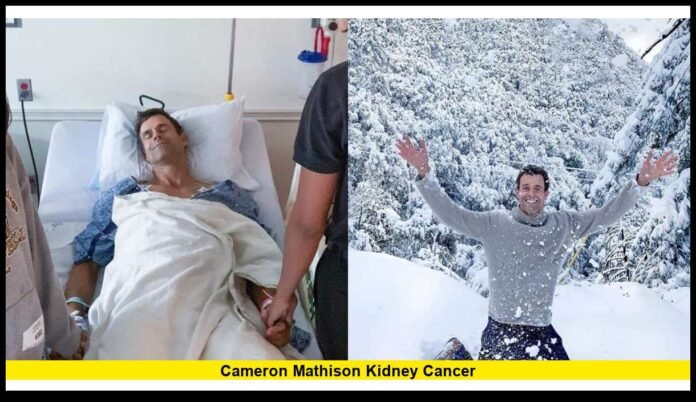

Cameron Mathison kidney cancer remains a subject of public interest as the General Hospital actor continues sharing his experience with renal cell carcinoma, the medical concerns that led to his diagnosis, and the changes he made after treatment. Diagnosed in 2019, Mathison underwent surgery to remove a cancerous tumor from his right kidney. His recovery brought encouraging results, and in February 2026, he celebrated another major milestone after announcing that his six-year follow-up scans were clear and his kidney function had improved.
The actor’s story has attracted renewed attention in November 2026 following interviews in which he discussed the warning signs he noticed before doctors discovered the tumor. He revealed that he had spent approximately two years looking for answers because several health assessments continued producing concerning results. An MRI eventually identified the kidney abnormality, changing his understanding of his health and leading to surgery.
For Mathison, the experience was more than a medical challenge. It influenced his attitude toward exercise, nutrition, rest, personal relationships, and the importance of taking unexplained health concerns seriously. His latest comments also reveal how surviving cancer has shaped his priorities during a period marked by significant personal and professional changes.
Cameron Mathison’s Kidney Cancer Diagnosis: What Happened in 2019?
Cameron Mathison first publicly revealed his kidney cancer diagnosis in September 2019. At the time, the television personality was known for his acting career, television appearances, and commitment to physical fitness.
The diagnosis came as an unexpected shock because Mathison had spent years maintaining an active lifestyle. He regularly exercised, monitored his health, and paid considerable attention to nutrition and physical conditioning.
However, his health investigations eventually revealed a serious problem.
An MRI examination identified a mass measuring approximately 4.2 centimeters in his right kidney. Doctors considered the growth consistent with renal cell carcinoma, the most common type of kidney cancer in adults.
The discovery changed his immediate priorities. Instead of concentrating on work and fitness, he had to consider treatment options and prepare for surgery.
One encouraging aspect of the diagnosis was that the cancer had not spread to other organs, according to the information he shared publicly at the time.
Doctors determined that surgery could remove the tumor. They planned a kidney-sparing procedure that would eliminate the cancerous tissue while preserving as much healthy kidney tissue as possible.
Mathison underwent surgery only days after announcing his diagnosis.
Following the procedure, he shared positive news about the pathology results. Doctors had successfully removed the tumor, and he described the cancer as the least aggressive form identified in his case.
The favorable outcome provided considerable relief to the actor and his family.
His experience also introduced many viewers to renal cell carcinoma and demonstrated why investigating unexplained health concerns can matter, even when someone appears physically healthy.
What Type of Cancer Did Cameron Mathison Have?
Mathison was diagnosed with renal cell carcinoma (RCC), a cancer that begins in the kidney’s filtering structures.
The kidneys contain millions of tiny structures that help remove waste products and excess fluid from the bloodstream. Renal cell carcinoma develops when cells in these structures begin growing abnormally.
RCC accounts for the majority of kidney cancer diagnoses among adults.
The disease can develop gradually, and some tumors remain relatively small for an extended period. Unfortunately, early kidney cancer does not always cause noticeable symptoms.
This can make the condition difficult to recognize without appropriate medical examinations.
In Mathison’s case, doctors discovered a tumor in his right kidney through MRI imaging. The mass measured approximately 4.2 centimeters.
After surgery, the actor discussed the encouraging pathology findings and described his cancer as a less aggressive form with a relatively low recurrence risk.
It is important to distinguish his personal medical experience from the broader characteristics of renal cell carcinoma.
Not every kidney tumor behaves the same way. Different RCC subtypes can have different growth patterns, treatment requirements, and outcomes.
Doctors consider several factors when evaluating kidney cancer, including:
- The size and location of the tumor.
- The specific cancer subtype.
- The tumor’s grade and biological characteristics.
- Whether cancer has spread outside the kidney.
- The patient’s overall health and kidney function.
- Whether surgery can remove the cancer while preserving healthy tissue.
Mathison’s favorable surgical outcome was encouraging, but treatment decisions and long-term expectations differ from patient to patient.
The Two-Year Search for Answers Before His Diagnosis
One of the most important details in Mathison’s November 2026 interviews was his explanation of how long he had been trying to understand his health problems.
The actor said he spent approximately two years seeking answers before doctors identified the kidney tumor.
During that period, he monitored his body through several health assessments. These included bloodwork, gut microbiome testing, and hormone evaluations.
Despite his efforts, certain results continued to concern him.
He explained that he had been following an extremely demanding approach to fitness and wellness. He believed he was doing many things correctly, but his medical results suggested that something might not be right.
The conflicting information encouraged him to continue investigating.
Eventually, an MRI revealed the tumor in his right kidney.
The discovery was unexpected because his original concerns were not simply about a known kidney condition. The imaging examination identified a problem that required immediate medical attention.
Mathison has described this period as an important lesson in taking responsibility for personal health.
He believes people should pay attention when something feels wrong and should not automatically accept unanswered questions.
His experience also highlights the importance of communicating clearly with healthcare professionals.
Patients can help medical teams by explaining symptoms, describing how long problems have continued, sharing previous test results, and asking whether additional examinations may be appropriate.
At the same time, his experience does not mean that everyone with digestive problems or unusual bloodwork needs an MRI. Medical testing should depend on symptoms, clinical findings, individual risk factors, and professional judgment.
How an MRI Revealed Cameron Mathison’s Kidney Tumor
MRI imaging played a central role in discovering Mathison’s cancer.
An MRI, or magnetic resonance imaging examination, uses magnetic fields and radio waves to produce detailed images of structures inside the body.
Doctors can use MRI scans to investigate suspicious abnormalities in organs, including the kidneys.
In Mathison’s case, the examination revealed a growth in his right kidney that was consistent with renal cell carcinoma.
The tumor measured approximately 4.2 centimeters.
The discovery was particularly important because kidney cancer can remain unnoticed during its earlier stages.
Some people do not experience recognizable symptoms until a tumor becomes larger or affects surrounding structures.
Imaging examinations can help doctors identify abnormalities, determine their location, measure their size, and assess whether additional testing is necessary.
MRI and CT scans are among the examinations used when doctors investigate suspected kidney cancer.
An imaging result alone does not always establish every detail of a cancer diagnosis. Doctors may consider additional investigations, surgical findings, and pathology reports when determining the exact nature of a tumor.
For Mathison, the MRI provided the critical information that moved his medical investigation toward treatment.
Cameron Mathison’s Kidney Cancer Surgery and Partial Nephrectomy
After doctors identified the tumor, Mathison underwent surgery in September 2019.
His operation involved a procedure called a partial nephrectomy.
A partial nephrectomy removes the portion of a kidney containing the tumor while preserving the remaining healthy tissue whenever possible.
This differs from a radical nephrectomy, which involves removing the entire affected kidney.
Mathison’s doctors successfully removed the cancerous growth without taking out the complete organ.
Following the operation, he reported that approximately 20% of his right kidney had been removed, leaving around 80% intact.
This was an encouraging development because preserving kidney tissue can help maintain the organ’s ability to perform its essential functions.
The kidneys play a major role in regulating fluid balance, filtering waste, controlling electrolyte levels, and supporting blood pressure regulation.
Maintaining healthy kidney tissue is therefore an important consideration when doctors plan treatment for localized kidney cancer.
Partial nephrectomy can be an appropriate treatment for selected patients, depending on the tumor’s characteristics and location.
However, not every patient qualifies for kidney-sparing surgery. Some tumors require a different approach because of their size, position, or extent.
Mathison’s successful operation became the most significant turning point in his cancer journey.
After receiving the pathology results, he shared encouraging information with his supporters and expressed gratitude for the medical care he received.
What Did Cameron Mathison’s Pathology Report Reveal?
The pathology results following Mathison’s surgery brought particularly positive news.
He explained that doctors had removed the tumor completely and described the cancer as the least aggressive form identified in his case.
He also reported that the likelihood of recurrence was considered low.
These findings were important because surgery is only one part of evaluating a kidney cancer diagnosis.
Pathologists examine removed tissue to identify the tumor’s characteristics. Their findings can help doctors understand the cancer subtype, grade, and other features that influence treatment and follow-up decisions.
Mathison’s public comments indicated that his results were encouraging.
However, the complete pathology report and all of its technical details have not been publicly established in the information reviewed for this article.
It would therefore be inappropriate to assign him a specific pathological stage or subtype without confirmed medical documentation.
The most important publicly reported facts are that doctors removed the tumor, the actor described the pathology results as favorable, and he subsequently reported being cancer-free.
Was Cameron Mathison’s Kidney Cancer Stage 1?
Questions about the stage of Mathison’s kidney cancer continue to appear in online searches.
His tumor measured approximately 4.2 centimeters, and information shared around the time of his diagnosis indicated that the cancer had not spread to other organs.
These details suggest that doctors discovered the tumor while it remained localized.
However, the exact pathological stage should not be presented as confirmed without an official staging report.
Kidney cancer staging considers more than tumor size. Doctors also evaluate whether the disease has affected nearby structures, lymph nodes, or distant organs.
Under standard staging criteria, a kidney tumor measuring 7 centimeters or less that remains confined to the kidney generally falls into the T1 category.
That classification alone does not establish the patient’s complete cancer stage.
For Mathison, the confirmed public information supports describing the cancer as an early-detected, localized tumor that doctors successfully removed.
His experience demonstrates why the timing of diagnosis can influence available treatment options.
Cameron Mathison’s Recovery After Surgery
Recovering from kidney cancer surgery required time, patience, and adjustments to his daily routine.
Mathison gradually returned to physical activities as his condition improved.
In November 2019, he shared an encouraging recovery update, explaining that he was feeling stronger and regaining his energy.
The support he received from family, friends, medical professionals, and fans also played an important role during this period.
However, recovery involved more than healing from the operation.
The actor needed to understand how the procedure affected his remaining kidney tissue and how to maintain his health over the longer term.
His experience encouraged him to reconsider some of his previous wellness habits.
Before the diagnosis, he had placed considerable emphasis on exercise, physical conditioning, and maintaining a particular appearance.
After surgery, he began recognizing that recovery, balanced nutrition, and adequate rest deserved equal attention.
He also discussed learning more about his individual health requirements with the help of a health coach.
In later interviews, Mathison explained that this process helped him understand aspects of his health that he had previously overlooked.
His recovery became a continuing process of learning how to support his body rather than constantly challenging it.
Cameron Mathison Announces Clear Cancer Scans in February 2026
A major positive development in Mathison’s medical journey came in February 2026.
The actor announced that his six-year cancer follow-up examinations had produced encouraging results.
His checkup included several assessments, including bloodwork, X-rays, and a CT scan.
He subsequently shared that the scans were clear.
He also reported that his kidney function had improved compared with the previous year.
This was especially encouraging because kidney function is an important consideration for people who have undergone surgery involving kidney tissue.
Mathison explained that he felt strong, healthy, and grateful for the results.
The announcement marked another important milestone since his September 2019 diagnosis.
For his supporters, the update provided reassurance that his recovery had continued in a positive direction.
It also highlighted the value of maintaining regular medical follow-up after cancer treatment.
Even after surgeons successfully remove a tumor, doctors may recommend continued examinations to monitor for recurrence and evaluate the patient’s overall health.
The frequency and type of follow-up testing depend on the original cancer characteristics, treatment, and individual medical circumstances.
Mathison’s February announcement demonstrated that his long-term monitoring remained an important part of his recovery.
Cameron Mathison Kidney Cancer Latest Update: What He Revealed in November 2026
Interest in Cameron Mathison’s health increased again in November 2026 after the actor discussed his original diagnosis and the circumstances that led to the discovery.
In an interview published November 15, he explained that he had spent approximately two years trying to understand concerning health results.
He recalled how repeated testing failed to provide the answers he wanted.
The actor discussed his bloodwork, gut microbiome assessments, and hormone evaluations, explaining that certain results served as warning signs.
His comments focused on the importance of recognizing when something is wrong and continuing to seek appropriate medical attention.
He also discussed how the experience changed his approach to exercise.
Mathison acknowledged that he had previously adopted an extreme approach to physical fitness and wellness.
He now places greater importance on recovery and understanding the limits of his body.
Another important part of the November interviews involved the wider personal challenges he experienced.
He reflected on losing his mother, the end of his 22-year marriage, professional changes, and the destruction of his Southern California home during the January 2025 wildfires.
These events represented a difficult period in his life.
However, he described how they encouraged him to reconsider his priorities and think about the kind of person he wanted to become.
His reflections included the importance of kindness, gratitude, compassion, and making meaningful use of time.
Regarding his current medical condition, the latest clearly documented detailed scan update remains his February 2026 announcement of clear six-year follow-up results and improved kidney function. His November interviews revisited his diagnosis but did not establish a newer scan result or a new cancer diagnosis.
How Cancer Changed Cameron Mathison’s Approach to Fitness
Mathison’s kidney cancer experience challenged his previous understanding of what it meant to be healthy.
For much of his career, he maintained an athletic appearance and regularly shared his exercise routines with audiences.
He believed that maintaining physical fitness was an important part of overall well-being.
However, his diagnosis made him recognize that physical appearance does not always reflect what is happening internally.
During his September 2026 appearance on the hol+ with Dr. Taz MD podcast, he discussed his previous approach to exercise, nutrition, and wellness.
He reflected on periods when he under-ate, exercised excessively, and placed considerable pressure on himself to maintain a particular level of fitness.
The discussion offered additional insight into the changes he made after his cancer diagnosis.
His current outlook places greater emphasis on balance.
Rather than treating exercise as something that must always be increased, he recognizes the importance of allowing the body to recover.
His experience also encouraged him to learn more about his individual health requirements.
Some of the important lessons from his changing approach include:
- Prioritize recovery: Exercise should be balanced with sufficient rest.
- Understand individual needs: Health recommendations should account for personal circumstances.
- Avoid unnecessary extremes: More exercise or stricter dieting does not automatically produce better health.
- Pay attention to changes: Persistent concerns should be discussed with medical professionals.
- Maintain long-term awareness: Health management continues after recovery from a major illness.
These lessons form an important part of the message he has shared with audiences following his cancer treatment.
Why Kidney Cancer Can Be Difficult to Recognize
Mathison’s diagnosis also brought attention to the challenges associated with detecting kidney cancer.
Renal cell carcinoma does not always produce recognizable symptoms during its early stages.
Some tumors are discovered accidentally when doctors perform imaging examinations for unrelated medical concerns.
Other patients develop symptoms that lead to further investigations.
Possible warning signs include:
- Blood in the urine.
- Persistent pain in the side or lower back.
- Unexplained weight loss.
- Loss of appetite.
- Ongoing fatigue.
- A noticeable lump or swelling around the abdomen or side.
- Unexplained fever in some cases.
These symptoms are not exclusive to kidney cancer. They may occur with several other medical conditions.
Anyone experiencing persistent or concerning symptoms should seek appropriate medical evaluation.
Doctors may recommend blood tests, urine tests, imaging examinations, or additional procedures depending on the patient’s medical history and symptoms.
There is no universally recommended routine screening test for kidney cancer among average-risk adults without symptoms.
People with certain inherited conditions, family histories, or other risk factors may require individualized medical guidance.
Mathison’s experience illustrates why unexplained health concerns deserve attention, but it does not mean that every person with digestive issues or abnormal laboratory results has kidney cancer.
Does Kidney Cancer Return After Surgery?
Another common question surrounding Mathison’s recovery concerns the possibility of kidney cancer returning after treatment.
Cancer recurrence is a concern for some patients following surgery, even when doctors successfully remove the original tumor.
The risk depends on several factors, including:
- Cancer stage.
- Tumor grade.
- Cancer subtype.
- Whether the tumor was completely removed.
- Other pathological findings.
- Individual health circumstances.
Some people with localized kidney cancer have favorable outcomes after surgery.
Others require additional treatment or more intensive monitoring.
Mathison’s publicly reported pathology results were encouraging, and he later announced clear follow-up scans.
His February 2026 update provided further positive information about his recovery.
However, clear scans represent the findings at the time of examination. They should not be interpreted as a guarantee that cancer can never return.
Continued follow-up remains important because medical teams use monitoring to identify possible changes and assess kidney function.
Cameron Mathison’s Career After His Cancer Diagnosis
Despite his medical challenges, Mathison continued pursuing his entertainment career.
He is widely recognized for his performance as Ryan Lavery on the daytime drama All My Children.
He later joined General Hospital, where he became known for playing Drew Cain.
His work in television extended beyond acting.
He also developed experience as a presenter and television host, including his appearances on Hallmark Channel’s Home & Family.
Following his cancer surgery, Mathison gradually returned to professional activities.
His career remained an important part of his identity, although his experience encouraged him to think more carefully about balancing work and personal life.
His public discussions about health also created opportunities to connect with audiences beyond entertainment.
Rather than keeping the diagnosis entirely private, he chose to share important parts of his recovery.
This openness helped bring attention to kidney cancer and encouraged conversations about medical awareness.
His experience demonstrates that a serious diagnosis can change someone’s priorities without necessarily ending their professional ambitions.
How Cameron Mathison’s Personal Experiences Changed His Outlook
Mathison’s kidney cancer diagnosis was one of several major experiences that influenced his personal outlook.
During the years following his treatment, he also experienced significant family and professional changes.
He and his former wife, Vanessa Arevalo, announced their separation in July 2024 after approximately 22 years of marriage.
They share two children, Lucas and Leila, and have continued to emphasize the importance of family.
In January 2025, Mathison also lost his Southern California home during the devastating wildfires.
He later discussed the emotional impact of discovering that his neighborhood had been destroyed.
These experiences came after his cancer diagnosis and contributed to a difficult period in his life.
In November 2026 interviews, he reflected on how several losses had forced him to reconsider what mattered most.
His comments focused on creating a meaningful life rather than concentrating exclusively on professional achievements or physical appearance.
He spoke about the value of compassion, gratitude, kindness, and appreciating everyday experiences.
His perspective demonstrates how a major health challenge can influence decisions long after the immediate medical treatment ends.
For Mathison, surviving cancer became part of a broader personal journey involving resilience, change, and a renewed appreciation for life.
What Can Readers Learn From Cameron Mathison’s Kidney Cancer Experience?
Although every cancer diagnosis is different, Mathison’s experience offers several useful lessons.
1. Take unexplained health concerns seriously.
Persistent symptoms or unusual medical results deserve appropriate attention. Patients should communicate their concerns clearly and ask questions when they do not understand their results.
2. Do not rely entirely on physical appearance.
Being athletic or maintaining a healthy weight does not eliminate the possibility of developing a serious medical condition.
3. Understand the purpose of medical testing.
Different examinations provide different information. Bloodwork, MRI scans, CT scans, and pathology assessments each have specific roles in evaluating medical conditions.
4. Understand treatment options.
Patients should discuss available treatments, possible complications, and long-term effects with their medical teams.
5. Give recovery enough time.
Healing after cancer surgery involves physical and emotional adjustments. Rest and appropriate follow-up care are important.
6. Maintain medical follow-up.
Clear test results are encouraging, but ongoing monitoring can help doctors assess recovery and identify potential problems.
7. Make wellness sustainable.
A balanced approach to nutrition, movement, sleep, and recovery is generally more sustainable than extreme routines.
These lessons help explain why Mathison’s story continues to attract attention years after his original diagnosis.
Final Thoughts
Cameron Mathison kidney cancer is a story of an unexpected medical discovery, successful surgery, continued recovery, and a significant change in personal priorities.
Diagnosed with renal cell carcinoma in 2019, Mathison underwent a partial nephrectomy that removed the tumor while preserving most of his right kidney.
His pathology results were encouraging, and he subsequently reported being cancer-free.
In February 2026, he celebrated another important milestone after announcing clear six-year follow-up scans and improved kidney function.
His November 2026 interviews brought renewed attention to the two-year search for answers that preceded his diagnosis. They also revealed how the experience changed his understanding of exercise, rest, and long-term wellness.
Although his medical journey has included difficult moments, his publicly shared updates have remained encouraging.
His story is an important reminder that good health involves more than maintaining an athletic appearance or following demanding fitness routines. Understanding personal health needs, seeking appropriate medical advice, and maintaining regular follow-up care can make a meaningful difference.
For Mathison, the experience has also reinforced the importance of gratitude, family, kindness, and making the most of everyday life.
What do you think about Cameron Mathison’s journey and the health lessons he has shared? Leave a comment and follow the latest updates for more entertainment and celebrity health news.