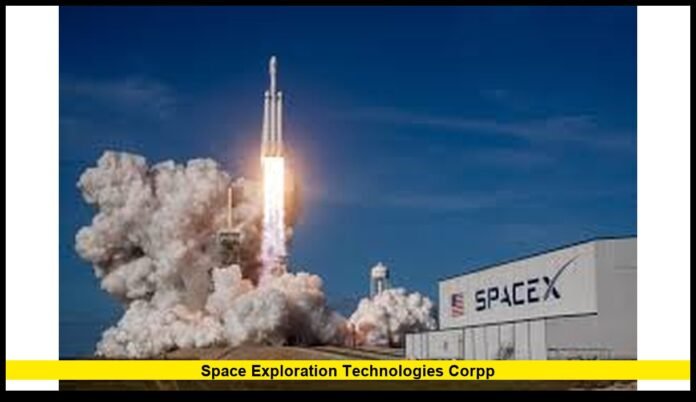

The aerospace industry continues to evolve at a rapid pace, and space exploration technologies corp remains one of the most influential forces shaping that transformation. Through advancements in reusable rockets, satellite communications, lunar mission support, and next-generation spacecraft development, the company has strengthened its position as a leading player in both commercial and government-backed space programs.
The past year has brought a series of significant milestones. From continued testing of the massive Starship vehicle to an expanding launch schedule and growing defense-related partnerships, the company has remained at the center of many of the most important developments in the global space sector.
As interest in space exploration reaches new heights, SpaceX is pushing forward with ambitious goals that could redefine how people, cargo, and scientific missions travel beyond Earth.
Starship Development Continues to Move Forward
Designed as a fully reusable transportation system, Starship is intended to carry large payloads into orbit while eventually supporting human missions to the Moon and Mars. Engineers have spent years refining the vehicle’s design, testing hardware, and gathering critical flight data.
Recent test flights demonstrated substantial progress in vehicle performance, propulsion systems, and operational procedures. Each mission provides valuable information that helps improve future versions of the spacecraft.
The Starship program represents a dramatic shift from traditional launch systems. Instead of treating rockets as disposable vehicles, the company aims to create a transportation system capable of flying repeatedly with minimal refurbishment between missions.
If successful, this approach could dramatically lower the cost of access to space and increase the frequency of launches across the industry.
Why Reusability Has Changed the Space Industry
For decades, most launch vehicles were designed for a single flight. Once a mission ended, major rocket components were lost in the ocean or burned up during reentry.
SpaceX challenged that model by developing boosters capable of returning safely to Earth after launch.
The company’s Falcon 9 rocket has become the most visible example of this strategy. First-stage boosters routinely land after missions and are prepared for future launches.
This process significantly reduces operational costs while improving launch efficiency.
The success of reusable rockets has influenced competitors across the aerospace industry, many of whom are now pursuing similar technologies.
Falcon 9 Continues to Set Industry Standards
While Starship attracts considerable attention, Falcon 9 remains the workhorse of SpaceX operations.
The rocket continues to perform missions for commercial customers, government agencies, research organizations, and satellite operators worldwide.
Its launch cadence remains among the highest in the industry, demonstrating both reliability and operational efficiency.
Falcon 9 missions have delivered communications satellites, scientific payloads, Earth observation systems, and spacecraft destined for international missions.
The rocket’s consistent performance has helped establish SpaceX as a dominant provider of launch services.
Many customers choose Falcon 9 because of its proven track record, flexible mission capabilities, and competitive pricing structure.
As launch demand continues to increase globally, Falcon 9 remains a crucial part of the company’s overall strategy.
Starlink Becomes a Major Business Engine
Beyond rocket launches, Starlink has emerged as one of the most important components of SpaceX’s long-term growth strategy.
The satellite-based internet service now serves millions of users across numerous countries and territories.
By using a large constellation of satellites operating in low-Earth orbit, Starlink delivers broadband connectivity to locations where traditional infrastructure may be limited or unavailable.
The service has gained popularity among rural communities, remote businesses, maritime operators, and travelers seeking reliable internet access.
Its growing customer base has created a substantial revenue stream that supports broader company initiatives.
Many industry analysts view Starlink as a key financial asset that helps fund advanced research and development efforts, including future spacecraft programs.
As additional satellites enter service, network coverage and performance continue to improve.
Government Partnerships Expand Across Multiple Sectors
Government agencies remain among SpaceX’s most important customers.
The company works with organizations involved in national security, communications, scientific research, and human spaceflight.
Launch contracts continue to represent a significant portion of company operations, but partnerships increasingly extend beyond transportation services.
Satellite networks, secure communications systems, and advanced space-based infrastructure have become areas of growing collaboration.
These partnerships highlight the strategic importance of commercial aerospace companies in modern government operations.
As space becomes more critical to communications, navigation, weather monitoring, and defense activities, demand for reliable launch providers and advanced orbital systems continues to rise.
SpaceX has positioned itself to play a major role in that evolving landscape.
Lunar Exploration Plans Gain Momentum
The return of astronauts to the Moon remains one of the most significant goals in modern space exploration.
SpaceX is expected to contribute heavily to those efforts through specialized versions of Starship designed for lunar missions.
Future Moon landings will require powerful transportation systems capable of carrying crews, cargo, and scientific equipment to the lunar surface.
Starship’s large payload capacity makes it a strong candidate for supporting these objectives.
Engineers continue refining technologies necessary for long-duration missions, orbital refueling, and deep-space operations.
These capabilities will be essential not only for lunar exploration but also for future missions beyond the Earth-Moon system.
As preparations continue, SpaceX remains deeply involved in the broader effort to establish a sustained human presence on the Moon.
The Long-Term Vision for Mars
Although lunar missions represent an important near-term objective, Mars remains a central part of the company’s long-range vision.
Company leadership has consistently emphasized the goal of developing transportation systems capable of supporting human settlement on the Red Planet.
Achieving that objective will require major technological breakthroughs, extensive testing, and significant infrastructure development.
Starship is designed with these challenges in mind.
The vehicle’s size, payload capacity, and reusable architecture are intended to support the transportation of equipment, supplies, and eventually people across interplanetary distances.
While substantial work remains before such missions become reality, current development efforts are laying the foundation for future exploration.
Infrastructure Investments Support Future Growth
Building advanced spacecraft requires more than innovative engineering.
SpaceX has invested heavily in manufacturing facilities, launch sites, testing infrastructure, and operational centers.
Its Starbase complex has become a focal point for Starship development, serving as both a production hub and launch facility.
Meanwhile, launch operations continue expanding at other locations to support increasing mission demand.
These investments allow the company to accelerate testing cycles, improve production efficiency, and support a growing launch manifest.
As future programs move closer to operational status, infrastructure expansion will remain a critical component of overall growth.
The ability to build, test, launch, and recover vehicles at scale provides an important competitive advantage.
Commercial Spaceflight Market Continues to Grow
The broader commercial space economy is experiencing significant expansion.
Satellite services, launch operations, Earth observation systems, and emerging technologies continue attracting investment from around the world.
SpaceX has benefited from this growth while also helping drive it.
The company’s launch capabilities have made access to orbit more affordable for businesses, universities, and research organizations.
Lower launch costs create opportunities for new ventures and innovative applications that may not have been financially viable in previous decades.
As demand for orbital services increases, commercial operators are expected to play an increasingly important role in shaping the future of space activities.
Challenges Remain Despite Rapid Progress
Developing advanced aerospace technology is rarely a smooth process.
Spacecraft, launch vehicles, and satellite systems operate in some of the most demanding environments imaginable.
Testing programs inevitably encounter technical setbacks, engineering challenges, and operational hurdles.
SpaceX has experienced its share of difficulties throughout its history.
However, the company has built a reputation for learning quickly from test results and implementing improvements at a rapid pace.
This iterative development approach has become one of its defining characteristics.
By conducting frequent tests and continuously refining designs, engineers can identify issues early and accelerate overall progress.
That philosophy continues to guide development across multiple programs.
The Growing Influence of Space Exploration Technologies Corp
The impact of space exploration technologies corp extends well beyond rocket launches.
Its innovations have influenced industry standards, encouraged competition, and accelerated investment throughout the aerospace sector.
The company’s achievements have also contributed to renewed public interest in space exploration.
From students pursuing careers in engineering to entrepreneurs developing space-focused businesses, the ripple effects of SpaceX’s work can be seen across numerous industries.
Its combination of ambitious goals and operational execution has helped transform perceptions of what private aerospace companies can accomplish.
As technology continues advancing, the company’s influence is likely to remain significant for years to come.
Looking Ahead
The coming months are expected to be important for multiple SpaceX programs.
Additional Starship testing, continued Falcon 9 missions, further Starlink expansion, and ongoing government partnerships will keep the company at the forefront of aerospace innovation.
The organization faces the challenge of balancing ambitious long-term objectives with the practical demands of day-to-day operations.
Yet its ability to execute complex missions while pursuing transformative technologies has distinguished it from many competitors.
Whether through lunar exploration, global connectivity, national security support, or future interplanetary missions, SpaceX continues shaping the future of humanity’s presence in space.
As the aerospace sector enters a new chapter of growth and innovation, the company’s progress will remain one of the most closely watched stories in the world of science, technology, and exploration.
What are your thoughts on SpaceX’s latest achievements and future plans? Share your perspective and stay tuned for more developments from the rapidly evolving space industry.