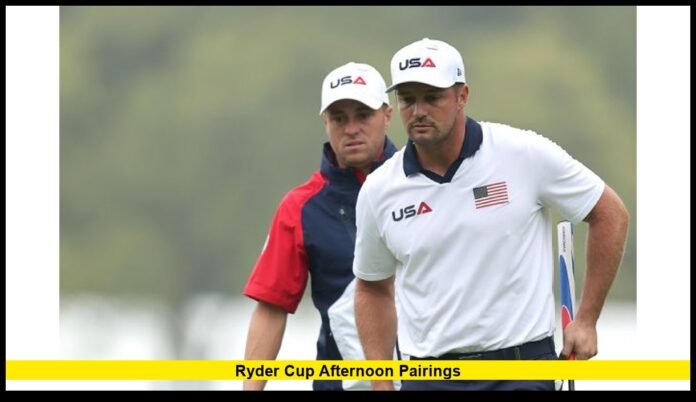

The announcement of the Ryder Cup afternoon pairings always creates a wave of anticipation among golf fans, but in 2025 at Bethpage Black, the excitement feels even greater. After Europe surged to a 3–1 lead in the morning foursomes, all eyes turned to the four-ball matches, where the U.S. team looked to rally and Europe hoped to extend its dominance. The afternoon lineups not only revealed fresh strategies but also highlighted the importance of chemistry, momentum, and psychological resilience on the world’s biggest golf stage.
Why Afternoon Pairings Matter So Much
The Ryder Cup alternates between foursomes (alternate shot) and four-ball (better ball). The morning foursomes format emphasizes precision and teamwork, often favoring experienced duos who can minimize mistakes. By contrast, the afternoon four-ball format allows each golfer to play their own ball, with the lower score counting for the team.
This structure often leads to:
- More birdie opportunities, as one player can play aggressively while the other plays conservatively.
- Highlight-reel moments, with individual brilliance turning matches.
- Momentum swings, since the format rewards risk-taking.
For captains, announcing the Ryder Cup afternoon pairings is about balancing fresh legs with proven chemistry, ensuring the team can maximize points before heading into the weekend.
Official Friday Afternoon Pairings at Bethpage Black
The first-day afternoon matchups were confirmed shortly after the morning session ended:
| Tee Time (ET) | USA Pairing | Europe Pairing |
|---|---|---|
| 12:25 p.m. | Scottie Scheffler / J.J. Spaun | Jon Rahm / Sepp Straka |
| 12:41 p.m. | Ben Griffin / Bryson DeChambeau | Tommy Fleetwood / Justin Rose |
| 12:57 p.m. | Cameron Young / Justin Thomas | Ludvig Åberg / Rasmus Højgaard |
| 1:13 p.m. | Sam Burns / Patrick Cantlay | Rory McIlroy / Shane Lowry |
These four matches form the backbone of Day 1’s second session, with each pairing chosen to either protect or swing momentum.
Scheffler and Spaun vs Rahm and Straka
The headline match of the afternoon pits World No. 1 Scottie Scheffler alongside Ryder Cup debutant J.J. Spaun against Europe’s powerhouse Jon Rahm and reliable Sepp Straka.
- Why It Matters for Team USA: After an inconsistent morning, Scheffler needs to set the tone. Pairing him with Spaun brings in fresh energy and a steady putter.
- Why It Matters for Team Europe: Rahm is the heart of Europe’s lineup. With Straka’s calm presence and accuracy, this duo has both power and consistency.
This pairing feels like a statement match — a battle of anchors who could define the rhythm of the entire afternoon.
Griffin and DeChambeau vs Fleetwood and Rose
A fascinating matchup sees rookie Ben Griffin team with Bryson DeChambeau, taking on the experienced European pairing of Tommy Fleetwood and Justin Rose.
- Team USA Strategy: By placing Griffin with DeChambeau, Captain Johnson is blending youthful excitement with raw power. DeChambeau’s aggressive drives can free Griffin to play his natural steady game.
- Team Europe Strategy: Fleetwood and Rose are nicknamed “Fleetwood Mac” for their chemistry. Both are clutch Ryder Cup performers, with Rose’s veteran composure balancing Fleetwood’s flair.
The question is whether Griffin can handle the intensity of his Ryder Cup debut against such a seasoned European pairing.
Young and Thomas vs Åberg and Højgaard
This contest brings together some of the brightest young stars of the sport.
- For Team USA: Cameron Young and Justin Thomas make an intriguing duo. Thomas is known for his fiery Ryder Cup competitiveness, while Young brings length and confidence off the tee.
- For Team Europe: Rising stars Ludvig Åberg and Rasmus Højgaard showcase the new generation of European talent. Both are unafraid of big moments, having impressed in global tournaments.
This match is one of the most unpredictable, with both sides fielding fearless players capable of momentum-changing shots.
Burns and Cantlay vs McIlroy and Lowry
The afternoon’s final pairing is filled with star power. Sam Burns and Patrick Cantlay face off against Rory McIlroy and Shane Lowry.
- Why It’s Big for the U.S.: Burns and Cantlay have experience together and are seen as a reliable pair who can deliver under pressure.
- Why It’s Big for Europe: McIlroy, a Ryder Cup veteran, thrives in this competition. Paired with Lowry, who brings grit and passion, they make a formidable duo.
This match could be pivotal. If Team USA falters here, Europe’s lead could stretch beyond reach. If Burns and Cantlay hold their ground, the Americans can build momentum for Saturday.
Strategic Decisions Behind the Pairings
The choices made by both captains reveal different philosophies:
Team USA Adjustments
- Fresh Faces: Debutants like Spaun and Griffin were rested in the morning to stay sharp for the afternoon.
- Mix of Styles: Pairings like DeChambeau with Griffin balance power with steadiness.
- Reworking Chemistry: Scheffler, who lost with Henley in the morning, gets a new partner to reset his confidence.
Team Europe Continuity
- Trusted Combinations: Fleetwood and Rose bring years of success together.
- Star Anchors: Rahm and McIlroy feature again, ensuring Europe keeps its top players on the course.
- Youth Integration: Åberg and Højgaard are given responsibility early, a sign of Europe’s faith in its next generation.
Momentum Shift Opportunities
The afternoon matches provide a chance for big swings in the overall score:
- If Team USA wins at least three matches, the day ends level at 4–4, erasing Europe’s morning advantage.
- If Europe extends its lead to 5–3 or 6–2, the U.S. faces a steep climb going into Saturday.
- Ryder Cup history shows that afternoons often set the emotional tone heading into the weekend.
Past Ryder Cup Lessons About Afternoon Pairings
Looking at history, afternoon sessions often decide momentum:
- In 2018, Europe dominated the four-ball matches to take control of the contest.
- In 2021, Team USA surged in afternoon play to cement their eventual victory.
- Afternoon sessions test stamina, mental strength, and the ability to rebound from morning setbacks.
This year at Bethpage, both teams understand the afternoon could determine the trajectory of the entire Ryder Cup.
The Bethpage Black Factor
The course itself plays a big role in shaping these pairings:
- Length: Bethpage Black favors long hitters like DeChambeau and Scheffler, making aggressive play in four-ball a viable option.
- Rough and Greens: Precision is still critical, which is why experienced players like Rose and McIlroy are so valuable.
- Crowd Pressure: New York fans are loud and passionate, and rookies like Griffin and Højgaard will feel that intensity more than seasoned players.
Pairings were likely designed with these challenges in mind, balancing players who can handle both the course and the atmosphere.
Final Thoughts
The Ryder Cup afternoon pairings for Day 1 at Bethpage Black highlight the drama, strategy, and intensity that make this competition so special. With Europe holding the early lead, the U.S. must rely on its mix of stars and newcomers to claw back points in the four-ball format. Europe, meanwhile, looks to lean on trusted veterans while giving its younger talents a chance to shine.
Which of the afternoon pairings do you think will swing momentum the most — Scheffler and Spaun’s firepower or McIlroy and Lowry’s experience? Share your thoughts below.