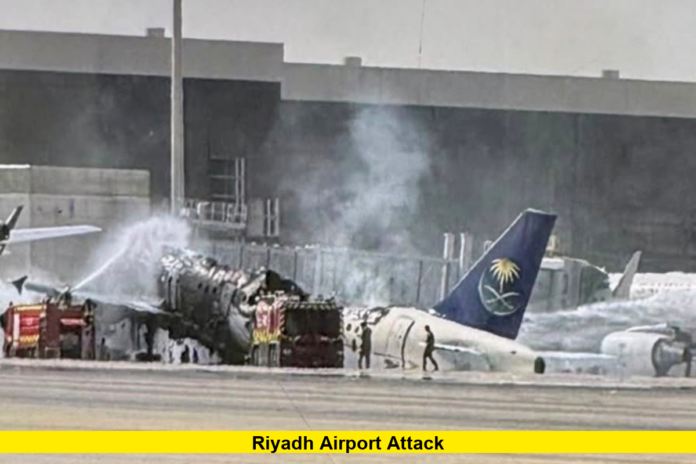

The Riyadh airport attack has raised fresh concerns about aviation safety in Saudi Arabia after a loud blast was reported at King Khalid International Airport on Saturday, October 10, 2026. The incident comes amid escalating missile strikes and heightened security concerns across the region. Travelers have faced disruptions, while several airlines have canceled or suspended flights to the Saudi capital as the situation develops.
The latest reports indicate that the blast followed earlier attacks on Riyadh’s airport facilities and a Saudia aircraft, which resulted in fatalities, injuries, and property damage. However, the cause of Saturday’s reported explosion, its full impact, and any connection to the earlier strikes had not been officially confirmed in the available reporting at the time of publication.
For passengers, the immediate priority is checking flight status, following airport instructions, and obtaining updates directly from their airlines before traveling to the airport.
Key Points Summary
Loud blast reported
An explosion-like sound was reported at King Khalid International Airport in Riyadh on October 10.
Travelers affected
Reports indicate that travelers were evacuated amid the latest security concerns.
Flight cancellations
Etihad Airways and Qatar Airways canceled multiple Riyadh services, with some cancellations extending into Monday.
Official confirmation pending
Saudi authorities had not publicly confirmed the cause or full consequences of Saturday’s reported blast in the latest available reports.
What Happened at Riyadh Airport on October 10, 2026?
A loud blast was reported at Riyadh’s King Khalid International Airport on Saturday, prompting emergency activity and renewed concern about passenger safety. Reuters reported that travelers were evacuated and more than a dozen ambulances were dispatched following the incident. The airport also advised passengers to contact their airlines and confirm their flight status before setting out.
The latest incident occurred only days after earlier strikes caused fatalities and damage at the airport. Associated Press reported that the airport was evacuated again amid continuing missile and drone threats. However, the precise circumstances of the latest blast and the extent of any new damage remained unclear in the available reporting.
The distinction matters because the reported blast, the earlier confirmed airport attacks, and claims about who was responsible are separate issues. Readers should avoid treating unverified details circulating on social media as established facts.
Riyadh Airport Attack: What Is Known About the Earlier Strikes?
The reported blast on October 10 followed a series of attacks on Saudi aviation infrastructure earlier in the week.
According to Saudi Arabia’s General Authority of Civil Aviation, attacks on October 6 and 7 targeted Abha International Airport and King Khalid International Airport. The authority reported two deaths and 28 injuries at Abha, while the attack on Riyadh airport killed one person and injured eight. The incidents also caused property damage.
On Thursday, October 8, further attacks targeted Riyadh airport facilities and a Saudia aircraft. Saudi authorities subsequently confirmed that three Saudi citizens were killed and several other people were injured. Saudia identified Captain Hamoud Ali Alkalthami among those who died and confirmed that one of its aircraft had been damaged while parked on the ground. The airline said there were no passengers aboard that aircraft at the time.
The attacks demonstrate why the latest blast has caused concern among passengers and airline operators. Nevertheless, casualty figures from the earlier incidents should not be confused with a confirmed toll for the October 10 incident.
Who Is Responsible for the Riyadh Airport Attack?
Yemen’s Houthi movement, which is aligned with Iran, has claimed responsibility for earlier missile attacks targeting Saudi airports. The group said it had launched ballistic and cruise missiles against Riyadh and other Saudi locations. However, those claims and the precise circumstances of individual strikes must be distinguished from independently verified findings.
As of the latest available reporting on October 10, Saudi aviation and government authorities had not publicly confirmed the cause of Saturday’s reported blast. Reuters reported that requests for comment had not received an immediate response. Therefore, it would be premature to state definitively that the latest explosion was caused by a particular missile, drone, or other weapon.
The broader security situation is linked to renewed fighting involving the Houthis and Saudi-backed forces in Yemen. Escalating hostilities have increased concerns about the safety of civilian aviation and the potential for further disruptions across the region.
Flights Canceled at Riyadh Airport: Which Airlines Are Affected?
The security situation has caused significant disruption at King Khalid International Airport. Several airlines have canceled or suspended services, while other flights have faced delays or diversions.
Etihad Airways
Reuters reported cancellations on services between Abu Dhabi and Riyadh, with some disruptions extending into Monday.
Qatar Airways
Multiple services between Doha and Riyadh were canceled amid the security concerns.
Lufthansa
The airline suspended Riyadh services amid regional instability, with reporting indicating a suspension extending through October 16.
Air India and other carriers
Air India, IndiGo, Air India Express and other airlines have announced suspensions or cancellations affecting services to Riyadh during the developing situation. Specific schedules and restrictions vary by airline.
Sources: Reuters, Associated Press and airline disruption reporting. Schedules can change rapidly, so confirm individual flights before traveling.
Associated Press reported that more than 225 flights had been canceled within a 24-hour period amid the latest security concerns. That figure reflects a reported disruption window and should not be interpreted as the final number of cancellations for the entire day or as a count limited exclusively to international flights.
Flight schedules can change even after an airline initially lists a service as operating. Passengers should therefore rely on their airline’s latest flight-specific information rather than assume that all services have been canceled or that all flights are operating normally.
Is Riyadh Airport Open or Closed?
The airport’s operating status has been complicated by repeated security incidents and changing flight schedules.
Saudi state media reported on October 9 and 10 that passenger movement and airport operations had returned to normal following the October 8 attacks. However, Reuters subsequently reported a new blast on October 10, alongside further cancellations and airline suspensions.
These reports describe different points in a rapidly changing situation. An earlier return to normal operations does not guarantee that every terminal, route, or scheduled flight remains unaffected after a new security incident.
Passengers should not assume that the airport is fully closed or fully operational based on a single report. Check the latest status of the specific flight and follow any instructions issued by airport staff or the airline.
The airport’s official website provides flight-tracking services:
What Should Travelers Do After the Riyadh Airport Attack?
Travelers scheduled to depart from, arrive at, or connect through Riyadh should take practical steps to reduce the risk of missing a flight or encountering avoidable problems.
1. Confirm your flight before leaving. Check your flight number, departure time, terminal, and current status directly with the operating airline.
2. Contact the airline about cancellations. If your service has been canceled, ask whether you qualify for a refund, rebooking, or another available travel arrangement. Policies depend on the airline, ticket conditions, and circumstances.
3. Follow official airport instructions. If an evacuation or security restriction is announced, follow directions from airport personnel and emergency responders rather than returning to a restricted area.
4. Avoid relying on unverified social media posts. Videos and images may show earlier incidents or locations unrelated to the latest blast. Confirm major claims through credible news organizations and official announcements.
5. Check connecting flights separately. A canceled or diverted inbound service may affect a connecting journey even if the second flight still appears on the schedule.
6. Keep travel documents and airline communications accessible. Retain booking details, boarding information, cancellation notices, and any messages about revised arrangements.
These precautions are especially important for passengers traveling internationally, where a canceled flight can affect onward connections, hotel reservations, and return journeys.
Could the Riyadh Airport Attack Affect International Travel?
Riyadh is a major aviation hub connecting Saudi Arabia with destinations across the Middle East, Asia, Europe, and other regions. Disruptions at its main international airport can therefore affect travelers well beyond the Saudi capital.
Canceled flights may force airlines to rebook passengers, divert incoming aircraft, adjust aircraft rotations, or temporarily suspend particular routes. Travelers connecting through other Gulf hubs may also experience schedule changes when services between those hubs and Riyadh are interrupted.
The wider security situation has raised concerns about the use of Saudi airspace by commercial aircraft. The European Union Aviation Safety Agency has warned about increased risks to civil aviation in the region, according to recent reporting.
However, the consequences will depend on how the security situation develops, which routes remain available, and what decisions individual airlines make. A disruption affecting Riyadh does not automatically mean that every flight throughout the Middle East is canceled.
Travelers should check the advisories applicable to their nationality, destination, and itinerary before making changes to their plans.
Saudi Arabia’s Response and the Wider Security Situation
Saudi authorities have previously said that emergency teams responded to the airport attacks under established emergency procedures. The General Authority of Civil Aviation also reported that it was coordinating with security agencies to assess damage and protect passengers and airport employees.
The latest blast has renewed questions about airport security, the protection of civilian infrastructure, and the risks posed by escalating regional hostilities.
Airports are critical civilian facilities. Attacks that threaten passengers, employees, and aircraft can have consequences beyond the immediate damage, including interrupted travel, reduced confidence among international visitors, and increased pressure on emergency and security services.
Saudi Arabia is also preparing to host major international business and energy gatherings. Reuters reported on October 10 that organizers intended for major conferences to proceed despite the security concerns, while emphasizing visitor safety.
Whether the latest incident leads to further restrictions will depend on official security assessments and airline decisions. At the time of writing, the cause and full impact of Saturday’s reported blast had not been definitively established in the available official information.
Latest Update on the Riyadh Airport Attack
The main confirmed developments are that a loud blast was reported at King Khalid International Airport on October 10, travelers were reportedly evacuated, emergency vehicles were dispatched, and airlines canceled or suspended additional services.
These developments followed earlier attacks that killed people, injured others, and damaged a Saudia aircraft. The Houthi movement has claimed responsibility for earlier strikes, but the cause of Saturday’s reported blast and the full extent of any new damage remained uncertain in the available reporting.
The situation remains fluid, and new information may change the picture. Passengers should prioritize official travel advisories, airline announcements, and airport instructions over speculation.
What do you think will happen next following the Riyadh airport attack? Share your thoughts in the comments and stay tuned for the latest verified updates on airport operations, flight cancellations, and regional security.