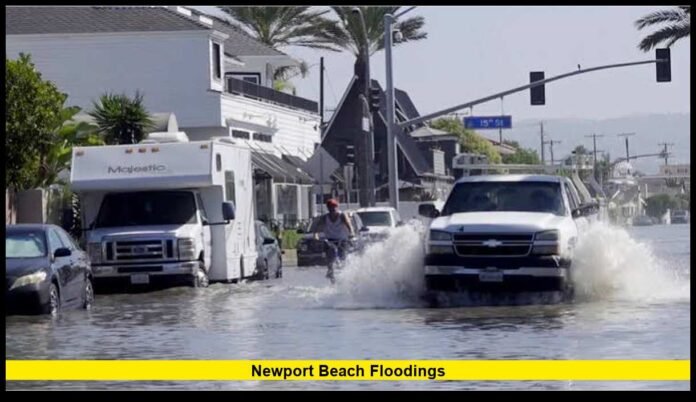

Newport Beach flooding has prompted an emergency response in Southern California after powerful ocean waves and unusually high tides sent seawater onto streets and threatened properties along the Balboa Peninsula. City officials declared a local emergency on October 9, 2026, as crews worked to strengthen shoreline barriers and prepare for further coastal impacts during the approaching storm system.
The situation remains a concern for residents, business owners and weekend visitors. Coastal flood alerts extend into October 13, while dangerous surf and potential rainfall could complicate recovery efforts. Authorities are urging the public to avoid flooded roads, stay away from hazardous ocean conditions and prepare for temporary access restrictions in vulnerable neighborhoods.
Key Points Summary
╔════════════════════════════════════════════════════════════════════╗
║ – Newport Beach declared a local emergency following coastal inundation on October 9, 2026. ║
║ – Powerful waves pushed seawater into streets and affected vehicles and properties along the Balboa Peninsula. ║
║ – A coastal flood warning remains in effect through Sunday afternoon, October 11. ║
║ – A subsequent advisory extends the period of coastal flood concern through Tuesday afternoon, October 13. ║
║ – Emergency crews are reinforcing shoreline barriers and managing water accumulation in vulnerable locations. ║
║ – Residents and tourists should follow safety instructions and avoid flooded roads and dangerous surf. ║
╚════════════════════════════════════════════════════════════════════╝
Emergency Response Intensifies Along the Orange County Coast
The latest coastal emergency has placed Newport Beach officials on heightened alert as they work to protect homes, maintain access for emergency vehicles and limit damage to public infrastructure.
The Balboa Peninsula has experienced some of the most visible impacts, with seawater reaching streets and disrupting normal travel. The flooding has demonstrated how quickly ocean conditions can affect neighborhoods built close to the shoreline.
City personnel and contractors have been reinforcing vulnerable beach areas and preparing equipment for additional high-water periods. Emergency coordination has also become a priority as officials assess changing conditions and determine where protective measures are most urgently needed.
The emergency declaration gives the city additional flexibility to coordinate assistance and resources. However, the response remains dependent on weather conditions, ocean levels and the ability of crews to keep vulnerable areas protected.
Residents should expect that traffic restrictions and temporary closures could change as the situation develops.
Why Are Streets and Properties Under Threat?
The current emergency involves several environmental factors that can combine to push ocean water inland.
High astronomical tides raise the baseline water level, leaving less space for incoming waves before they reach coastal roads. Large swells then drive additional water toward the shoreline, potentially carrying it over beaches and protective sand barriers.
Storm-related winds and rainfall can create further complications. When coastal water levels remain elevated, drainage systems may struggle to move accumulated rainwater away from low-lying streets.
These conditions are especially concerning along the Balboa Peninsula, where some streets and buildings sit close to the ocean. Water entering these locations can disrupt traffic, affect ground-floor properties and create hazards for pedestrians.
Floodwater can also carry sand and debris onto roads, making cleanup more difficult after the ocean begins to recede.
Balboa Peninsula Remains a Major Concern
The Balboa Peninsula has emerged as a central focus of the emergency response. Its exposed shoreline and low-lying streets make it vulnerable when powerful surf coincides with high tides.
Several sections of the peninsula have required attention from city crews, including areas around Balboa Boulevard and vulnerable numbered streets. The Wedge and parts of Corona del Mar are also among the locations being monitored.
For residents, the immediate concern is not limited to water entering homes. Flooding can interfere with vehicle access, emergency services, deliveries and routine travel.
People living near affected streets should consider moving vehicles to higher ground and relocating belongings away from floors where water could enter. Property owners should also avoid entering flooded garages or buildings until conditions are safe.
Visitors should reconsider nonessential trips into affected neighborhoods while flood hazards and access restrictions remain in place.
Coastal Flood Warning Extends Into the Weekend
The coastal hazard outlook indicates that the danger will not necessarily end when the initial floodwater recedes.
A Coastal Flood Warning covers the Orange County coastline through 3 p.m. Pacific Daylight Time on Sunday, October 11. A Coastal Flood Advisory is scheduled to remain in effect from Sunday afternoon through 2 p.m. Tuesday, October 13.
The warning period includes the possibility of significant coastal inundation and erosion. Beach hazards are also expected to increase during part of Sunday, when surf of approximately 5 to 7 feet, with isolated sets reaching 9 feet, could create dangerous conditions.
The storm system associated with Tropical Storm Rachel may bring additional rainfall and changing winds to the region. The precise effects can vary by location, so residents should not assume that conditions in one neighborhood reflect the situation elsewhere.
Officials are particularly concerned about periods when elevated tides and powerful waves occur together. Such combinations can cause renewed flooding even after crews have removed standing water.
What Residents Can Do to Protect Their Homes
Preparation remains important for households located near the shoreline or in streets with a history of flooding.
Newport Beach has announced free, prefilled sandbags at its Corporation Yard at 592 Superior Avenue. Empty sandbags have also been made available at city fire stations while supplies last. Residents should confirm current availability before traveling.
Homeowners can reduce potential damage by taking several precautions:
- Protect entrances: Position sandbags near vulnerable doors, garage openings and other places where water could enter.
- Relocate vehicles: Move cars away from low-lying streets and coastal parking areas.
- Raise valuable belongings: Keep important documents, electronics and essential household items above floor level.
- Review drainage: Check accessible gutters and private drainage areas when conditions allow.
- Prepare emergency supplies: Keep flashlights, charged phones, drinking water and necessary medications readily available.
- Plan alternative routes: Identify roads away from coastal flood zones before leaving home.
Residents should never enter moving floodwater to retrieve belongings or attempt repairs during hazardous conditions.
Travel Disruptions and Public Safety Concerns
Flooded streets can be dangerous even when the water appears relatively shallow. Water may hide potholes, damaged pavement and drainage openings. Moving water can also compromise vehicle control, while seawater can cause substantial damage to engines and electrical systems.
Motorists should obey barricades and instructions from public safety personnel. Attempting to drive through water of unknown depth can put drivers, passengers and emergency responders at risk.
Pedestrians should also avoid walking through flooded streets because water can conceal hazards and may contain debris or contaminants.
Residents who must travel should check road conditions before departure and allow additional time for detours. Emergency access must remain clear so response crews can reach homes and businesses that need assistance.
Beachgoers Face Dangerous Ocean Conditions
Newport Beach’s popular shoreline attractions may be affected by the combination of flooding, erosion and powerful surf.
The Wedge and other exposed coastal locations can experience unpredictable waves that wash farther inland than expected. Rip currents may also develop, creating serious risks for swimmers and surfers.
Beach visitors should stay away from restricted areas, follow lifeguard instructions and avoid approaching seawalls or jetties during heavy surf. Taking photographs near incoming waves is not worth the risk of being swept off a walkway or into the water.
Boaters should also assess conditions carefully before departing. Rough seas and changing weather can make harbor entrances and nearby coastal waters hazardous.
Families planning weekend visits should check local conditions before traveling and be prepared to change their plans if beaches or access points are closed.
Economic Effects on Local Businesses and Tourism
Newport Beach’s coastal economy depends heavily on visitors who come for its beaches, restaurants, shopping districts and harbor activities. Flooding can affect these businesses by limiting parking, interrupting deliveries and making certain locations difficult to reach.
Restaurants and waterfront businesses may need to adjust operations if nearby streets become inaccessible. Hotels and vacation rental operators may also have to inform guests about temporary restrictions and recommend safer travel routes.
The extent of any economic impact will depend on how long flooding persists and whether additional damage occurs. Businesses should monitor official announcements and protect equipment, inventory and outdoor furnishings where practical.
Visitors should confirm access to planned destinations instead of assuming that all attractions remain open during the emergency.
What to Expect Over the Coming Days
The next several high-tide cycles will be important in determining how the situation develops. Coastal flooding may ease in some areas while continuing in others, depending on shoreline exposure, drainage and local water levels.
City crews are expected to continue protective work and address accumulated water where conditions permit. However, additional waves and rainfall could complicate those efforts.
Residents should remain alert through the advisory period ending Tuesday afternoon, October 13, and continue following local instructions even if their immediate neighborhood appears unaffected.
The priority is to protect people first, reduce preventable property damage and maintain access for emergency services. Recovery efforts will depend on the extent of inundation and the condition of affected roads and coastal infrastructure.
Conclusion
Newport Beach is confronting a serious coastal weather challenge as elevated tides, powerful waves and storm-related conditions threaten vulnerable neighborhoods. The emergency response is focused on protecting properties, managing floodwater and preparing for further impacts during the coming days.
Residents can reduce risks by moving vehicles to higher ground, preparing entrances with sandbags and avoiding flooded streets. Visitors should remain cautious around beaches and postpone unnecessary travel through affected areas.
Stay alert, follow local safety instructions and share your experiences in the comments as conditions along the Southern California coast continue to develop.