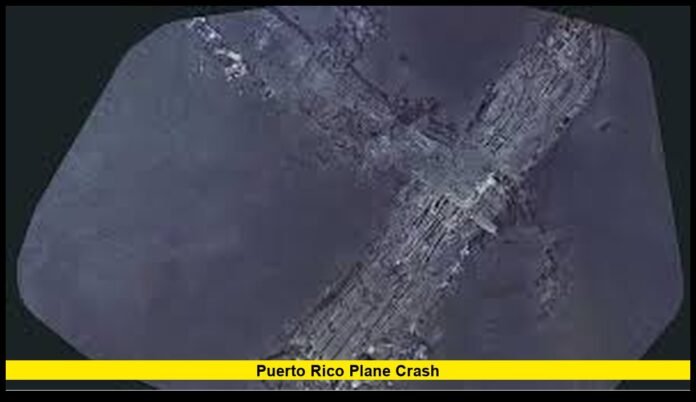

The Puerto Rico plane crash that claimed dozens of lives in 1952 has returned to national attention after the long-lost wreckage of Pan American World Airways Flight 526A was identified deep beneath the Atlantic Ocean. The discovery marks a historic moment for aviation researchers, families connected to the tragedy, and historians who have spent decades searching for answers. Modern underwater technology finally revealed the resting place of the aircraft, ending one of the longest aviation mysteries connected to Puerto Rico.
For many Americans, the finding is more than a historical milestone. It highlights how advances in ocean exploration continue to uncover important chapters in aviation history while reminding travelers that many of today’s airline safety procedures were shaped by accidents from the early years of commercial flight.
A Flight That Became Part of Aviation History
On the evening of April 11, 1952, Pan American World Airways Flight 526A departed Isla Grande Airport in San Juan, Puerto Rico, for a scheduled flight to New York City. The Douglas DC-4 carried passengers and crew members on what began as a routine commercial trip.
Only minutes after takeoff, the crew reported serious mechanical difficulties involving the aircraft’s engines. The pilots worked to keep the airplane under control while attempting to return toward Puerto Rico.
Despite their efforts, the aircraft could not remain airborne. The crew performed a controlled ditching in the Atlantic Ocean a short distance from the island.
Unlike many aviation accidents, the airplane initially remained afloat after touching the water. That gave many people on board an opportunity to escape before the aircraft slowly disappeared beneath the surface.
Even so, the disaster resulted in the loss of 52 lives, while 17 people survived.
The accident became one of the most significant commercial aviation tragedies involving a successful water landing followed by a delayed evacuation.
Quick Facts About the Accident
| Detail | Information |
|---|---|
| Airline | Pan American World Airways |
| Flight Number | 526A |
| Aircraft | Douglas DC-4 |
| Departure | San Juan, Puerto Rico |
| Destination | New York City |
| Date | April 11, 1952 |
| People on Board | 69 |
| Survivors | 17 |
| Fatalities | 52 |
| Wreckage Located | 2026 |
Discovery Ends a 74-Year Search
For decades, the exact location of the aircraft remained unknown despite extensive historical research.
Search teams relied on witness statements, archived flight records, weather reports, military observations, and historical maps to narrow the search area. Earlier technology could not accurately scan the deep ocean floor where investigators believed the aircraft had come to rest.
That changed with modern autonomous underwater systems.
Researchers deployed advanced sonar equipment capable of creating detailed images of the seabed thousands of feet below the ocean’s surface. During one of the survey missions, the technology detected shapes matching a large aircraft.
Further imaging confirmed that the wreckage belonged to Pan American Flight 526A.
The airplane now rests approximately 2,000 feet below the Atlantic Ocean, where it has remained undisturbed for more than seven decades.
How Investigators Confirmed the Aircraft
Finding an airplane underwater is only the first step.
Experts carefully examined several characteristics before confirming the aircraft’s identity.
Among the recognizable features were:
- The overall size of the fuselage
- The aircraft’s tail section
- Landing gear components
- Engine placement
- Structural layout consistent with a Douglas DC-4
- Visible Pan American markings
Each detail matched historical records from Flight 526A.
The combination of sonar mapping and high-resolution underwater imaging removed any doubt about the identity of the wreckage.
Why This Discovery Matters
Locating the aircraft is important for several reasons.
First, it provides a confirmed resting place for one of the most historically significant commercial aviation accidents involving Puerto Rico.
Second, it offers long-awaited answers to families who never knew the exact location of the aircraft.
Finally, it gives aviation historians an opportunity to better understand one of the defining accidents of the early jet age.
Although investigators completed their original accident inquiry decades ago, locating the airplane helps preserve an important piece of aviation history for future generations.
The Flight Crew’s Final Moments
Historical investigations determined that the pilots faced an extremely difficult situation.
Mechanical failures developed shortly after departure, reducing the aircraft’s ability to maintain altitude.
Rather than continuing over open water, the crew attempted to return toward Puerto Rico.
As the airplane lost altitude, the pilots chose to perform a controlled landing on the ocean instead of risking an uncontrolled crash.
Their actions allowed many passengers to leave the aircraft after it reached the water.
Unfortunately, the airplane gradually filled with water and eventually sank.
Many people escaped successfully, but others were unable to evacuate before the aircraft disappeared beneath the surface.
Read More – UPS Plane Crash Victims: Latest Developments and Ongoing Investigation
Lessons That Changed Commercial Aviation
The accident exposed several weaknesses in airline emergency procedures during the early 1950s.
Investigators found that many passengers lacked clear guidance during the evacuation.
Some people remained inside the aircraft longer than necessary, while others struggled to locate emergency equipment.
These findings encouraged the aviation industry to improve passenger safety.
Over time, airlines introduced several practices that are now standard before every flight.
These improvements include:
- Mandatory safety demonstrations
- Clear emergency exit instructions
- Better life vest education
- Improved cabin crew training
- More effective evacuation procedures
- Standardized emergency equipment placement
Millions of airline passengers now receive these safety briefings every day before takeoff.
Modern Technology Made the Difference
The successful search demonstrates how much underwater exploration has advanced.
Decades ago, locating a single aircraft beneath thousands of feet of water would have been extremely difficult.
Today’s equipment allows researchers to scan large areas with remarkable accuracy.
Key technologies used during the search included:
- Autonomous underwater vehicles
- Side-scan sonar
- Digital ocean-floor mapping
- High-definition underwater imaging
- Precision navigation systems
These tools can identify large objects hidden beneath sediment and marine growth while producing detailed images for investigators.
Condition of the Wreckage
Despite spending more than 70 years underwater, major portions of the aircraft remain recognizable.
Images released after the discovery show several structural sections resting on the ocean floor.
Marine life has covered much of the wreckage, yet investigators were still able to identify numerous components.
Among the visible sections are:
- Fuselage
- Tail assembly
- Landing gear
- Engine structures
- External markings associated with Pan American
The aircraft has become part of the surrounding underwater environment while remaining an important historical site.
Remembering Those Who Lost Their Lives
The discovery has renewed public interest in the passengers and crew members aboard Flight 526A.
Every aviation accident represents individual stories, families, careers, and lives interrupted far too soon.
For relatives of those who died, knowing where the airplane rests carries emotional significance.
Although nothing can undo the tragedy, identifying the wreckage provides a measure of closure after decades of uncertainty.
Memorial efforts continue to honor those affected by the disaster and preserve their place in aviation history.
Puerto Rico’s Role in Commercial Aviation
During the 1950s, Puerto Rico served as an important gateway between the Caribbean and the mainland United States.
Pan American World Airways operated frequent flights connecting San Juan with major American cities.
The island’s growing importance in international travel made Flight 526A one of the era’s most closely followed aviation accidents.
The recent discovery once again places Puerto Rico at the center of an important historical story that continues to attract worldwide interest.
How Aviation Safety Has Improved
Commercial aviation today looks very different from the industry that existed in 1952.
Aircraft feature sophisticated navigation systems, advanced engine monitoring, improved communication equipment, and stronger safety standards.
Cabin crews receive extensive emergency training before working aboard commercial flights.
Passengers also receive consistent instructions before departure regardless of which airline they choose.
These improvements developed gradually through decades of research, engineering, and lessons learned from earlier accidents.
Modern commercial aviation is now considered one of the safest forms of transportation in the world.
Interest From Historians and Researchers
The confirmed location of Flight 526A has generated widespread attention among aviation museums, historians, researchers, and ocean exploration specialists.
The discovery demonstrates the value of combining historical records with modern exploration technology.
It also shows that important chapters of aviation history can still be uncovered many decades after an accident occurred.
Researchers believe similar technology could eventually help locate other historic aircraft that remain missing beneath oceans around the world.
Current Status of the Wreckage
At this time, the aircraft remains on the ocean floor.
The discovery has been documented through sonar imaging and underwater photographs.
No plans have been announced to recover the aircraft itself.
Instead, the site is expected to remain an important historical location that helps preserve the memory of Flight 526A and the people connected to it.
The identification of the wreckage closes one chapter of aviation history while opening new opportunities for historical research and education.
A Lasting Legacy
More than seventy years after the tragedy, the story of Flight 526A continues to influence aviation history.
The discovery of the wreckage does not change the events of April 1952, but it provides long-awaited answers and ensures that the accident will not be forgotten.
Every airline safety demonstration, emergency briefing, and evacuation procedure reflects decades of continuous improvement across the aviation industry.
The rediscovery of this historic aircraft serves as a reminder that preserving the past helps build a safer future for every passenger who boards a commercial flight today.
The story of this historic discovery continues to capture attention across the United States. Share your thoughts below and check back for the latest verified aviation updates.