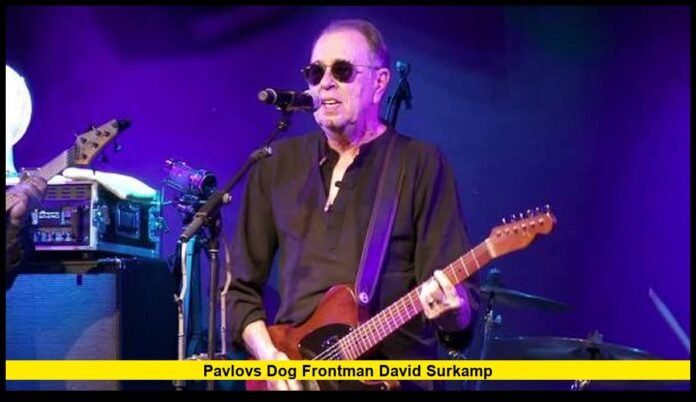

Pavlovs Dog frontman David Surkamp, the distinctive singer and songwriter behind one of American progressive rock’s most recognizable bands, died on October 13, 2026, at the age of 74, according to reports published following the band’s announcement. His passing has renewed interest in his remarkable musical journey, from the early days of Pavlov’s Dog in St. Louis, Missouri, to the recordings and performances that kept his music alive for generations of rock fans.
Surkamp built his reputation through a combination of expressive vocals, thoughtful songwriting, and an unconventional musical approach. His work helped distinguish Pavlov’s Dog from other rock groups of the 1970s. The band’s debut album, Pampered Menial, introduced listeners to memorable recordings such as “Julia” and “Late November,” establishing a musical identity that remained recognizable throughout his career.
His death represents the loss of a musician whose work extended far beyond one successful period in rock history. Surkamp continued recording, performing, and developing new material decades after the band’s original emergence. His later work, including the album Wonderlust, demonstrated his continuing commitment to music and the artistic identity he helped create.
David Surkamp’s Death and the Latest Update
The death of David Surkamp was announced publicly in October 2026. Abbie Steiling, a member of Pavlov’s Dog, shared the news on behalf of the band and paid tribute to his creativity, artistry, and lasting influence.
Surkamp died on October 13, according to reports about the announcement. His passing prompted tributes from people familiar with the band’s music and from listeners who had followed his career over several decades.
The band’s tribute emphasized the personal and artistic qualities that made Surkamp important to its history. He was remembered not only as a lead singer but also as a creative force whose work reached audiences across generations.
Reports have differed over some biographical details, including his age. The Los Angeles Times reported that he was 74. His cause of death has not been publicly disclosed in the reports reviewed for this article.
The announcement has also brought renewed attention to Pavlov’s Dog’s recordings and its place in American progressive rock. For longtime fans, Surkamp’s death represents the end of an important chapter in the band’s story.
His recorded performances, songwriting, and contributions to the group’s albums remain the clearest record of his musical achievements.
Who Was David Surkamp?
David Surkamp was an American singer, guitarist, and songwriter best known for his work with Pavlov’s Dog. He helped establish the band’s distinctive sound through his unusual vocal register and emotionally expressive performances.
Born and raised in the United States, Surkamp became part of the St. Louis music scene during the early 1970s. The city provided the setting for the formation of a band that would eventually attract attention beyond its regional beginnings.
Surkamp’s artistic identity differed from that of many contemporary rock singers. His high, sometimes fragile-sounding voice gave the band’s music a distinctive character. Rather than following conventional rock vocal styles, he used his range to convey tension, vulnerability, and dramatic emotion.
His contributions extended beyond singing. He played guitar, wrote songs, and helped shape the group’s musical direction. These roles made him central to Pavlov’s Dog during its early years and its later returns.
Surkamp also continued working outside the band. His collaboration with Ian Matthews in the group Hi-Fi demonstrated his interest in different musical settings and songwriting approaches.
Although Pavlov’s Dog remained his best-known project, his career was not limited to its initial success. He continued developing music through lineup changes, reunions, and later studio recordings.
How Pavlov’s Dog Developed Its Distinctive Sound
Pavlov’s Dog emerged from St. Louis in the early 1970s, when progressive rock was gaining attention for its ambitious compositions and unconventional arrangements.
Many rock groups of the period relied primarily on guitars, bass, drums, and straightforward song structures. Pavlov’s Dog approached music differently. Its arrangements incorporated violin, keyboards, acoustic textures, and shifts in tempo and mood.
The result was a sound that combined progressive rock complexity with memorable melodies. The band could move from gentle passages into dramatic instrumental sections without losing the emotional focus of a song.
Surkamp’s vocals played a major role in that balance. His distinctive register gave the music an unmistakable character, while his songwriting connected elaborate arrangements with personal and atmospheric themes.
The band’s early lineup included musicians such as bassist Rick Stockton, violinist Siegfried Carver, drummer Mike Safron, and keyboardist and flutist Doug Rayburn. The musicians contributed different instrumental influences that helped shape the group’s early recordings.
Pavlov’s Dog attracted record-industry attention and signed with ABC Records. Its debut album established the foundation for a career that would later include reunions, new recordings, and performances for audiences in the United States and abroad.
The group did not follow a conventional path to long-term mainstream success. Nevertheless, its distinctive sound helped it develop a devoted following.
Pampered Menial and the Songs That Made Surkamp Recognizable
Pavlov’s Dog released Pampered Menial in 1975. The album remains one of the most important recordings associated with Surkamp and the band’s early history.
Its arrangements combined rock instrumentation with classical influences and carefully developed melodies. The album also established Surkamp’s voice as one of the group’s defining characteristics.
“Julia” became one of the band’s best-known songs. Its memorable melody and expressive vocal performance helped introduce Pavlov’s Dog to listeners who might not otherwise have discovered its music.
“Late November” offered another example of the band’s atmospheric approach. Its arrangement demonstrated how the musicians could combine melodic songwriting with progressive rock elements.
Other notable recordings included “Song Dance,” “Theme from Subway Sue,” and “Of Once and Future Kings.” Each helped establish the range of the band’s musical identity.
The album’s lasting reputation rests on more than individual songs. It captured a period when musicians were exploring different ways to combine technical complexity with emotional expression.
Surkamp’s contribution was central to that approach. His voice did not simply sit above the instrumentation; it became part of the band’s overall musical texture.
For listeners discovering Pavlov’s Dog today, Pampered Menial remains a useful introduction to the sound that made Surkamp a distinctive figure in progressive rock.
At the Sound of the Bell and a Changing Musical Journey
Pavlov’s Dog followed its debut with At the Sound of the Bell in 1976. The album continued the band’s interest in intricate arrangements while introducing additional instrumental colors.
The recording featured contributions from notable guest musicians, including drummer Bill Bruford and saxophonist Michael Brecker. Their participation added to the album’s musical range.
Surkamp remained an important part of the group’s identity. His singing and songwriting connected the album to the sound established by Pampered Menial, even as the arrangements developed in new directions.
However, the band experienced internal changes and difficulties sustaining its original lineup. By the late 1970s, its initial period of activity had come to an end.
A third album’s worth of material was recorded during this broader period, but the project did not receive a conventional release at the time.
The band’s changing circumstances did not end Surkamp’s musical career. He continued pursuing other opportunities, working with fellow musicians, and developing his own artistic interests.
These years demonstrated that his musical identity extended beyond the original group’s lineup. Although Pavlov’s Dog remained central to his legacy, Surkamp continued working even when the band’s future was uncertain.
David Surkamp’s Collaboration With Ian Matthews
After his initial period with Pavlov’s Dog, Surkamp worked with British singer Ian Matthews in the group Hi-Fi.
Matthews was already known for his work with Fairport Convention and other musical projects. His collaboration with Surkamp created an opportunity to explore a different approach to songwriting and performance.
Hi-Fi represented a departure from the particular instrumental combinations that had characterized Pavlov’s Dog. The collaboration allowed Surkamp to continue developing his musical skills in a different setting.
His work with Matthews also illustrates a recurring feature of his career: a willingness to continue making music despite changes in the popularity and circumstances of his principal band.
Surkamp remained associated with the progressive rock sound that first brought him attention, but he did not restrict himself entirely to that musical environment.
His later return to Pavlov’s Dog would bring his distinctive voice back to the center of the project that had established his reputation.
The Return of Pavlov’s Dog and Its Later Albums
Pavlov’s Dog returned to recording with Lost in America, released in 1990. The album marked an important step in the band’s renewed activity.
The return brought Surkamp back to the group that had defined much of his early career. It also allowed longtime listeners to reconnect with the band’s musical identity after an extended period of uncertainty.
The reunion did not attempt simply to recreate the circumstances of the 1970s. Instead, the musicians approached the project with the experience they had gained during the intervening years.
Pavlov’s Dog continued developing its catalog in subsequent decades. The band’s later recordings included Has Anyone Here Seen Siegfried?, released in 2007, and Prodigal Dreamer, released in 2018.
These albums demonstrated that the group’s work extended beyond the original success of Pampered Menial. Surkamp continued writing and performing while maintaining the musical qualities that listeners associated with the band.
The later recordings also helped introduce Pavlov’s Dog to people who had not followed the group during its initial period.
For Surkamp, continued activity meant that his career remained focused on creating music rather than relying exclusively on earlier achievements.
Wonderlust: A Significant Release in Surkamp’s Later Career
Pavlov’s Dog released Wonderlust on October 3, 2025. The album contains 11 tracks and arrived around the 50th anniversary of the band’s landmark debut.
The release became an important part of Surkamp’s later musical history. It demonstrated that the band continued recording original material decades after its first appearance.
The album’s track list includes:
- “Anyway There’s Snow”
- “Jet Black Cadillac”
- “Mona”
- “Another Blood Moon”
- “Collingwood Hotel”
- “Solid Water, Liquid Sky”
- “Can’t Stop the Hurt”
- “Calling Sigfried”
- “I Told You So”
- “Canadian Rain”
- “I Wait for You”
The collection combines the band’s established musical identity with material from its later creative period. Surkamp’s vocals, guitar work, and songwriting remained important elements of the group’s sound.
The album also provides a perspective on his artistic development. Rather than remaining tied exclusively to the musical style of the 1970s, he continued working with arrangements and songs created many years after the band’s original success.
Its release now carries additional significance following his death. Wonderlust documents a late chapter in his career and gives listeners a way to revisit his work during the final years of his life.
The album’s place in the band’s catalog also reinforces the extent of Surkamp’s commitment to music. His career involved repeated returns to recording and performing, even after the original group had undergone substantial changes.
Sara Surkamp and Their Shared Musical History
David Surkamp’s musical life was closely connected to his wife, Sara Surkamp, who also contributed to Pavlov’s Dog.
Sara performed vocals and guitar and became part of the band’s later musical identity. Her involvement helped shape its work during the years when the group returned to recording and performing.
The couple shared a connection to the band’s creative activities. Their contributions formed part of the group’s later history, including its work on Wonderlust.
Sara died in late November 2025, according to published reports. Her death preceded David’s passing by less than a year.
The loss of both musicians has drawn attention to their shared contribution to Pavlov’s Dog and the importance of their work within its later lineup.
Their musical partnership formed one part of a much longer story that included the band’s founding, its early albums, periods of inactivity, and its return to recording.
For listeners, the recordings preserve the musical contributions they made together.
Why David Surkamp’s Voice Remains Important to Rock Music
Surkamp’s voice was central to Pavlov’s Dog’s identity. His high register distinguished the band from many of its contemporaries and helped make its recordings immediately recognizable.
His singing combined technical control with a dramatic quality. He could move between delicate passages and more intense performances, creating a sense of emotional movement within a song.
That approach suited the band’s arrangements, which frequently incorporated changes in tempo, instrumentation, and atmosphere.
Surkamp also helped demonstrate that progressive rock did not need to rely entirely on instrumental virtuosity. His performances showed how an individual voice could become a defining element of a complex musical arrangement.
His style was distinctive rather than conventional. That individuality contributed to the band’s lasting appeal among listeners who appreciate musicians with recognizable artistic identities.
The songs associated with Pampered Menial remain especially important in understanding his influence. They capture the combination of melodic songwriting and unusual vocal delivery that established his reputation.
His later recordings show that he continued using those qualities while developing new material.
David Surkamp’s Legacy After His Death
Surkamp’s death marks the end of his personal musical journey, but his recorded work remains an important part of Pavlov’s Dog’s history.
The band’s albums preserve his singing, songwriting, and guitar performances across different periods. They also document the changes that occurred as the group moved from its early success into later reunions and recordings.
Pampered Menial remains a defining release, while At the Sound of the Bell illustrates the band’s early musical development. Later albums, including Prodigal Dreamer and Wonderlust, demonstrate that Surkamp continued creating music well beyond the 1970s.
His career also reflects the persistence required to sustain a distinctive musical project. Pavlov’s Dog experienced lineup changes, periods of reduced activity, and shifting public attention. Surkamp nevertheless continued working and performing.
The band’s future activities following his death have not been conclusively established. Any announcement about additional concerts or recording projects will need confirmation from the musicians or their representatives.
For now, Surkamp’s contribution can be understood through the music he left behind. His distinctive vocals, memorable songs, and long association with Pavlov’s Dog secured his place in the history of American progressive rock.
Frequently Asked Questions
Who was Pavlovs Dog frontman David Surkamp?
David Surkamp was an American singer, guitarist, and songwriter best known for leading Pavlov’s Dog. He helped define the band’s progressive rock sound through his distinctive voice and expressive songwriting.
When did David Surkamp die?
Reports published in October 2026 stated that Surkamp died on October 13, 2026. The band announced his passing later that week.
How old was David Surkamp when he died?
The Los Angeles Times reported that Surkamp was 74 when he died. Some other reports gave a different age, so the discrepancy should be acknowledged.
What was David Surkamp’s most famous song?
“Julia” is among the best-known songs associated with Surkamp and Pavlov’s Dog. “Late November” and “Of Once and Future Kings” are also important recordings in the band’s catalog.
What was Pavlov’s Dog’s debut album?
The band’s debut album was Pampered Menial, released in 1975. It helped establish the group’s distinctive combination of progressive rock, melodic songwriting, and dramatic vocals.
What was David Surkamp’s latest album with Pavlov’s Dog?
Wonderlust, released on October 3, 2025, is the band’s latest studio album listed in major music catalogs as of October 2026. The 11-track recording features Surkamp’s contributions to the group’s later work.
Was David Surkamp only a singer?
No. In addition to singing, Surkamp played guitar and wrote songs. He also participated in musical collaborations outside Pavlov’s Dog, including the group Hi-Fi with Ian Matthews.
Who was Sara Surkamp?
Sara Surkamp was David’s wife and a musician who contributed vocals and guitar to Pavlov’s Dog. She died in late November 2025.
Will Pavlov’s Dog perform again?
The band’s future performance plans have not been conclusively confirmed in the information reviewed. Any future dates should be considered official only after an announcement from the band or its representatives.
Why is David Surkamp remembered in progressive rock?
Surkamp is remembered for giving Pavlov’s Dog a distinctive musical identity. His unusual vocal style, songwriting, and continued commitment to recording helped the band maintain a following across multiple generations.
David Surkamp leaves behind a distinctive musical legacy that continues to resonate with progressive rock fans. Share your favorite Pavlov’s Dog song in the comments and stay tuned for further confirmed updates about his music and career.