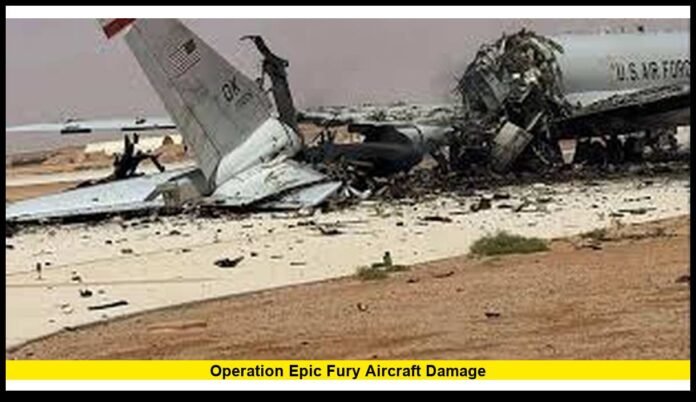

Operation Epic Fury aircraft damage continues to dominate defense headlines in 2026 as the United States faces rising aircraft losses, emergency combat landings, drone shootdowns, and mounting operational pressure during its largest Middle East air campaign in years. Military activity connected to the conflict has expanded rapidly across multiple regions, creating serious challenges for American airpower and military logistics.
The scale of the operation has pushed fighter squadrons, bomber fleets, aerial refueling crews, and surveillance aircraft into nonstop combat rotations. New battlefield assessments reveal that aircraft damage and attrition have become one of the defining military issues of the campaign.
Operation Epic Fury Enters a More Dangerous Phase
The conflict began earlier this year after U.S. forces launched coordinated strikes against Iranian military infrastructure, missile facilities, radar systems, drone bases, and command centers. What started as a limited operation quickly evolved into a sustained regional military campaign involving thousands of combat sorties.
American and allied aircraft now operate daily across contested airspace stretching from the Persian Gulf to parts of Iraq and Syria. Military planners have relied heavily on advanced airpower to maintain operational control while responding to missile attacks and drone threats.
The operation includes:
- Long-range bomber strikes
- Carrier-based fighter missions
- Drone surveillance operations
- Electronic warfare attacks
- Aerial refueling support
- Combat rescue missions
- Air defense suppression operations
The growing intensity of these missions has placed extraordinary pressure on U.S. aviation assets.
Aircraft Losses Become Central Military Concern
Military aviation experts say aircraft damage now represents one of the most serious developments tied to the campaign. Reports from multiple defense outlets indicate that American forces have lost or damaged dozens of aircraft during the operation’s opening months.
The losses involve several categories of military aircraft, including:
| Aircraft | Status Reported |
|---|---|
| MQ-9 Reaper | Multiple destroyed |
| F-15E Strike Eagle | Combat losses reported |
| F-35A Lightning II | Damage sustained |
| KC-135 Stratotanker | Damage and crash incidents |
| E-3 Sentry AWACS | Missile strike damage |
| A-10 Thunderbolt II | Combat loss confirmed |
| Helicopters | Several incidents reported |
The total number of damaged or destroyed aircraft has continued climbing as the campaign expands.
Drone Warfare Produces Heavy Losses
Unmanned aircraft have played a major role in the conflict since the earliest strikes began. The Pentagon relied heavily on MQ-9 Reaper drones for intelligence gathering, surveillance, target tracking, and precision attack coordination.
However, the drone fleet has also suffered severe attrition.
Military analysts estimate that more than twenty MQ-9 drones have been destroyed since the operation started. Many were reportedly lost while operating deep inside heavily defended airspace.
Iranian forces adapted quickly by increasing the use of:
- Radar-guided missile systems
- Mobile air defenses
- Electronic jamming equipment
- Drone interception tactics
The losses revealed growing risks for unmanned aircraft in modern high-threat combat zones.
Drone operators have continued flying missions despite those dangers because commanders still depend on real-time intelligence from airborne surveillance platforms.
F-35A Damage Sparks International Attention
One of the most discussed developments involved combat damage sustained by an F-35A stealth fighter.
The aircraft reportedly completed its mission before making an emergency landing at a regional military base. The pilot survived safely, and recovery crews immediately secured the aircraft for inspection.
The incident attracted global attention because the F-35 remains one of America’s most advanced combat aircraft. Defense analysts viewed the event as a rare example of visible combat damage involving a fifth-generation stealth fighter during active wartime operations.
Military experts continue studying what caused the damage. Analysts believe several possibilities remain under review, including:
- Surface-to-air missile fragments
- Anti-aircraft artillery fire
- Operational stress during combat maneuvers
- Equipment complications triggered during the mission
The aircraft later entered extended maintenance evaluation.
Strike Eagle Losses Raise Questions About Air Defense Threats
The F-15E Strike Eagle fleet has also suffered setbacks during the campaign.
One of the most widely reported incidents involved three American F-15E fighters mistakenly shot down by friendly air defenses during a period of heightened regional missile alerts. All crew members successfully ejected and survived.
Additional Strike Eagle losses later emerged during active strike operations.
The F-15E remains one of the most heavily used aircraft in the operation because it carries large payloads and can perform long-range strike missions against hardened targets.
Pilots flying these missions have encountered increasingly dangerous air defense environments as Iranian missile crews continue repositioning mobile launch systems throughout the region.
Military planners have responded by increasing escort operations and electronic warfare support for strike packages.
A-10 Warthog Continues Flying Despite Combat Risks
The A-10 Thunderbolt II, often called the Warthog, remains active in the campaign despite years of retirement discussions inside the Pentagon.
At least one A-10 aircraft was reportedly destroyed during combat support operations. Even with the loss, commanders continue using the aircraft because of its strong close-air-support capabilities.
The A-10 performs particularly well during missions involving:
- Ground troop support
- Precision attacks
- Low-altitude battlefield operations
- Armored target engagement
Its durability has made it valuable during prolonged combat missions, especially in areas where ground forces require immediate air support.
Tanker Fleet Under Pressure
Aerial refueling operations have become critical during the campaign because combat aircraft often remain airborne for extended periods while operating across vast distances.
KC-135 Stratotanker crews now conduct nonstop support missions for fighters, bombers, reconnaissance aircraft, and rescue operations.
The tanker fleet has faced several serious incidents.
One KC-135 crashed during operations connected to the campaign, killing multiple crew members. Investigators later examined whether nighttime flight conditions and high operational tempo contributed to the disaster.
Other tanker aircraft reportedly sustained damage during missile strikes targeting regional military installations.
The growing strain on tanker crews has raised concerns inside military planning circles because aerial refueling remains essential for maintaining U.S. air superiority.
Without tanker support, long-range strike operations would become far more difficult.
AWACS Aircraft Damage Creates Strategic Problems
The E-3 Sentry Airborne Warning and Control System aircraft represents one of the most important assets used during the campaign.
The aircraft serves as an airborne command center that tracks hostile aircraft, monitors missile launches, and coordinates combat operations across massive areas of airspace.
Damage to one E-3 aircraft during missile attacks raised alarm among military strategists.
The platform plays a major role in organizing fighter patrols, guiding intercept missions, and managing battlefield communications. Losing even temporary AWACS capability can disrupt operational coordination during high-intensity combat.
Military officials reportedly increased protective measures around surveillance aircraft after the incident.
Massive Combat Rescue Missions Launched
As aircraft incidents increased, the U.S. military expanded combat search-and-rescue operations across the region.
One rescue operation reportedly involved more than 150 aircraft supporting efforts to recover downed aviators and protect rescue teams entering hostile territory.
The mission included:
- Fighter escorts
- Refueling aircraft
- Helicopter recovery units
- Intelligence aircraft
- Electronic warfare support
- Surveillance drones
Military experts described the rescue effort as one of the largest coordinated aviation recovery operations seen in recent years.
The scale of the mission highlighted how quickly localized incidents can evolve into large military operations during modern warfare.
Read More – Harry Truman Aircraft Carrier
Aircraft Maintenance Crews Face Relentless Workloads
Behind the combat missions, military maintenance crews have worked around the clock to keep aircraft operational.
Thousands of sorties over hostile territory have accelerated wear on engines, radar systems, landing gear, and electronic components.
Military bases supporting the operation now face enormous maintenance demands involving:
- Spare parts replacement
- Engine inspections
- Structural repairs
- Software diagnostics
- Weapons system calibration
Aircraft technicians have become essential to sustaining combat operations as flight hours continue rising.
Defense officials reportedly worry about long-term readiness if the current pace continues for several more months.
Missile Threats Continue Across the Region
Although American airpower remains dominant in the region, missile threats continue creating dangerous conditions for military aircraft.
Iranian forces and allied groups still possess significant capabilities involving:
- Ballistic missiles
- Cruise missiles
- Attack drones
- Mobile launch systems
- Anti-aircraft batteries
Many aircraft now operate under constant threat while flying missions near contested areas.
Pilots and crews must frequently alter flight paths to avoid missile tracking systems and drone interception attempts.
These operational adjustments have increased mission complexity throughout the campaign.
Operation Compared to Historic U.S. Air Campaigns
Military historians increasingly compare the campaign to major American operations from previous decades.
Defense analysts point to similarities with:
- Operation Desert Storm
- Operation Iraqi Freedom
- NATO air operations in the Balkans
However, Operation Epic Fury differs in several major ways.
Modern combat now includes advanced drone warfare, stealth technology, cyber operations, satellite-guided targeting, and integrated missile defense systems operating simultaneously.
The battlefield environment has become far more technologically complex than earlier air campaigns.
Military planners worldwide continue monitoring the conflict closely because it provides real-world lessons about modern air combat against heavily defended adversaries.
Financial Costs Continue Climbing
The cost of the operation has surged as aircraft losses, combat missions, and logistical demands continue increasing.
Military analysts estimate that the campaign has already consumed tens of billions of dollars in operational spending.
Several factors contribute to the rising costs:
- Aircraft replacement expenses
- Precision-guided munitions usage
- Fuel consumption
- Aircraft maintenance operations
- Combat deployment support
- Base security upgrades
Advanced military aircraft represent some of the most expensive systems ever produced.
Replacing damaged stealth fighters, surveillance platforms, drones, and tanker aircraft could require years of manufacturing and budget planning.
Pressure Builds on U.S. Defense Manufacturing
The campaign has also exposed broader concerns about defense production capacity inside the United States.
Military planners increasingly question whether current manufacturing systems can rapidly replace combat losses during prolonged conflicts.
Key concerns include:
- Production speed for fighter aircraft
- Missile stockpile replenishment
- Drone manufacturing capacity
- Spare parts availability
- Supply chain security
Defense contractors may now face pressure to accelerate production timelines if the operation continues deep into 2026.
The conflict has already renewed debate in Washington about military readiness and industrial preparedness for large-scale warfare.
Pilots Face Intense Combat Conditions
American pilots involved in the operation continue flying under extremely demanding conditions.
Combat crews regularly encounter:
- Extended flight durations
- Missile threats
- Electronic interference
- High operational tempo
- Rapid mission changes
Many squadrons now rotate through multiple combat assignments within short periods.
The physical and mental demands of sustained air warfare have increased significantly as missions continue expanding across the region.
Military aviation experts note that pilot fatigue can become a serious operational concern during prolonged conflicts.
Global Military Powers Watch Closely
Foreign governments continue analyzing the operation for strategic lessons.
Military observers in Europe, Asia, and the Middle East are studying how American forces handle:
- Drone attrition
- Stealth aircraft survivability
- Missile defense coordination
- Electronic warfare tactics
- Combat rescue missions
The campaign may influence future military planning and aircraft development programs around the world.
Defense experts believe lessons from the operation could shape air combat doctrine for years.
What Happens Next
Operation Epic Fury aircraft damage remains a developing story as military operations continue across multiple combat zones.
American forces still maintain strong air superiority, but the conflict has demonstrated how quickly modern warfare can place even advanced aircraft under intense pressure.
Military officials continue evaluating aircraft survivability, combat readiness, and operational strategy as new missions unfold daily across the region.
Further updates regarding aircraft losses, rescue operations, and combat activity are expected as the campaign enters its next phase.
The situation surrounding Operation Epic Fury aircraft damage continues evolving rapidly, and defense analysts expect additional developments in the weeks ahead.