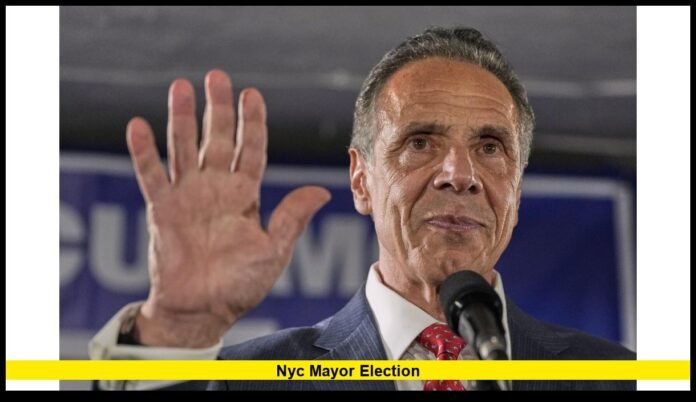

The NYC mayor election is shaping up as one of the most closely watched and consequential political events of the decade. With the general election scheduled for November 4, 2025, several major candidates are competing to lead America’s largest city. The race has already produced surprising turns and sharp contrasts among the contenders.
Key Candidates and Primary Results
In the recent Democratic primary for the NYC mayor election, Zohran Mamdani, a 33-year-old state assemblyman from Queens and a self-described democratic socialist, took a commanding lead. Mamdani secured about 43.5% of the first-choice votes, ahead of former Governor Andrew Cuomo, who earned around 36.4%. Cuomo conceded shortly after results confirmed Mamdani’s lead.
Adding another layer of complexity, incumbent Mayor Eric Adams decided not to seek the Democratic nomination and instead filed to run as an independent candidate in the general election. His decision followed months of speculation amid declining approval ratings and ongoing investigations into his administration.
On the Republican side, Curtis Sliwa, the 2021 GOP nominee and founder of the Guardian Angels, is once again representing his party. His campaign is focused on crime reduction, public safety, and restoring confidence in city law enforcement.
What the Polls Show
Recent polls for the NYC mayor election show Zohran Mamdani leading the field going into the general election. A citywide survey in July found Mamdani commanding about 35% support among registered voters, followed by Cuomo at 25%, Sliwa at 14%, and Adams at 11%.
Another poll among likely voters showed Mamdani ahead by double digits in a four-way race, suggesting his grassroots campaign and progressive platform are gaining traction across boroughs. His proposals—such as rent freezes, expanded public housing, free citywide bus service, and municipal grocery stores—have resonated with younger and working-class voters.
The data also indicates that independent candidates, particularly Cuomo and Adams, could split the centrist vote, potentially giving Mamdani a path to victory if turnout trends continue in his favor.
Why This Race Matters
The NYC mayor election holds significance far beyond city limits. As the largest metropolitan area in the United States, New York City often serves as a testing ground for policies that shape national political trends.
This year’s election has drawn national attention for several reasons:
- A reshaped Democratic field: Mamdani’s rise represents the continued strength of progressive politics in large urban centers.
- An independent incumbent: Eric Adams’ choice to run outside traditional party lines is a rare move for a sitting mayor.
- High-profile figures: Andrew Cuomo’s comeback attempt as an independent has reignited debates about political redemption and leadership style.
- Shifting priorities: Voters are increasingly focused on affordability, safety, and trust in local government rather than party loyalty.
The outcome could redefine how future city and state elections are contested in New York—and perhaps influence broader urban policy nationwide.
Key Upcoming Dates and Election Procedures
| Date | Event | Details |
|---|---|---|
| June 24, 2025 | Democratic Primary | Mamdani emerged as the frontrunner after ranked-choice counting concluded. |
| November 4, 2025 | General Election | Voters across all five boroughs will elect the next mayor of New York City. |
Voting System:
New York City continues to use ranked-choice voting for its primaries, allowing voters to rank multiple candidates by preference. In the general election, however, the candidate with the most votes wins outright.
Ballot Access:
Independent candidates, including Adams and Cuomo, have officially qualified for the November ballot, joining Mamdani and Sliwa in what’s shaping up to be a four-way race.
Issues Defining the Campaign
1. Public Safety and Policing
Crime and police-community relations remain central issues. Sliwa and Adams are emphasizing stronger law enforcement, while Mamdani advocates for investment in social programs, housing, and mental health services as alternatives to traditional policing.
2. Housing Affordability
With rent prices at record highs, Mamdani has proposed rent freezes and expanded public housing options. Cuomo has countered with a “middle-income housing plan,” while Adams is focusing on revitalizing underused city-owned properties for residential use.
3. Cost of Living and City Budget
New Yorkers are grappling with rising living costs. Mamdani’s critics question the feasibility of his expansive social spending, while his supporters argue that his policies address the root causes of inequality.
4. Transit and Infrastructure
Public transportation remains a key focus. Mamdani has promised free bus service citywide, while Cuomo and Adams have pledged to improve subway reliability without increasing fares.
5. Leadership and Trust
Adams faces scrutiny over ethics investigations, while Cuomo’s independent run is viewed by some as an attempt at political rehabilitation. Mamdani’s youth and grassroots background contrast sharply with the establishment credentials of his opponents.
What to Watch in the Coming Months
The next few months will be crucial in shaping the narrative of the NYC mayor election. Here’s what observers are monitoring closely:
- Voter Turnout: Will young and first-time voters, a key Mamdani demographic, show up in large numbers?
- Independent Dynamics: Can Cuomo or Adams consolidate centrist and moderate voters enough to challenge Mamdani’s lead?
- Endorsements: Union, business, and political endorsements could shift momentum.
- Debates: Televised debates are expected to highlight stark contrasts in vision and policy between candidates.
- Fundraising: The ability to sustain citywide campaign operations through October may determine final momentum heading into election day.
The Road Ahead
As the NYC mayor election moves toward November, New Yorkers are weighing bold change against calls for stability. Zohran Mamdani’s early lead underscores a shifting political landscape that favors grassroots movements and progressive reform. However, the entry of Cuomo and Adams as independents introduces unpredictable dynamics that could reshape the outcome.
Regardless of who prevails, the 2025 election will define New York City’s direction for years to come—on housing, policing, and how local government serves its people.
The next few weeks will determine whether the city embraces a new progressive era or reaffirms a centrist approach to governance. Stay tuned and share your thoughts below on where you think New York is headed.