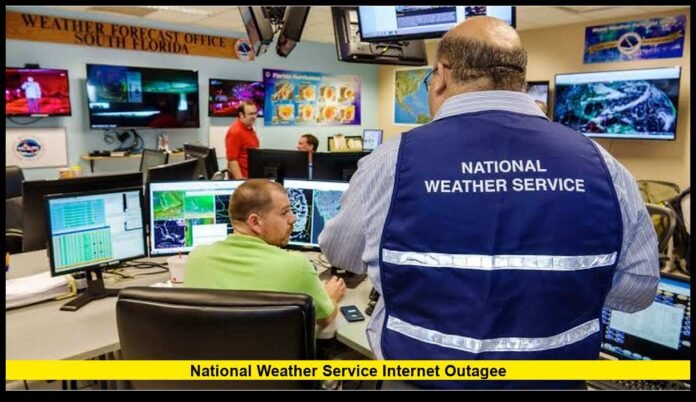

The national weather service internet outage reports have raised questions about the reliability of government weather information across the United States. Developments reported on November 13, 2026, initially created concern about access to weather forecasts, radar images, and emergency warnings. However, the National Weather Service (NWS) subsequently clarified that its radar data systems and network communications were operating normally. The agency also confirmed that no widespread information technology or network outage was affecting its operations.
The clarification was significant because some online reports suggested that a nationwide radar failure had interrupted weather monitoring. An outdated notice displayed on an individual weather service webpage contributed to the confusion. Readers who encountered the notice without its original context could easily mistake historical information for a current emergency.
The latest confirmed information presents a different picture. The agency’s operational statement indicated that its radar infrastructure remained functional. There was no official confirmation of a nationwide shutdown of weather monitoring or a suspension of forecasting services.
For millions of Americans, accurate weather information is essential. Residents use government forecasts to prepare for severe thunderstorms, tornadoes, heavy rainfall, flooding, winter storms, and other hazardous conditions. Understanding the actual status of NWS operations is therefore important for public safety.
National Weather Service Addresses Nationwide Outage Concerns
The situation attracted attention on November 13 after information about possible internet and communications problems involving the National Weather Service began circulating.
The reports created uncertainty about whether Americans could continue accessing official weather information. Some concerns focused on weather.gov, while others involved the availability of radar observations and warnings issued by local forecast offices.
The distinction between these services became central to understanding the developing situation.
The National Weather Service operates a large technical infrastructure that supports weather monitoring, forecasting, data distribution, and public communication. Its website represents only one part of that infrastructure.
A problem involving a webpage does not automatically mean that radar equipment has stopped collecting observations. Similarly, a technical issue affecting one information channel does not establish that every forecasting operation has been interrupted.
The agency’s subsequent operational clarification addressed these concerns directly.
NWS Central Operations issued an administrative message at 6:01 p.m. Eastern Time on November 13. It confirmed that radar data systems and network communications were operating normally.
The announcement also stated that there were no widespread NWS information technology or network outages.
This statement is the most important development for understanding the incident. It does not support claims that the entire national radar network stopped functioning.
Official Clarification Changes the Understanding of the Incident
The operational announcement provided an important distinction between public concerns and the confirmed condition of NWS infrastructure.
Before the clarification, reports about possible internet problems created uncertainty about whether weather information remained available across the country.
Some discussions suggested that radar systems had experienced a nationwide failure. However, the agency’s statement explicitly confirmed normal radar data and network communications operations.
This distinction matters because radar systems support several essential forecasting activities.
Meteorologists use radar observations to examine precipitation, identify developing thunderstorms, monitor storm movement, and evaluate changing weather conditions.
A widespread failure involving these systems could create serious challenges for forecasting operations.
However, the NWS did not report such a failure in its November 13 administrative update.
The confirmation also helped distinguish actual operational information from outdated webpage content.
Readers should therefore avoid treating every notice about a radar outage as evidence of a current nationwide emergency.
The date and context of an announcement are just as important as its headline.
Outdated Government Webpage Notice Contributed to the Confusion
One important factor behind the incident involved an older notice displayed on an individual National Weather Service webpage.
The notice referred to a national radar outage. Because it appeared on an official government website, its wording attracted attention.
Visitors who encountered the page during the November 13 developments could interpret the message as a current warning.
However, the notice did not establish that a new nationwide radar failure was taking place.
The absence of a clearly visible publication date made the information particularly confusing.
Government websites frequently maintain historical announcements, technical notices, and administrative records. These pages can remain accessible after the circumstances that originally prompted them have changed.
That does not mean the information is false. It means readers must establish whether it describes current conditions.
An old notice about an outage should not automatically be treated as a new operational announcement.
This issue becomes especially important when emergency-related information spreads through screenshots and social media posts.
A screenshot may show the original headline without displaying its publication date or any subsequent clarification.
As a result, information that was accurate at one point can become misleading when presented without context.
The November 13 incident demonstrates why checking current operational messages is essential when evaluating claims about government weather infrastructure.
Weather.gov and the Availability of Public Forecast Information
The weather.gov platform provides access to a wide range of government weather information.
Residents use it to find local forecasts, precipitation details, active warnings, radar images, and other meteorological products.
The website allows visitors to identify weather conditions affecting specific locations.
For people planning outdoor activities, preparing for travel, or monitoring severe weather, these services provide important information.
Reports about possible internet disruptions therefore attracted attention from people across the country.
However, the later operational clarification indicated that the situation did not represent a confirmed nationwide shutdown of the NWS website and its radar infrastructure.
It is important to distinguish between an individual user experiencing a loading problem and a widespread government service interruption.
A webpage may fail to load because of a local internet connection, browser issue, temporary server problem, or other isolated technical difficulty.
Such an experience does not prove that the entire National Weather Service platform is unavailable.
Likewise, an outdated forecast displayed through a browser cache does not necessarily indicate that the agency has stopped producing updated information.
Users should check the time associated with weather products and confirm whether the information reflects current conditions.
How National Weather Service Radar Systems Support Forecasting
Weather radar is one of the most important technologies used by the National Weather Service.
The agency operates a geographically distributed network of radar installations that provides meteorologists with observations of precipitation and atmospheric activity.
These systems help forecasters monitor storms and understand how weather conditions are changing.
Doppler radar is particularly valuable because it provides information about precipitation movement and wind patterns within storms.
Meteorologists use these observations alongside other weather data when evaluating potentially dangerous conditions.
The information supports several important forecasting activities.
Monitoring Thunderstorms
Radar observations help meteorologists identify thunderstorms and track their movement.
This information is valuable when storms approach populated areas or develop near communities with a history of severe weather.
Identifying Heavy Rainfall
Radar provides information about precipitation intensity and distribution.
Meteorologists use this information to evaluate areas experiencing heavy rainfall and monitor potential flooding threats.
Supporting Tornado Monitoring
Radar observations can help forecasters identify atmospheric patterns associated with rotating storms.
These observations are considered alongside other information when evaluating the potential for tornado development.
Evaluating Severe Thunderstorms
Weather radar helps meteorologists monitor storm structure, precipitation, and movement.
These observations support decisions involving severe thunderstorm warnings and other public safety messages.
Monitoring Winter Precipitation
Radar observations also contribute to monitoring precipitation during winter weather events.
Meteorologists combine radar information with surface observations and temperature data to evaluate changing conditions.
The nationwide radar infrastructure is therefore an essential part of the country’s weather forecasting capabilities.
The November 13 operational statement was significant because it confirmed that the radar data systems remained functional.
Weather Forecasting Depends on More Than Internet Connectivity
Weather forecasting involves several different technologies and information sources.
Although public websites are important, the process of producing forecasts does not depend entirely on whether a visitor can open a particular webpage.
The National Weather Service uses observational data, computer models, satellite information, radar measurements, and reports from other monitoring systems.
These resources help meteorologists evaluate atmospheric conditions and prepare forecasts.
Satellite Observations
Weather satellites provide information about cloud patterns, atmospheric moisture, storm development, and other conditions.
Satellite observations are especially valuable for monitoring large weather systems and conditions over oceans.
Surface Weather Stations
Ground-based stations measure conditions such as temperature, wind speed, humidity, and atmospheric pressure.
These measurements help meteorologists understand current weather conditions at specific locations.
Numerical Weather Prediction
Computer-based forecasting models process atmospheric observations to estimate how weather conditions may change.
Meteorologists examine model guidance alongside real-world observations when preparing forecasts.
Weather Radar
Radar provides detailed information about precipitation and storm activity.
It helps forecasters evaluate conditions that may develop into severe weather.
Combining these sources gives meteorologists a broader picture of the atmosphere.
This is why a problem involving one website should not automatically be interpreted as a failure of the entire forecasting system.
The different technologies perform separate functions, even though they work together to support public weather services.
Local Forecast Offices Remain Important to Weather Information
The National Weather Service operates local Weather Forecast Offices throughout the United States.
These offices monitor conditions within their respective geographic areas and provide weather information for nearby communities.
Their work includes daily forecasts, severe weather warnings, winter weather advisories, flood information, and other meteorological products.
Local offices are particularly important because weather conditions can vary considerably across short distances.
A severe thunderstorm affecting one county may not create the same threat for a neighboring county.
Similarly, coastal communities may experience different weather hazards from inland locations.
Local forecasters evaluate these differences when preparing public information.
Their responsibilities include:
- Monitoring developing weather systems.
- Preparing local temperature and precipitation forecasts.
- Issuing severe thunderstorm warnings.
- Communicating tornado warnings.
- Providing flood-related information.
- Publishing winter weather advisories.
- Monitoring hazardous marine conditions.
- Supporting emergency preparedness through weather information.
The November 13 clarification did not establish a nationwide suspension of these forecasting responsibilities.
Residents should continue checking the information issued by the forecast office responsible for their area.
The most relevant warnings are generally those that identify the affected geographic locations and provide current instructions.
Why Severe Weather Alerts Matter During Technical Disruptions
Severe weather warnings are among the most important services provided by the National Weather Service.
These alerts communicate threats that may require immediate action.
A tornado warning, for example, indicates that a tornado has been detected or that conditions justify an immediate protective response.
A tornado watch has a different meaning. It indicates that atmospheric conditions are favorable for tornado development within the specified area.
Flash flood warnings also require attention because rapidly rising water can threaten homes, vehicles, roads, and other infrastructure.
During winter, weather alerts may communicate risks associated with heavy snowfall, freezing rain, ice accumulation, and dangerous travel conditions.
The November 13 reports highlighted why dependable access to emergency information matters.
However, the NWS operational clarification did not establish that severe weather warning services had stopped nationwide.
People should continue monitoring active alerts and following instructions issued by local authorities.
They should also avoid assuming that an individual website problem means emergency warnings are unavailable through every other communication channel.
NOAA Weather Radio Provides an Additional Source of Emergency Information
NOAA Weather Radio All Hazards remains an important part of the United States emergency information system.
The service broadcasts weather forecasts, watches, warnings, and other emergency announcements.
Its network includes transmitters serving communities throughout the country.
Compatible weather radios can receive local broadcasts and, depending on the device, activate automatically when qualifying emergency alerts are transmitted.
This provides an additional way to receive important information without constantly checking a website.
Weather radios are particularly useful during power outages, severe storms, and situations when mobile internet connectivity becomes unreliable.
Residents can select equipment appropriate for their location and ensure that the device has functioning batteries or another reliable power source.
Keeping a weather radio available does not mean that the National Weather Service website is experiencing an outage.
Instead, it represents a practical preparedness measure that provides access to another emergency information channel.
Wireless Emergency Alerts Help Deliver Urgent Weather Warnings
Wireless Emergency Alerts provide another way for Americans to receive certain public safety messages.
These notifications are delivered to compatible mobile phones within designated alert areas.
Depending on the emergency and alert category, messages can communicate information about tornadoes, flash floods, and other imminent threats.
The system allows emergency authorities to reach people without requiring them to open a weather application or visit a government website.
People should review their phone settings to ensure that important emergency notifications remain enabled.
They should also understand that wireless alerts are not intended to replace every type of weather forecast.
Their primary purpose is to communicate selected emergency information when public safety requires immediate attention.
Combining mobile alerts with local broadcasts and NOAA Weather Radio provides additional options for receiving urgent information.
Local Television and Radio Continue to Provide Weather Coverage
Broadcast television and radio stations remain valuable sources of weather information.
Local meteorologists use official forecasts and warnings to explain developing conditions in their coverage areas.
Their reporting can help viewers understand storm movement, expected rainfall, wind conditions, and the locations affected by active warnings.
Television coverage may also provide visual information about severe weather systems and changing conditions.
Radio stations can communicate urgent information to residents who cannot access television or internet services.
Battery-powered radios are particularly useful when electrical interruptions affect households.
These services provide additional communication channels rather than replacing the National Weather Service’s official forecasting role.
Residents should pay attention to local emergency announcements and follow protective instructions when severe weather threatens.
FAA Telecommunications Incident Was a Separate Development
The November 13 weather service reports circulated around the same time as a separate aviation communications disruption.
The Federal Aviation Administration experienced telecommunications problems that resulted in a nationwide ground stop for departing flights.
The aviation incident attracted significant attention because air traffic control operations depend on reliable communications infrastructure.
However, the FAA and the National Weather Service perform different functions.
The FAA manages aviation safety and air traffic control operations. The NWS provides weather forecasts, observations, warnings, and other meteorological services.
The timing of the two developments encouraged speculation about whether they shared a technical cause.
However, the available information does not establish a verified connection between the incidents.
The NWS subsequently confirmed normal operations across its radar data systems and network communications.
The FAA telecommunications problem involved a separate aviation system.
It would therefore be inaccurate to claim that the NWS reports caused the FAA ground stop or that the aviation incident disabled the national weather radar network.
The two developments should be treated independently unless authorities provide evidence establishing a connection.
How to Evaluate Claims About Government Weather Outages
The November 13 incident provides an important example of why readers should examine technical announcements carefully.
Not every report describing a government outage refers to a complete service shutdown.
A technical problem may affect a single webpage, a particular data product, a local office, or a larger communications system.
These situations have different consequences.
When evaluating a weather service outage report, readers should examine several details.
Check the Publication Date
The date of an announcement helps establish whether it describes current conditions.
Historical notices should not be presented as new operational developments.
Identify the Affected System
Determine whether the notice concerns a public website, radar equipment, data distribution, or internal communications.
These systems perform different functions.
Look for a Newer Operational Statement
A later announcement may clarify whether a reported problem remains active.
The most recent official information should take priority when assessing current conditions.
Check the Geographic Scope
An issue affecting one forecast office does not automatically indicate a nationwide outage.
Readers should establish whether an announcement identifies a local, regional, or national problem.
Verify the Current Status of Weather Products
Check the timestamps attached to forecasts, warnings, and radar information.
This helps identify whether displayed information is current.
These practices can prevent inaccurate reports from spreading during situations when reliable emergency information matters most.
What the Latest National Weather Service Update Means for Americans
The latest confirmed information provides an important clarification about the November 13 developments.
NWS Central Operations stated that radar data systems and network communications were operating normally.
The agency also reported no widespread information technology or network outages.
This means the reports should not be described as confirmation of a nationwide radar shutdown.
The outdated notice appearing on an individual webpage contributed to the confusion, but it did not establish that the national weather monitoring infrastructure had stopped operating.
For residents, the practical message is to continue checking current forecasts and warnings through reliable channels.
People should also maintain access to alternative emergency information services.
NOAA Weather Radio, wireless emergency notifications, and local television and radio broadcasts can provide additional ways to receive important weather information.
These options remain valuable even when government websites and online applications are functioning normally.
Current Outlook for NWS Radar and Network Operations
As of November 14, 2026, the latest clearly identified operational clarification confirms normal radar and network communications.
There is no verified confirmation of an ongoing nationwide NWS radar shutdown.
There is also no established basis for claiming that nationwide forecasting operations have been suspended.
The situation should therefore be understood as an incident involving confusing outage-related information rather than a confirmed failure of the entire national weather service infrastructure.
Any new technical developments should be evaluated using current operational announcements.
A future notice concerning a particular radar installation, forecasting application, data feed, or communications service would need to be assessed separately.
A localized technical issue does not automatically indicate a national emergency.
Likewise, an old webpage notice should not override a newer statement that directly addresses the current operational status.
The distinction between individual service availability and nationwide infrastructure performance remains essential when reporting on government weather systems.
Conclusion: NWS Operational Clarification Provides Important Reassurance
The November 13 developments created widespread questions about the reliability of weather information in the United States. However, the National Weather Service’s operational clarification established that radar data systems and network communications were functioning normally.
The outdated notice displayed on an individual webpage contributed to inaccurate interpretations of the situation. The available information does not confirm a nationwide radar shutdown or widespread NWS network failure.
Americans should continue using official local forecasts, monitoring active weather warnings, and maintaining alternative ways to receive emergency notifications.
Reliable weather information is essential for communities facing rapidly changing conditions. Checking publication dates, verifying technical announcements, and following current emergency instructions can help residents make informed decisions.
Stay informed about verified National Weather Service developments and continue monitoring local weather conditions to keep your household prepared for changing weather threats.