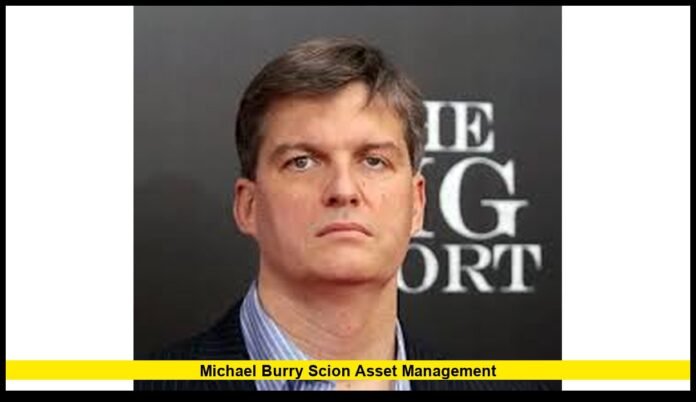

Michael Burry Scion Asset Management has taken a bold and definitive step by officially deregistering its investment advisory status with the U.S. Securities and Exchange Commission, signaling one of the most important transitions in the firm’s history. The change, finalized in early November 2025, reflects a clear redirection in strategy for the investor best known for predicting the 2008 housing collapse.
Scion Asset Management’s registration termination means the fund is no longer required to report public holdings or maintain the same level of regulatory disclosure. For followers of Michael Burry’s investment activity, the move has sharply reduced visibility into the firm’s positions at a time when market conditions and technology valuations have been under heavy scrutiny.
Burry’s Strategic Pivot and Latest Developments
The deregistration occurred shortly after investors received a year-end letter indicating a planned return of external capital. That communication outlined a shift away from traditional fund management and hinted at operational changes ahead. Scion had been overseeing roughly $155 million in assets earlier in the year, but Burry’s recent comments show a growing disconnect between his valuation models and public market pricing.
In public posts, Burry shared that he is preparing to “move on to much better things” later in November. While he did not disclose exact details, the timing aligns with the firm’s structural changes and investor redemptions. His messaging suggests a future announcement or initiative that will operate outside the regulatory constraints of a registered investment advisor.
Why Scion Deregistered: The Core Reasons
Burry emphasized that the market no longer reflects the fundamental values he believes should guide long-term investing. In his investor communication, he noted that his internal assessment of securities has not aligned with market behavior “for some time.”
Key reasons behind the deregistration include:
- Freedom from regulatory disclosure obligations, including quarterly fund holdings.
- Reduced administrative and compliance burdens, especially for a firm that may transition to managing only internal or family funds.
- Flexibility to pursue investments without public scrutiny, particularly in sectors Burry has warned may be overvalued.
- A return to a more private investment structure, similar to how many elite investors operate once outside capital is no longer part of their strategy.
The shift does not imply closure; instead, it suggests a restructuring into a private investment entity where Burry’s decisions will be far less visible to the broader market.
Timeline of Key Events
A clear timeline helps clarify how the transition unfolded:
- Late October 2025: Investors received notice that capital would be returned and fund operations would shift by year-end.
- November 10, 2025: Scion Asset Management’s SEC registration officially terminated.
- November 13, 2025: Public filings confirmed the deregistration and the end of Scion’s status as a registered investment advisor.
- November 25, 2025: Burry teased this date for a major update, building anticipation around his next venture.
This sequence represents one of the most significant structural shifts in Scion’s existence since its founding.
Impact on Followers and Financial Markets
The deregistration has immediate implications for market watchers, particularly those who follow Burry’s contrarian positions:
- Loss of 13F filings means investors will no longer see his quarterly equity holdings.
- Reduced transparency may cause increased speculation, especially given his history of bold macroeconomic calls.
- Shift in influence moves Burry from an easily trackable hedge-fund manager to a more private financial operator.
- Greater focus on his commentary, as public statements will become one of the few insights into his current thinking.
For U.S. markets, the transition carries symbolic weight. Burry’s decisions are watched closely because of his track record, and his concerns about market excess—particularly in areas like artificial intelligence and cloud technology—often re-ignite investor debate. His withdrawal from formal reporting may lead analysts to rely even more on his public assessments of valuation trends.
Tech Sector Scrutiny and Burry’s Concerns
In recent months, Burry emphasized potential accounting and valuation issues surrounding large technology companies. He raised flags about depreciation schedules on high-cost computing equipment and the possibility that some tech giants may be understating the true expenses of rapid hardware replacement cycles.
These concerns relate directly to industries heavily involved in AI infrastructure, data-center expansion, and semiconductor purchases. Burry suggested that depreciation strategies could distort true earnings power, contributing to inflated valuations during a period of strong investor enthusiasm.
These observations add context to some of his previously disclosed positions, such as bearish trades involving high-growth tech companies. Although Scion’s deregistration means such positions will no longer surface through mandatory filings, Burry’s broader skepticism about tech valuations remains a central part of his public messaging.
What the Future May Hold for Scion Asset Management
With external capital being returned and regulatory obligations removed, Scion Asset Management appears to be transitioning into a structure similar to a family office. This setup allows full autonomy, no investor oversight, and the ability to pursue unconventional or long-term investment themes without public disclosure.
Potential directions for Scion’s next phase may include:
- Private investment vehicles focused solely on Burry’s capital.
- Opportunities in alternative assets, including natural resources or real-asset strategies he has explored in the past.
- More public commentary, especially if his upcoming announcement reveals a new platform for economic or investment insights.
- Quiet, high-conviction positioning in areas where Burry sees mispricing or under-recognized risk.
Until the expected update later in November, specific details remain unclear. However, the structural shift strongly suggests a more flexible and less publicly constrained chapter for Burry and Scion.
Broader Significance of the Shift
Michael Burry’s decisions often reflect larger market themes. His move away from public-facing hedge-fund management highlights a growing trend: experienced investors increasingly prefer private structures where they can execute long-term strategies without regulatory or investor pressure.
For followers of the “Big Short” investor, the deregistration marks the beginning of a new period—one where insights must come from analysis of his public signals rather than regulatory filings. The market will almost certainly react when Burry reveals his next project later this month.
As Scion enters this new chapter, many will be watching closely to see how Michael Burry’s next move shapes the evolving landscape of U.S. financial markets.