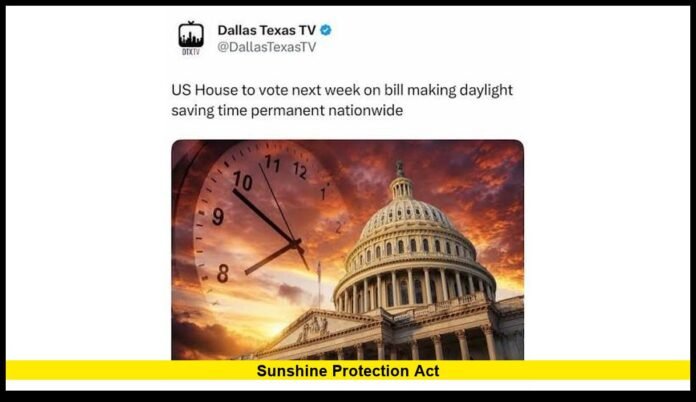

Sunshine Protection Act is back in the national spotlight after the U.S. House of Representatives approved legislation on July 14, 2026, that would make daylight saving time permanent across most of the United States. The bipartisan bill now moves to the Senate, where lawmakers will decide whether it advances to the president’s desk. As of today, the measure has not become law, meaning Americans will continue following the current schedule until Congress completes the legislative process.
For years, millions of Americans have questioned whether changing clocks twice a year is still necessary. Supporters of the legislation believe ending the seasonal clock changes would simplify daily life, reduce disruptions, and provide more evening daylight throughout the year. Opponents argue that darker winter mornings could create safety and health concerns, especially for children heading to school before sunrise.
Here’s a closer look at where the bill stands, why Congress is debating it again, and what could happen next.
What Is the Sunshine Protection Act?
The Sunshine Protection Act is federal legislation that would make daylight saving time permanent in most parts of the United States.
Currently, most Americans:
- Move clocks forward one hour each spring.
- Turn clocks back one hour each fall.
If the legislation becomes law, those twice-yearly clock changes would end for states that observe daylight saving time.
The proposal would not affect states that already remain on standard time throughout the year unless they choose to change under federal law.
Latest Update on the Bill
The biggest development came on July 14, 2026, when the House approved H.R. 139, the Sunshine Protection Act, by a bipartisan 308-117 vote.
The legislation now awaits Senate consideration.
Although the House vote represents significant momentum, no changes take effect unless the Senate also approves the bill and the president signs it into law.
Current Legislative Status
The bill has completed one major step but still has several hurdles before becoming law.
| Legislative Stage | Current Status |
|---|---|
| Introduced in House | Completed |
| House Approval | Passed |
| Senate Vote | Pending |
| Presidential Signature | Not Yet |
| Federal Law | Not Yet |
Until every required step is completed, Americans will continue changing clocks under existing federal law.
Why Lawmakers Want to End Clock Changes
The United States has observed seasonal clock changes for decades, but many lawmakers believe the practice no longer reflects modern lifestyles.
People now work, study, travel, and shop differently than they did when daylight saving time policies were first adopted.
Supporters argue that keeping one consistent time throughout the year would eliminate unnecessary disruptions that affect daily routines every spring and fall.
Potential Benefits of Permanent Daylight Saving Time
Supporters believe the proposal offers several advantages.
More Evening Daylight
One of the strongest arguments is that permanent daylight saving time would provide more daylight during the evening.
That extra daylight could encourage:
- Outdoor recreation
- Family activities
- Shopping
- Dining
- Community events
- Youth sports
Many businesses also support later sunsets because consumers are generally more active after work.
Ending the Twice-Yearly Clock Change
Many Americans dislike adjusting clocks every March and November.
Changing clocks affects:
- Sleep schedules
- Morning routines
- School schedules
- Travel plans
- Business operations
Supporters believe maintaining one time year-round would simplify everyday life.
Economic Activity
Retailers, restaurants, entertainment venues, and tourism businesses often see value in additional evening daylight.
Longer daylight hours after work may encourage people to spend more time outside, potentially benefiting local businesses.
Why Some Lawmakers Oppose the Proposal
Not everyone agrees that permanent daylight saving time is the best solution.
Opponents point to several concerns.
Darker Winter Mornings
The biggest criticism involves sunrise during winter months.
If daylight saving time remained in effect throughout the year:
- Sunrise would occur later in many areas.
- Some students would travel to school before daylight.
- Morning commuters could spend more time driving in darkness.
Critics believe these factors deserve careful consideration before making a permanent nationwide change.
Health Considerations
Some sleep researchers have argued that permanent standard time aligns more closely with natural circadian rhythms.
Others believe eliminating seasonal clock changes would improve public health regardless of which time system remains in place.
The scientific discussion continues, and lawmakers have considered differing viewpoints during congressional debate.
What Happens if the Bill Becomes Law?
If Congress completes the legislative process, Americans in most states would no longer change clocks twice each year.
Instead:
- Clocks would move forward for daylight saving time.
- They would remain there permanently.
- The annual November return to standard time would end.
The implementation date would depend on the final version of the legislation.
Would Every State Follow the Same Rule?
Not necessarily.
Federal law currently allows certain states to remain on permanent standard time.
Today:
- Hawaii does not observe daylight saving time.
- Most of Arizona also stays on standard time throughout the year.
Those existing arrangements would continue unless state lawmakers choose otherwise under federal law.
Can States Make Daylight Saving Time Permanent on Their Own?
No.
States currently have two primary options:
- Observe daylight saving time under federal law.
- Remain on permanent standard time if permitted.
They generally cannot adopt permanent daylight saving time without congressional approval.
Several states have already passed legislation expressing support for year-round daylight saving time if federal law eventually allows it.
A Look Back at Previous Efforts
The idea of ending seasonal clock changes has surfaced many times.
Important milestones include:
| Year | Development |
|---|---|
| 1974 | Temporary year-round daylight saving time adopted during the energy crisis |
| 2022 | Senate unanimously approved similar legislation |
| 2022 | House did not take final action |
| 2025 | New Sunshine Protection Act introduced |
| 2026 | House passes the bill with bipartisan support |
Previous attempts demonstrate that while many lawmakers support ending clock changes, reaching final passage has proven difficult.
Why the 1974 Experience Still Comes Up
The national discussion often includes the experience of 1974.
During the energy crisis, the United States temporarily remained on daylight saving time throughout the year.
Public opinion later shifted after concerns about dark winter mornings, particularly for schoolchildren.
That experience continues to shape today’s debate as lawmakers weigh the advantages and disadvantages of permanent daylight saving time.
How the Proposal Could Affect Daily Life
If enacted, Americans could notice changes across many parts of everyday life.
Possible impacts include:
- Later sunsets during winter.
- More daylight after work.
- No seasonal clock adjustments.
- Greater consistency for scheduling.
- Different sunrise times during colder months.
Whether those changes are viewed positively often depends on personal schedules and where someone lives.
Public Opinion Remains Divided
Many Americans support ending the twice-yearly clock changes.
However, opinions differ regarding the preferred solution.
Some people favor permanent daylight saving time because of brighter evenings.
Others prefer permanent standard time because of brighter mornings.
A smaller group believes the current system should remain unchanged.
Despite differing opinions, there is broad recognition that the debate extends beyond simply changing clocks.
Industries Watching the Debate
Several industries are paying close attention to the legislation.
Businesses that often support permanent daylight saving time include:
- Tourism
- Hospitality
- Outdoor recreation
- Retail
- Restaurants
Additional evening daylight may encourage more consumer activity after traditional working hours.
Other sectors, including transportation and agriculture, continue evaluating how year-round daylight saving time could affect operations.
What Happens Next in Congress?
The Senate now becomes the center of attention.
Senators may choose to:
- Pass the House bill.
- Amend the legislation.
- Delay consideration.
- Reject the proposal.
If the Senate changes the bill, the House would generally need to approve those revisions before the legislation could move forward.
Only after both chambers pass identical legislation can it be presented to the president.
Will Americans Change Their Clocks This Fall?
Yes, unless Congress completes the legislative process and any enacted law takes effect before the scheduled time change.
At this point:
- Existing federal law remains in place.
- Daylight saving time continues under the current schedule.
- No nationwide changes have been implemented.
Americans should continue following official time change announcements until any future law is enacted.
Frequently Asked Questions
Is the Sunshine Protection Act already law?
No. The House has approved the bill, but Senate approval and presidential action are still required before it becomes law.
Would everyone stop changing clocks?
Most Americans would no longer change clocks twice each year if the legislation becomes law, though states that remain on permanent standard time would continue under their existing rules.
Why has this issue remained unresolved?
Lawmakers generally agree that changing clocks twice each year is unpopular, but they disagree over whether permanent daylight saving time or permanent standard time is the better long-term solution.
Has Congress considered this before?
Yes. Similar proposals have been introduced multiple times over the past several years, including a Senate-approved version in 2022 that did not become law.
What Americans Should Watch Going Forward
The House vote marks one of the most significant steps the Sunshine Protection Act has taken in years, but the legislative process is not yet complete. The Senate’s decision will determine whether the proposal continues moving toward becoming federal law.
Until that happens, the current system of changing clocks in the spring and fall remains in effect across most of the country.
What are your thoughts on making daylight saving time permanent? Share your opinion in the comments and check back for the latest updates as the legislation moves through Congress.