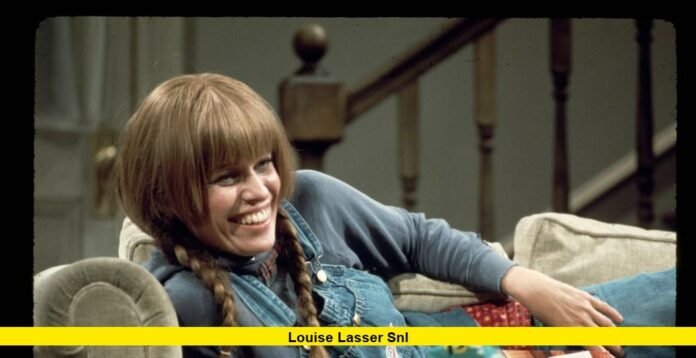

Louise Lasser, the actress best known for her Emmy-nominated role in Norman Lear’s cult classic “Mary Hartman, Mary Hartman,” has died at age 87, prompting renewed attention to her infamous Louise Lasser SNL hosting appearance and her decades-long career in television and film. Lasser passed away of natural causes on Monday, July 6, at her home on the Upper East Side of Manhattan, according to her close friend Susan Charlotte, who confirmed the news to reporters. The actress’s death has led fans and former colleagues to revisit one of the most talked-about moments of her career: a “Saturday Night Live” hosting gig in 1976 that became legendary for all the wrong reasons.
Background and Early Career
Louise Jane Lasser was born on April 11, 1939, in New York City. She studied political science at Brandeis University before turning her attention to acting, eventually training under the influential acting coach Sanford Meisner. Lasser’s early break came in 1962, when she was cast as the understudy for a young Barbra Streisand in the Broadway musical “I Can Get It for You Wholesale.” When Streisand departed the production, Lasser briefly stepped into the role herself, giving her an early taste of the spotlight.
That same year, Lasser appeared in “The Laughmakers,” a television pilot written by a then up-and-coming comedian named Woody Allen. The two would go on to form both a personal and professional partnership that shaped the next decade of her career. Lasser and Allen married in 1966, and though their marriage lasted only until 1970, their creative collaboration continued well beyond the divorce.
Career with Woody Allen and Rise to Fame
Lasser became Allen’s first true leading lady on screen, providing the voice of the heroine Suki Yaki in his reworked 1966 comedy “What’s Up, Tiger Lily?” She went on to star in three more of his early films: “Take the Money and Run” (1969), “Bananas” (1971), and “Everything You Always Wanted to Know About Sex (But Were Afraid to Ask)” (1972). These roles established Lasser as a distinctive comedic presence, known for a calm, deadpan delivery that contrasted sharply with Allen’s neurotic on-screen persona.
Lasser also built a reputation in advertising during this period, becoming the first woman to win a Clio Award, the advertising industry’s top honor, for a Florida orange juice commercial in 1967. Her blend of comedic timing and understated charm made her a familiar face well before her breakout television role arrived.
Mary Hartman, Mary Hartman and Peak Stardom
Lasser’s defining role came in 1976, when Norman Lear cast her as the title character in “Mary Hartman, Mary Hartman.” The syndicated series aired five nights a week and satirized American suburban life, consumer culture, and daytime soap operas through the eyes of a frazzled Ohio housewife dealing with everything from waxy yellow buildup on her kitchen floor to mass murder in her small town. Over 325 episodes, Lasser turned Mary Hartman into one of television’s most memorable characters, earning an Emmy nomination for the performance in the process.
The show was unlike anything else on television at the time, mixing absurdist humor with genuinely dark storylines. Lasser has said in past interviews that she never viewed the series as ahead of its time, but rather as a show that was simply “of its time,” touching on the anxieties and contradictions of the era with both comedy and sincerity.
The Louise Lasser SNL Hosting Controversy
At the height of “Mary Hartman, Mary Hartman’s” popularity, Lasser was tapped to host “Saturday Night Live” in 1976, appearing on the finale of the show’s very first season. The Louise Lasser SNL episode became one of the most talked-about hosting gigs in the show’s history, though not for reasons anyone involved would have hoped.
Two months before the appearance, Lasser had been charged with cocaine possession after police found the drug on her while she was shopping at an antiques store; she was ultimately sentenced to six months’ probation. When she arrived to host “Saturday Night Live” shortly afterward, the episode’s sketches touched on themes of drug use and personal breakdowns, leaving viewers genuinely unsure whether they were watching scripted comedy or real distress play out live on air. The uncomfortable blurring of fiction and reality made the episode notorious, and it was frequently left out of the show’s reruns and syndicated packages in the years that followed.
Despite the rocky nature of that particular episode, the Louise Lasser SNL appearance remains a frequently cited chapter in retrospectives about the show’s early, unpredictable years, when live television regularly produced moments that were as unscripted as they were unforgettable.
Career After Mary Hartman
Following the end of “Mary Hartman, Mary Hartman,” Lasser continued working steadily across film and television. She took on a starring role in the second season of the syndicated sitcom “It’s a Living,” playing Maggie McBurney, and made guest appearances on shows including “Taxi,” “Laverne & Shirley,” “The Bob Newhart Show,” “The Mary Tyler Moore Show,” “St. Elsewhere,” “CSI,” and “Empty Nest.”
Lasser also built a substantial film résumé beyond her work with Woody Allen, appearing in Todd Solondz’s dark comedy “Happiness” (1998), Darren Aronofsky’s “Requiem for a Dream,” the comedy “Mystery Men,” and Owen Kline’s 2022 coming-of-age film “Funny Pages.” She wrote and starred in the independent film “Just Me and You” and appeared in projects such as “Simon,” “Rude Awakening,” “Modern Love,” “National Lampoon’s Gold Diggers,” and “Wolves of Wall Street.”
In the 2010s, a new generation of viewers discovered Lasser through her recurring role on HBO’s “Girls,” where she played Beadie, an elderly and once-overlooked artist rediscovered by younger admirers. The role saw Lasser deliver a mix of dark humor and vulnerability, including a storyline in which her character asks a younger assistant for help ending her life, only to change her mind at the last moment. The part introduced Lasser’s work to audiences who may not have been familiar with her earlier career, including her memorable Louise Lasser SNL appearance decades prior.
Later Years and Teaching
Beyond acting, Lasser spent much of her later career mentoring young performers, teaching acting classes at a studio on Manhattan’s Upper East Side. Those who trained with her have described a teacher who brought the same honesty and emotional precision to coaching that she brought to her own performances. Lasser never remarried after her divorce from Woody Allen, though the two reportedly remained close for years afterward, with Lasser once saying she still considered him a major influence in her life.
Public Interest and Reaction
News of Lasser’s death spread quickly across social media, with former co-star Claudia Lamb among the first to publicly acknowledge the loss, describing Lasser as the genius behind one of television’s most singular characters. Entertainment outlets and longtime fans of “Mary Hartman, Mary Hartman” have used the moment to revisit clips from the series, as well as archival footage from her Louise Lasser SNL episode, which continues to circulate as an example of the unpredictable, sometimes uncomfortable energy that defined the earliest seasons of the sketch show.
Retrospectives following her death have emphasized both her comedic gifts and the personal struggles she navigated in the public eye during the mid-1970s, framing her career as one marked by genuine innovation as well as real vulnerability. Her performance as Mary Hartman is widely regarded as one of the defining achievements of 1970s television comedy, and it remains a reference point in discussions of the genre’s evolution.
Latest Updates
As of this writing, funeral and memorial arrangements for Louise Lasser have not been publicly announced, and there is no official confirmation of a public service at this time. Lasser is survived by her longtime partner, Michael Citriniti. Additional details about her passing, including any forthcoming tributes from “Saturday Night Live,” Norman Lear’s production associates, or former “Girls” castmates, have not yet been confirmed, and any such information should be treated as unconfirmed until officially announced.
Final Thoughts
Louise Lasser’s career spanned six decades, moving from Broadway understudy to Woody Allen’s leading lady to daytime satire icon to a beloved character actress in prestige television. Her Louise Lasser SNL hosting appearance, however uncomfortable at the time, has become an enduring piece of television history, remembered as one of the moments when the show’s early experimental spirit collided head-on with real life. Combined with her groundbreaking work on “Mary Hartman, Mary Hartman,” Lasser’s legacy reflects a performer unafraid to blur the line between comedy and vulnerability, leaving behind a body of work that continues to resonate with both longtime fans and newer audiences discovering her through shows like “Girls.”
Share your memories of Louise Lasser’s career in the comments, and check back for more updates on tributes and remembrances as they are announced.