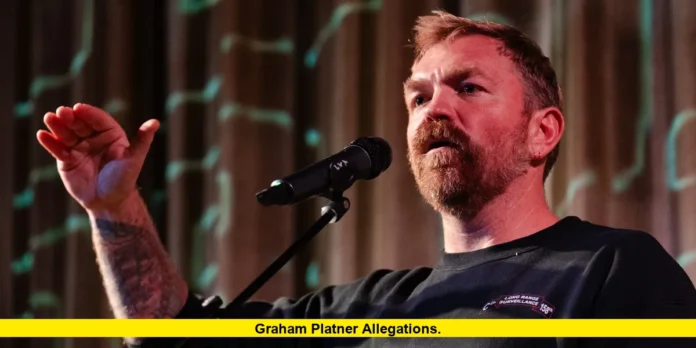

The Graham Platner allegations have become one of the biggest political stories in Maine during the 2026 U.S. Senate election cycle. Platner, a Marine veteran, oyster farmer, and Democratic Senate nominee, faced growing scrutiny after multiple controversies culminated in a sexual assault allegation that dramatically altered his campaign. As of July 2026, he has suspended his Senate campaign while continuing to deny the allegations against him.
This article explains the latest developments, Graham Platner’s background, the allegations, the tattoo controversy, his age, and why the case has attracted widespread public attention.
Introduction
Graham Platner emerged as an unconventional Democratic candidate who campaigned on economic populism and veterans’ issues. His primary victory surprised many political observers and positioned him as a challenger in one of the country’s most closely watched Senate races.
However, the campaign soon became overshadowed by a series of personal controversies. The Graham Platner allegations generated national headlines and led prominent Democratic leaders to withdraw their support. While Platner has denied the accusations, the political consequences proved significant enough for him to suspend his campaign.
Graham Platner’s Background
Graham Platner is an American military veteran and oyster farmer from Maine. Before entering politics, he served in the U.S. Marine Corps and later became involved in Maine’s aquaculture industry.
His Senate campaign focused on issues including:
- Affordable healthcare
- Economic inequality
- Veterans’ services
- Rural development
- Campaign finance reform
His outsider message resonated with many Democratic primary voters, helping him secure his party’s nomination despite relatively limited political experience.
How Old Is Graham Platner?
As of 2026, Graham Platner is 41 years old.
His military background and entrepreneurial experience became central parts of his campaign biography, with supporters portraying him as someone who understood the challenges facing working-class Mainers.
The Graham Platner Allegations Explained
The most serious Graham Platner allegations involve accusations made by a former romantic partner, who publicly alleged that Platner sexually assaulted her during an encounter in 2021.
According to the accusation, the alleged incident involved non-consensual sexual activity after Platner reportedly arrived at the woman’s home while intoxicated.
Platner has categorically denied the allegation, stating that any accusation of non-consensual behavior is false. He has maintained that he did not commit sexual assault and rejected the claims made against him.
At the time of writing:
- Platner has denied the allegation.
- No criminal conviction has resulted from the accusation.
- Public reporting has focused on the political implications alongside the allegation itself.
Because the matter involves serious allegations, it is important to distinguish between accusations and proven facts. The allegation remains disputed, and Platner continues to deny wrongdoing.
Additional Controversies During the Campaign
The sexual assault allegation was not the first controversy surrounding Platner’s Senate campaign.
Earlier media reports highlighted several issues that received significant public attention, including:
- Criticism regarding past online activity.
- Allegations involving inappropriate behavior in previous relationships.
- Questions about explicit messages reportedly sent in the past.
- Renewed attention surrounding an old tattoo that some critics claimed resembled Nazi imagery.
Although these controversies varied considerably in seriousness, together they increased political pressure on his campaign.
Platner disputed or rejected many of the characterizations surrounding these issues while acknowledging that some past actions had become distractions from his campaign message.
Graham Platner Tattoo Controversy
One of the earliest controversies involved the Graham Platner tattoo that became widely discussed during his Senate campaign.
Images circulated online showing a chest tattoo that critics argued resembled the Nazi SS Totenkopf symbol. The controversy quickly attracted national attention because of the symbol’s historical association with Nazi Germany.
Platner responded by saying:
- He did not intentionally choose Nazi symbolism.
- He had not understood the historical meaning of the design when he received the tattoo.
- He intended to have the tattoo covered or altered after learning how it was was being interpreted publicly.
His explanation received mixed reactions.
Some supporters accepted that the tattoo was an unfortunate mistake, while critics questioned whether someone with his military background would have been unaware of the symbol’s historical significance.
The tattoo controversy remained a recurring issue throughout his campaign.
Political Fallout
As additional allegations surfaced, support for Platner within the Democratic Party weakened rapidly.
Several prominent Democratic officials publicly withdrew their endorsements and encouraged him to step aside to protect the party’s chances in the general election.
Campaign organizations also reduced or ended their support.
Facing mounting political pressure, Platner announced that he would suspend his campaign and begin the process of withdrawing from Maine’s Senate race.
Importantly, Platner stated that suspending his campaign should not be interpreted as an admission of guilt. Instead, he said he believed the controversy had become too significant for the campaign to continue effectively.
Why the Allegations Received National Attention
The Graham Platner allegations became national news for several reasons.
First, Maine’s Senate race was considered one of the most competitive elections of the 2026 cycle, drawing significant national interest.
Second, Platner had positioned himself as an outsider candidate challenging traditional political figures, making his rapid rise especially noteworthy.
Finally, the combination of multiple controversies—including the tattoo debate, past personal conduct allegations, and the sexual assault accusation—created an unusually fast-moving political story.
The developments also forced Democratic leaders to quickly determine how to respond while preserving their competitiveness in the Senate election.
Public Reaction
Public reaction has remained sharply divided.
Some observers argued that the allegations raised serious concerns requiring political accountability regardless of whether criminal charges were filed.
Others emphasized that allegations alone should not be treated as proof of guilt and noted that Platner has consistently denied the accusations.
Across the political spectrum, many agreed that the controversy fundamentally changed the dynamics of Maine’s Senate race.
Career Outside Politics
Before seeking public office, Platner was primarily known for his work in aquaculture.
His experience as an oyster farmer formed a central part of his campaign narrative. He frequently discussed:
- Small business ownership
- Marine conservation
- Coastal economies
- Veterans transitioning to civilian careers
- Rural economic development
These themes helped distinguish him from more traditional political candidates during the Democratic primary.
Latest Updates
As of July 2026, the latest developments include:
- Graham Platner has suspended his U.S. Senate campaign.
- He has indicated he will withdraw from the ballot.
- He continues to deny the sexual assault allegation.
- Maine Democrats are moving forward with selecting a replacement nominee for the general election.
- The controversy remains one of the most significant political stories in the state’s 2026 election cycle.
Future legal or political developments could change the situation, but no official findings have established criminal guilt regarding the sexual assault allegation at the time of writing.
Final Thoughts
The Graham Platner allegations transformed what had been one of the Democratic Party’s most closely watched Senate campaigns into a major political controversy. While Platner insists that the accusations against him are false, the combination of the sexual assault allegation and earlier campaign controversies ultimately led him to suspend his candidacy.
For readers following the story, it is important to separate verified facts from speculation. The allegations have had undeniable political consequences, but Platner continues to deny wrongdoing, and no criminal conviction has resulted from the accusations discussed publicly. As additional official information becomes available, the public record may continue to evolve.
Stay informed by following the latest developments, and feel free to share your thoughts respectfully in the comments below.