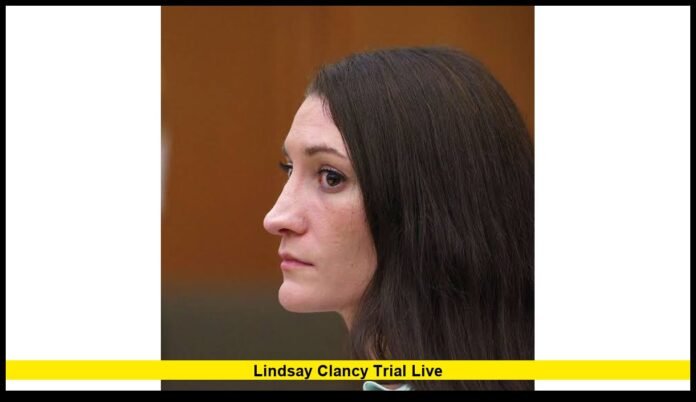

Lindsay Clancy trial live updates continue as the Massachusetts courtroom proceedings enter a critical stage, with the defense approaching the end of its case and both sides preparing for the final arguments that will shape the jury’s decision. The trial focuses on whether Lindsay Clancy should be held legally responsible for the deaths of her three children or whether a severe mental health crisis affected her ability to understand her actions.
The Plymouth Superior Court case has remained one of the most closely watched criminal trials in Massachusetts. Clancy, 36, has pleaded not guilty by reason of lack of criminal responsibility to three counts of first-degree murder connected to the January 2023 deaths of her children, Cora, Dawson, and Callan Clancy.
The central issue in the trial is not whether Clancy caused the deaths. Her defense team has acknowledged that she was responsible for the acts but argues that her mental condition prevented her from understanding the wrongfulness of what happened. Prosecutors have taken a different position, arguing that Clancy planned the killings and should be held accountable under Massachusetts law.
Latest Lindsay Clancy Trial Live Updates From Court
The trial has reached the final portion of testimony. Defense attorney Kevin Reddington has been presenting evidence focused on Clancy’s mental health condition, including claims that she experienced postpartum psychosis along with other psychiatric complications before the deaths.
The defense is expected to finish presenting its witnesses before prosecutors return with possible rebuttal testimony. After that stage, the court will move toward closing arguments, where both sides will summarize their cases for the jury.
Judge William Sullivan continues to oversee the proceedings at Plymouth Superior Court. Clancy attends court while receiving medical care after suffering serious injuries during a suicide attempt following the deaths.
Charges Against Lindsay Clancy
Clancy faces three first-degree murder charges related to the deaths of her children:
- Cora Clancy, 5
- Dawson Clancy, 3
- Callan Clancy, 8 months old
The deaths happened at the family’s home in Duxbury, Massachusetts, on January 24, 2023. Prosecutors say Clancy killed her children and later attempted to end her own life.
The defense has not disputed that Clancy caused the deaths. Instead, the legal argument centers on whether she had the mental ability required for criminal responsibility at the time.
If convicted, Clancy could face a life sentence. If the jury finds that she was not criminally responsible because of mental illness, the outcome would involve treatment in a secure mental health setting rather than a traditional criminal sentence.
Defense Arguments During the Trial
The defense has focused heavily on Clancy’s mental health struggles before the incident. Attorneys have argued that she experienced postpartum psychosis, a rare but serious psychiatric condition that can affect a person’s perception of reality.
Defense witnesses have described concerns about Clancy’s worsening mental state before January 2023. Testimony included discussions about her emotional distress, psychiatric treatment, medication concerns, and changes in her behavior.
Psychologist Dr. Paul Zeizel provided some of the most significant testimony for the defense. He testified that Clancy was experiencing severe mental illness and did not appreciate the wrongfulness of her actions at the time of the deaths.
The defense has argued that Clancy’s actions occurred during a psychiatric crisis rather than from a deliberate decision made with normal awareness.
Prosecution’s Case Against Clancy
Prosecutors have presented a different explanation of events. The state argues that Clancy’s actions showed planning and awareness, and that she should be held responsible for the deaths of her children.
During the prosecution’s case, jurors heard testimony from more than 70 witnesses, including law enforcement officers, medical professionals, family members, and technology experts.
The prosecution also introduced digital evidence, including information from devices and communications. Prosecutors argued that certain actions before the deaths demonstrated preparation and awareness.
The state has challenged the defense explanation by pointing to moments when Clancy appeared organized and able to complete everyday tasks before the tragedy. Prosecutors argue those details show she understood her actions.
Patrick Clancy’s Testimony and Family Evidence
Patrick Clancy, Lindsay Clancy’s husband, testified during the trial and provided details about the events surrounding the deaths. His testimony became an important part of the case because both sides used his statements to support different interpretations of Clancy’s mental state.
Family members also testified about Clancy’s condition before the incident. The defense highlighted testimony describing a woman struggling with mental health problems and seeking help.
Prosecutors, however, have argued that evidence of mental health struggles does not automatically remove criminal responsibility. The jury must decide whether Clancy’s condition met the legal standard required for a lack of criminal responsibility.
Mental Health Evidence at the Center of the Trial
A major focus of the proceedings has been postpartum psychosis and how it relates to criminal responsibility.
The defense has argued that Clancy’s condition affected her thoughts, judgment, and ability to understand reality. Experts testified about symptoms associated with severe psychiatric illness, including hallucinations and distorted beliefs.
The prosecution has not argued that mental illness cannot exist. Instead, prosecutors have focused on whether Clancy remained capable of understanding the consequences of her actions.
The jury will ultimately decide how the evidence fits within Massachusetts criminal law.
Courtroom Developments and Public Attention
The trial has attracted significant public interest, with supporters gathering outside the courthouse during recent proceedings. Some supporters have used the case to highlight concerns about maternal mental health care and the need for better support systems.
The court has also addressed disputes over potential witnesses and evidence. Judge Sullivan recently blocked testimony from a former McLean Hospital employee after determining that the testimony had limited value for the jury.
As testimony concludes, attention is now focused on the final legal arguments and the jury’s eventual decision.
What Happens Next in the Lindsay Clancy Trial
The next major steps include:
- Completion of the defense presentation
- Possible prosecution rebuttal witnesses
- Closing arguments from both sides
- Jury deliberations
The prosecution will ask jurors to find Clancy legally responsible for the deaths. The defense will ask jurors to consider the impact of her mental health condition and find that she lacked criminal responsibility.
The outcome will depend on how jurors evaluate expert testimony, medical evidence, witness accounts, and the arguments presented throughout the trial.
The Lindsay Clancy trial live proceedings remain active as the court moves closer to a final decision in a case that has raised difficult questions about mental illness, responsibility, and the criminal justice system.
Follow the latest courtroom developments and share your thoughts as this important legal case continues to unfold.