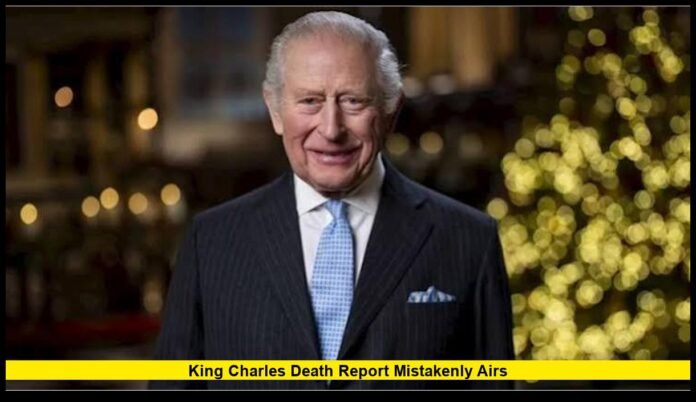

The King Charles death report mistakenly airs incident has drawn renewed attention after a British radio station was found to have breached broadcasting rules by accidentally transmitting prerecorded announcements falsely stating that King Charles III had died. The unusual incident happened on Radio Caroline in May 2026, when material prepared for a potential royal death was mistakenly played during a live program.
The broadcast sounded unusually official, including multiple announcements, the national anthem and a period of silence. However, the claim was completely false. King Charles was alive and continued carrying out royal duties. The incident has since become the subject of an Ofcom ruling concerning broadcast accuracy and the handling of significant errors.
What happened during the Radio Caroline broadcast
The incident occurred on May 19, 2026, during The Barry Marsh Show on Radio Caroline.
A member of the station’s staff was carrying out maintenance work at the studio when prerecorded material concerning the death of a monarch was played. The staff member reportedly accessed the files out of curiosity, without realizing that the material could enter the live broadcast.
Three prerecorded statements were subsequently transmitted to listeners.
The statements falsely reported that King Charles had died. The broadcast then included the British national anthem, followed by roughly 16 minutes of silence before regular programming resumed.
For listeners hearing the material without any additional context, the sequence could easily have appeared to be an authentic national announcement.
Radio Caroline later acknowledged the mistake and apologized for the confusion caused by the broadcast.
The announcement was not genuine
The most important fact is that there was no royal death on May 19, 2026.
The material heard by Radio Caroline listeners was prerecorded contingency content rather than a genuine announcement issued by Buckingham Palace.
That distinction is particularly important because broadcasters often prepare material in advance for extraordinary national events. A death of a reigning monarch would require extensive and immediate coverage, so media organizations can maintain scripts and other resources that would only be used after official confirmation.
The problem at Radio Caroline was that material intended for such a rare circumstance was accidentally transmitted.
There was therefore no legitimate royal announcement behind the broadcast.
Why the false report sounded convincing
The incident received significant attention because it did not resemble an ordinary internet rumor.
The broadcast included several elements that listeners might reasonably associate with the death of a monarch:
- Formal prerecorded announcements
- References to the King’s supposed death
- The national anthem
- An extended period of silence
- A disruption to normal programming
These elements gave the incident an appearance of authenticity.
For a listener who had not heard the subsequent explanation, there was little immediate reason to assume that the announcement was the result of an internal broadcasting error.
That is one reason the episode demonstrates the importance of strict controls around sensitive prerecorded material.
How the mistake was discovered
The station eventually recognized that the material had been transmitted in error.
The presenter subsequently apologized to listeners and explained that the incident had resulted from a technical problem.
Radio Caroline also reviewed the circumstances surrounding the broadcast. The sensitive files were moved away from the studio system, while the employee involved was reprimanded and apologized for the mistake.
The station reminded personnel about the importance of following procedures when dealing with prerecorded material intended for exceptional circumstances.
Ofcom investigates the incident
The U.K. broadcasting regulator Ofcom investigated the incident after receiving complaints.
Its subsequent ruling found that Radio Caroline had breached broadcasting requirements relating to accuracy and the correction of significant mistakes.
The issue was especially serious because the broadcast concerned the death of the monarch, an event of exceptional public importance.
Ofcom’s findings also considered the station’s response after the false announcement was transmitted. A broadcaster’s responsibility does not end when an inaccurate statement has gone on air. When a significant error occurs, a prompt and sufficiently clear correction can be crucial in preventing further confusion.
Radio Caroline’s later response was taken into account, including its efforts to address the cause of the incident and prevent a recurrence.
King Charles remains the reigning monarch
As of August 11, 2026, there is no official confirmation that King Charles III has died.
In fact, official royal information continues to document his activities during August. The Royal Family’s website published a message from the King connected with the Glasgow 2026 Commonwealth Games, including a message marking the opening of the Games.
The King’s recent activities provide further evidence that the Radio Caroline announcement should not be confused with a genuine royal death announcement.
The official Court Circular also recorded the King’s activities in Scotland on August 7, including engagements in and around Dingwall and the Castle of Mey.
Consequently, anyone encountering social media posts claiming that the radio broadcast represented an actual royal death should understand that the broadcast was an error.
King Charles III’s role and background
Charles became King in September 2022 following the death of Queen Elizabeth II.
His accession ended a long period in which he served as heir apparent and carried out public duties on behalf of the monarchy.
During his years as Prince of Wales, Charles became particularly associated with environmental issues, architecture, heritage, sustainability and charitable causes. Those interests have continued to influence aspects of his work as monarch.
His position as Britain’s head of state also means that developments involving him receive considerable attention from domestic and international media.
That intense public interest helps explain why even a mistaken broadcast can quickly become a major news story.
Why broadcasters prepare royal death announcements
The existence of prerecorded royal death material can sound unusual to people unfamiliar with broadcast procedures.
However, major broadcasters routinely prepare for events that require immediate and extensive coverage.
The death of a British monarch would be a historic national event. News organizations would need biographies, archive footage, scripts, graphics, music and other material ready for immediate use.
Preparing those resources in advance does not mean that the broadcaster expects the event to happen imminently.
Instead, it allows journalists and technical teams to respond quickly when an extraordinary event eventually occurs.
The Radio Caroline incident illustrates the potential consequences when those preparations are not adequately separated from normal broadcasting operations.
The importance of correcting false information quickly
A significant part of the controversy concerns not simply how the inaccurate announcement reached listeners but also what happened afterward.
When a major false claim is broadcast, the correction needs to be clear enough to overcome the impression created by the original report.
That is particularly important when the claim concerns the death of a head of state.
Listeners may immediately contact relatives, post about the announcement online or search for confirmation elsewhere. A delay can therefore allow a false report to travel beyond the original audience.
In the Radio Caroline case, the station eventually apologized and explained the error, but Ofcom still found that the incident breached relevant broadcasting standards.
The role of social media in royal rumors
The incident also highlights a wider challenge for modern news consumers.
A false broadcast can quickly become a social media clip. Once a short recording is separated from the original program, viewers may not know whether the material is current, genuine or already debunked.
Royal news is particularly vulnerable to this problem because public interest is extremely high.
An old video or audio recording can also be reposted months later and presented as though it were a new event.
For that reason, claims about a major royal development should be checked against current official announcements and established news reporting before being shared.
Earlier false claims about King Charles
The 2026 Radio Caroline incident is not the first false report involving King Charles.
False claims about the King’s death have circulated online previously, demonstrating the enduring public appetite for sensational royal stories.
The latest incident is different because an established radio station actually transmitted prerecorded material making the false claim. That gave the story an appearance of legitimacy that an anonymous social media rumor would not necessarily have.
It is therefore important to distinguish between the existence of a broadcast and the truth of the information contained within it.
A professional media outlet can make mistakes, and the Radio Caroline case is an unusually clear example.
Latest King Charles update in August 2026
The latest available official information indicates that King Charles continues to perform royal duties.
The Royal Family’s official website currently includes material relating to the King’s activities surrounding the Glasgow 2026 Commonwealth Games. It also records the royal family’s response to the birth of Princess Eugenie’s daughter earlier in August.
Recent royal engagements have also continued in Scotland.
These developments are significant when evaluating the King Charles death report mistakenly airs story because they confirm that the radio broadcast should not be interpreted as evidence of an actual death.
The latest developments surrounding the story concern the broadcasting standards investigation rather than the King’s status.
What the Ofcom ruling means for broadcasters
The case serves as a reminder that accuracy requirements apply even when an inaccurate report results from an accident.
Broadcasters have systems in place to prevent sensitive material from being transmitted incorrectly. Those systems become especially important when the material concerns a head of state or another event of exceptional national significance.
The Radio Caroline incident demonstrates several potential safeguards, including:
- Restricting access to sensitive prerecorded files
- Separating contingency material from ordinary studio systems
- Ensuring staff understand which recordings are restricted
- Establishing clear procedures for emergency material
- Correcting major mistakes quickly when they occur
Radio Caroline said it had taken steps following the incident, including moving the relevant files away from the studio environment.
Why the story continues to attract attention
The unusual nature of the incident explains why the story has continued to generate interest.
A false celebrity death rumor is relatively common online, but a radio station accidentally broadcasting a complete royal death sequence is much rarer.
The combination of a formal announcement, the national anthem and silence made the incident particularly striking.
The subsequent Ofcom ruling has also brought the episode back into the news cycle, turning what initially appeared to be a technical mishap into a broader discussion about broadcast responsibility and accuracy.
How readers should interpret new reports about the King
Extraordinary claims about the monarchy deserve careful verification.
If an authentic announcement concerning the death of a reigning British monarch were ever made, it would be expected to receive extensive coverage from major news organizations and official royal channels.
A single social media post, video clip or unexplained broadcast should not be treated as sufficient confirmation.
The Radio Caroline incident provides a useful example of why that caution matters. Even a broadcast that appears highly formal and authoritative can be wrong when a technical or procedural failure occurs.
Final thoughts
The King Charles death report mistakenly airs incident was not an announcement of an actual royal death. Instead, Radio Caroline accidentally transmitted prerecorded material designed for a future monarch’s death, creating temporary confusion among listeners.
The station apologized, reviewed its procedures and took steps to prevent the sensitive material from being accessed in the same way again. Ofcom subsequently found that the broadcast breached rules concerning accuracy and the handling of significant mistakes.
As of August 11, 2026, King Charles III remains the reigning British monarch, with official records continuing to document his public activities. The current story is therefore about a broadcasting error and its regulatory consequences, not a confirmed royal death.
What do you think about the Radio Caroline mistake? Share your thoughts below and stay connected for verified updates on King Charles and the Royal Family.