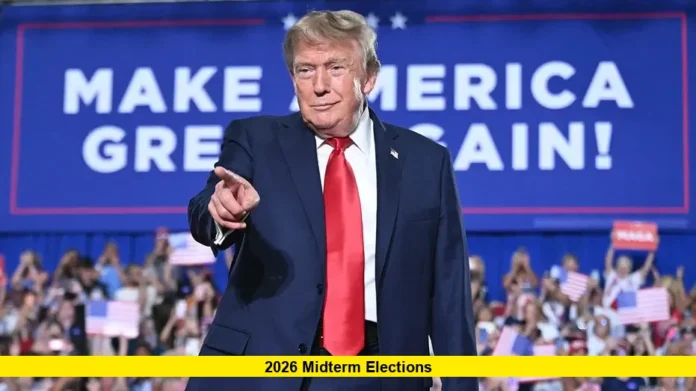

2026 Midterm Elections Enter a Critical Final Stretch
The 2026 midterm elections are entering their final stretch, with President Donald Trump and former President Barack Obama taking sharply different campaign messages to Michigan while a federal lawsuit over Alaska’s Senate race raises questions about election certification and the administration’s role in federal elections.
With Election Day approaching on November 3, both parties are concentrating on competitive races that could influence control of Congress and shape the remainder of Trump’s presidency. Michigan has become a prominent campaign destination, with Obama supporting Democratic candidates in Detroit on October 24 and Trump campaigning for Republicans in Port Huron on October 25.
At the same time, Alaska is facing a legal dispute involving Republican Sen. Dan Sullivan and another Senate candidate with a similar name. The Justice Department is seeking to prevent certification of the state’s Senate results under certain circumstances if the incumbent loses, arguing that potential voter confusion should be investigated.
The two developments reveal different dimensions of the midterm campaign. In Michigan, the focus is on political persuasion, party identity and candidates’ competing agendas. In Alaska, attention has shifted toward ballot interpretation, election procedures and the legal boundaries surrounding certification.
Neither campaign appearances nor pending litigation determines the final result. The election will ultimately depend on voters, applicable election laws and the official counting process.
Trump and Obama Bring Opposing Messages to Michigan
Michigan is an important part of the national struggle for congressional control because its Senate and gubernatorial races offer voters distinct choices about representation and state leadership.
Obama’s Detroit rally on October 24 supported Democratic Senate nominee Abdul El-Sayed and gubernatorial nominee Jocelyn Benson. Trump followed with a Port Huron appearance on October 25, campaigning for Republican Senate nominee Mike Rogers and gubernatorial nominee John James.
The back-to-back appearances placed two nationally recognized political figures at the center of Michigan’s final campaign push.
Obama’s message focused on criticizing Trump’s administration, defending Democratic candidates and encouraging voters to support the party’s agenda. He also addressed attacks directed at El-Sayed, including rhetoric questioning the candidate’s patriotism and religious identity.
Trump’s rally took a different approach, emphasizing Republican candidates and criticizing Democrats. He made national-security accusations against El-Sayed, who has rejected allegations concerning extremist affiliations.
Those accusations should be understood as contested campaign claims rather than independently established facts.
The contrast illustrates how national political figures can influence statewide races without being candidates themselves. Their appearances draw attention, reinforce party messages and encourage supporters to participate.
However, the presence of a former president or a sitting president does not automatically translate into votes. Michigan voters will make their own assessments of the candidates’ records, policy positions and responses to local and national issues.
Trump vs. Obama: How Their Campaign Strategies Differ
The Michigan appearances provide a useful comparison of the roles Trump and Obama are playing in the 2026 midterm elections.
| Campaign factor | Donald Trump | Barack Obama |
|---|---|---|
| Current political position | Serving president | Former president |
| Michigan appearance | Port Huron, October 25 | Detroit, October 24 |
| Senate candidate supported | Republican Mike Rogers | Democrat Abdul El-Sayed |
| Gubernatorial candidate supported | Republican John James | Democrat Jocelyn Benson |
| Main political message | Support Republican candidates and challenge Democratic positions | Support Democratic candidates and criticize the Trump administration |
| Relationship to federal policy | His administration’s decisions are directly under debate | His campaign arguments focus partly on oversight and opposition to current policies |
| Broader objective | Help Republicans retain congressional support | Help Democrats gain seats and increase their influence over federal policy |
The comparison shows two different political positions rather than establishing that one approach is more effective than the other.
Trump is campaigning as the sitting president, connecting Republican candidates with his administration’s policies and priorities. Obama is campaigning as a former president, using his standing within the Democratic Party to challenge the current administration and support Democratic nominees.
For Republican candidates, Trump’s involvement can provide national visibility and a direct connection to the administration. It can also make the president’s record an unavoidable part of their campaigns.
For Democrats, Obama’s participation offers a prominent surrogate who can communicate the party’s message and challenge Republican arguments. His endorsement, however, does not eliminate the need for individual candidates to demonstrate their qualifications and explain their proposals.
The eventual impact of both appearances will be measured through voter participation and official results, not through the speeches alone.
Why the Michigan Senate Race Matters
The contest between Republican Mike Rogers and Democrat Abdul El-Sayed is important because control of the Senate affects the federal government’s legislative and oversight functions.
Senators vote on legislation, federal spending, judicial nominations, executive appointments and other matters that can influence the direction of national policy. The party controlling the chamber also has substantial influence over committee leadership and the congressional agenda.
Republicans entered the final campaign stretch with a 53–47 Senate majority. Democrats would need to gain four seats to secure a majority under the existing party alignment, assuming the remaining seats follow their current partisan divisions.
That makes competitive contests such as Michigan’s particularly significant.
The candidates also offer different political profiles. Rogers is a former member of the House of Representatives and a Republican seeking a return to federal office. El-Sayed is a physician and former Michigan gubernatorial candidate running as a Democrat.
Their campaigns must address national issues while persuading Michigan voters that their individual positions and experience are relevant to the state.
Economic conditions, healthcare, immigration, trade and the cost of living are among the issues that can shape the broader debate. Michigan’s economic ties with Canada also make trade policy relevant to businesses and workers across the state.
The outcome cannot be determined by the prominence of the candidates’ campaign surrogates. Voters will decide which arguments and policy proposals they find most persuasive.
Alaska Senate Race Draws Attention Over Federal Lawsuit
While Michigan’s political debate centers on candidates and campaign messages, Alaska’s Senate race has become the subject of a legal challenge involving the certification of election results.
The Justice Department filed a federal lawsuit on October 22 seeking to prevent Alaska from certifying the Senate result under certain circumstances if incumbent Republican Dan Sullivan loses.
The dispute involves two candidates with similar names: incumbent Sen. Dan S. Sullivan and Daniel J. Sullivan Jr., a retired educator from Petersburg, Alaska.
Republicans have argued that the second candidate’s name could confuse voters and divert support from the incumbent. Daniel J. Sullivan has maintained that he is running independently, and allegations that his candidacy is intended to manipulate the result remain disputed.
The Alaska Supreme Court previously ruled that Daniel J. Sullivan could remain on the ballot.
Under the ballot format described in the federal lawsuit, the incumbent is identified as a registered Republican and the officeholder, while the other candidate appears without a party affiliation.
President Trump has acknowledged directing the Justice Department to file the lawsuit. The administration argues that potential voter confusion should be examined if the results suggest that it could have affected the outcome.
The case has attracted criticism from Democrats, election-law observers and some Alaska Republicans, including Sen. Lisa Murkowski, who has questioned the need for federal intervention.
The lawsuit’s filing does not establish that voters will be confused or that the election result will be invalid. Those are questions that would need to be addressed through evidence and the legal process.
What the Alaska Election Certification Dispute Could Mean
Election certification is the formal process through which election officials confirm results under applicable state and federal requirements.
The Alaska lawsuit seeks to prevent certification under specified circumstances while an investigation determines whether votes cast for Daniel J. Sullivan were intended for the incumbent.
The administration’s argument centers on protecting election integrity. Critics contend that seeking to delay certification before the election has taken place raises concerns about federal intervention and the possibility of withholding a result that state officials are legally required to certify.
These competing positions must be evaluated against the relevant statutes, the evidence and the court’s authority.
The fact that two candidates have similar names does not, by itself, establish that voters have been misled. Likewise, the existence of ballot-identification measures does not automatically resolve every possible question about voter understanding.
Alaska’s ranked-choice voting system adds another layer to the dispute. Voters rank candidates in order of preference, and the counting process can involve additional rounds if no candidate receives the required majority of first-choice votes.
That system makes the legal question more complicated than simply comparing the initial vote totals of two candidates with similar names.
A court would need to consider the applicable election rules and the specific relief requested before determining whether certification should be delayed.
For Alaska voters, the immediate issue is the election of their senator. For the national parties, the result could affect the balance of power in Congress. For election administrators, the challenge is to follow the law and preserve confidence in the process.
How Alaska Could Affect Control of the Senate
Alaska’s Senate contest is receiving national attention because it could contribute to the broader struggle for congressional control.
Democratic nominee Mary Peltola, a former U.S. representative, is challenging Sullivan. The presence of another candidate with a similar name has become a central point of contention as the campaign approaches Election Day.
Republicans have expressed concern that some voters could select the wrong candidate. Daniel J. Sullivan has disputed the suggestion that his candidacy is a coordinated effort to influence the result.
The federal lawsuit requests intervention if the vote totals meet the circumstances outlined in the complaint. It does not mean that the result has already been blocked or that a certification delay is inevitable.
The case also raises a broader question about the division of responsibilities between federal and state authorities. States administer elections under their own laws, while federal elections must also comply with applicable federal requirements.
The courts will determine how those responsibilities apply to the dispute.
The eventual ruling could clarify the legal standards governing the requested intervention. Until then, it is important to distinguish between allegations in a lawsuit, arguments made by political figures and decisions issued by a court.
What Voters Should Watch Before November 3
The final days of the 2026 midterm campaign will bring additional rallies, candidate appearances, advertising and legal developments.
Several factors deserve attention as Election Day approaches.
Early-voting participation: Ballot-return totals can indicate how many people have voted, but they do not independently establish which party will win. Differences in voting methods and turnout patterns must be considered before drawing conclusions.
Michigan’s competitive contests: The Senate race between Rogers and El-Sayed and the gubernatorial race between James and Benson will provide separate measures of voter preferences. Results in one contest should not automatically be treated as a prediction for the other.
Developments in Alaska: Court decisions and official statements could clarify the status of the federal lawsuit and the legal requirements governing certification.
Economic concerns: Household expenses, employment, healthcare and trade policy remain relevant to the debate over the administration’s record and the candidates’ proposals.
Congressional control: The combined results of Senate and House races will determine the balance of power in Washington and shape the legislative environment for the remainder of Trump’s term.
A neutral assessment requires separating documented developments from campaign claims. A rally does not establish an electoral outcome, and a lawsuit does not establish that an election has been improperly conducted.
FAQs
When are the 2026 midterm elections?
Election Day is November 3, 2026. Voters will decide all 435 seats in the House of Representatives, regularly scheduled Senate contests and numerous state and local races.
Why are Trump and Obama campaigning in Michigan?
Trump and Obama are supporting opposing candidates in competitive Michigan races. Trump campaigned for Republican Mike Rogers and John James, while Obama supported Democrat Abdul El-Sayed and gubernatorial nominee Jocelyn Benson.
Who is running for Senate in Michigan?
Republican Mike Rogers and Democrat Abdul El-Sayed are competing for Michigan’s open Senate seat. The race is part of the national contest that will determine the balance of power in the Senate.
Why did the Justice Department sue Alaska over its Senate election?
The Justice Department is seeking to prevent certification under certain circumstances if Republican incumbent Dan Sullivan loses, arguing that another candidate with a similar name could cause voter confusion. The allegations remain subject to the legal process.
Who is Mary Peltola?
Mary Peltola is the Democratic candidate challenging incumbent Republican Sen. Dan Sullivan in Alaska. She previously represented Alaska in the U.S. House of Representatives.
Does the Alaska lawsuit mean the election results will not be certified?
No. Filing the lawsuit does not automatically prevent certification. Any restriction would depend on the court’s decision and the applicable legal requirements.
Can the 2026 midterms change Trump’s presidency?
The election will not determine whether Trump remains president. However, the results can change congressional control, affecting legislation, federal spending, oversight, judicial confirmations and the administration’s ability to advance its agenda.
Final Analysis: Michigan’s Campaign Battle and Alaska’s Legal Fight
The 2026 midterm elections are bringing campaign strategy and election law into the same national conversation.
In Michigan, Trump and Obama are using their influence to support candidates with opposing political agendas. Their appearances highlight differences over the administration’s record, national policy and the direction of state and federal government.
In Alaska, the dispute over two similarly named candidates has shifted attention toward ballot design, voter understanding and the legal requirements for certifying election results.
The issues are different, but both developments demonstrate the importance of separating political messaging from verifiable facts. Campaign claims require scrutiny, legal allegations require evidence, and election results must be evaluated through the official process.
As November 3 approaches, the central question is how voters will distribute power across Congress and state government. The answers will emerge from the votes cast, the counting process and any legal decisions that follow—not from campaign appearances or assumptions about the outcome.