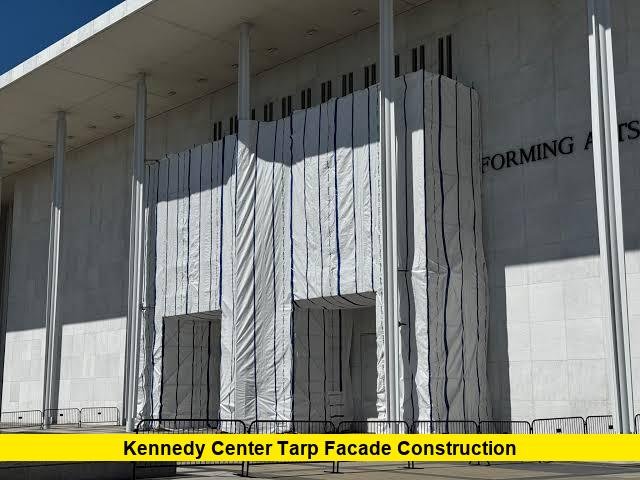

The kennedy center tarp facade construction has become a major focus of public attention in Washington, D.C., as the John F. Kennedy Center for the Performing Arts remains at the center of a legal and political dispute involving exterior changes, construction activity, and the large tarp covering part of the building’s facade. The covering was installed after workers removed signage connected to President Donald Trump’s name following court action, but the continued presence of the tarp has raised questions about the timeline, purpose, and future appearance of the iconic performing arts venue.
The situation has developed alongside broader plans for renovations at the Kennedy Center, including discussions about major construction work and temporary operational changes. The facade covering has attracted attention from visitors, lawmakers, and legal observers because it has prevented the public from clearly viewing the changes made to the building’s exterior.
Why the Kennedy Center Facade Is Covered by a Tarp
The tarp covering the Kennedy Center facade was placed over scaffolding after crews worked on removing signage from the exterior of the building. The work followed a federal court ruling that challenged the authority of the Kennedy Center board to rename the institution or make certain exterior branding changes without congressional approval.
Officials have said the scaffolding and covering were connected to construction and repair work involving the building’s exterior. The Kennedy Center has pointed to maintenance concerns, including facade-related repairs, while critics have questioned why the covering remained in place after the signage removal was completed.
The continued tarp coverage created a visible divide between the public and one of Washington’s most recognizable cultural landmarks. Visitors who gathered near the building wanted to see the restored facade, but the construction barrier limited public visibility.
Legal Dispute Behind the Kennedy Center Construction Activity
The controversy surrounding the Kennedy Center facade began after changes were made to the building’s exterior that added President Donald Trump’s name. The move triggered legal challenges from critics who argued that the institution’s official identity could not be changed without congressional action because the center was established as a national memorial to President John F. Kennedy.
A federal judge later ruled against the renaming effort, leading to the removal of Trump-related signage from the building. Workers removed the letters from the facade, and the Kennedy Center reported compliance with the court order. However, the tarp remained over the work area, keeping the updated exterior hidden from public view for a period of time.
The dispute has continued as the Kennedy Center board has pursued renovation plans and defended its decisions regarding the building’s future. The legal arguments have focused on whether the board exceeded its authority and whether proposed exterior changes were consistent with the center’s legal status.
Construction Plans and Future Renovations at the Kennedy Center
The tarp issue is connected to a larger conversation about the future of the Kennedy Center’s physical structure. The venue has discussed significant renovation work, with officials citing the need for improvements and repairs to maintain the facility.
The renovation plans have also affected performances and operations. The National Symphony Orchestra announced plans to perform at multiple locations in the Washington, D.C., area because of changes connected to the planned closure and renovation schedule.
Major construction projects at historic public buildings often require balancing preservation, safety, accessibility, and continued public use. The Kennedy Center’s situation has become especially complicated because construction decisions are occurring alongside an ongoing debate over the building’s identity and leadership decisions.
Public Reaction to the Tarp Covering
The large tarp covering the Kennedy Center facade quickly became a symbol of the wider disagreement surrounding the building. Some observers viewed the covering as a temporary construction measure, while others questioned whether it delayed public confirmation of changes made to the exterior.
The controversy attracted national attention because the Kennedy Center is not only a performance venue but also a landmark connected to American cultural history. Any visible change to its exterior carries significance beyond ordinary construction work.
The debate also highlighted questions about how cultural institutions manage renovations, leadership decisions, and historical symbolism. Supporters of the renovation plans have emphasized improvements to the facility, while opponents have focused on preserving the center’s original identity.
What Happens Next for the Kennedy Center Facade
The future of the tarp and the Kennedy Center’s exterior remains tied to construction schedules, legal developments, and decisions by the institution’s leadership. The center has continued to address renovation plans while facing scrutiny over the appearance and management of the building.
As work continues, attention will remain on when the public will once again have a clear view of the Kennedy Center facade and what changes will ultimately remain part of the building. The outcome could influence discussions about preservation, public landmarks, and the role of cultural institutions in American life.
The Kennedy Center tarp facade construction story reflects a rare intersection of architecture, law, politics, and public interest. As new developments emerge, the building’s exterior will continue to be closely watched by audiences across the country.
Share your thoughts on the Kennedy Center facade changes and stay connected for the latest updates as this story develops.