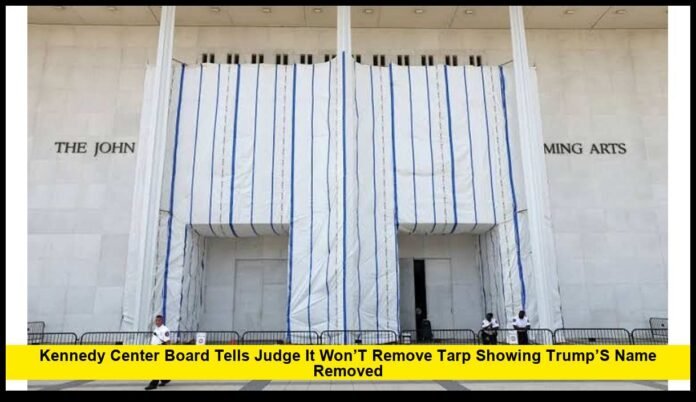

Kennedy Center board tells judge it won’t remove tarp showing Trump’s name removed as the legal dispute over Donald Trump’s connection to the Washington, D.C., performing arts institution continues. The board has informed a federal court that it will not take action to remove the tarp covering the area where Trump’s name was removed from the building facade, leaving the covering in place while legal arguments continue.
The controversy surrounding the Kennedy Center has developed into a major legal battle involving the authority to make changes to the historic venue, the removal of Trump’s name, and the board’s plans for future renovations. The tarp has become one of the most visible parts of the dispute because it covers the section where Trump’s name had previously appeared.
The board’s latest filing does not commit to removing the covering, keeping the exterior appearance unchanged as the court reviews arguments from both sides. The issue remains connected to broader questions about the institution’s leadership decisions and the limits of its authority.
Legal fight over Trump’s name at the Kennedy Center continues
The dispute began after the Kennedy Center board approved changes involving Trump’s name and the identity of the building. The move led to legal challenges from opponents who argued that the board did not have the power to rename or alter the identity of a memorial institution established by Congress.
A federal judge later ruled that changing the official name of the Kennedy Center required congressional action. Following that ruling, Trump’s name was removed from the exterior signage of the building.
After the removal, the area where the letters had been displayed was covered by a tarp and construction materials. The covering later became a separate issue as critics questioned how long it would remain and whether the public should be able to see the updated facade.
The Kennedy Center has argued that the tarp serves a practical purpose connected to construction and repair work. The board has maintained that the covering supports ongoing work involving the building’s exterior rather than serving as a political statement.
Why the tarp became a central issue
The tarp initially appeared during the process of removing Trump’s name from the building. Workers used protective materials while handling changes to the exterior, but the continued presence of the covering created additional questions.
The debate grew after legal opponents argued that the tarp prevented the public from clearly seeing the results of the court-ordered name removal. They pushed for more transparency regarding the condition of the facade and the timeline for removing the covering.
The Kennedy Center responded that the tarp remained necessary because of construction-related concerns. The board’s court filing described the covering as part of safety measures connected to exterior work, including repairs involving the building structure.
The disagreement over the tarp reflects the larger conflict surrounding the Kennedy Center. What started as a dispute over signage has expanded into a legal examination of board authority, renovation decisions, and the preservation of the institution’s historic identity.
Board says it will not immediately change the current situation
The Kennedy Center board told the court it would not immediately move forward with actions involving Trump’s name before September 8, allowing additional time for legal discussions. The decision came after renewed conflict over proposals involving Trump-related references at the venue.
The board’s response means the tarp remains over the section of the building where Trump’s name was previously installed. The center has not provided a commitment to remove the covering while the current legal matters remain unresolved.
The court filing came as opponents continued challenging actions taken by the board. They argued that recent decisions could conflict with previous judicial rulings involving the building’s official identity.
The Kennedy Center’s leadership has continued defending its position, stating that its actions relate to renovation plans and the future operation of the institution.
Kennedy Center renovation plans add another layer to dispute
Alongside the name controversy, the Kennedy Center board has been discussing major renovation plans for the facility. The proposed work has contributed to additional legal disagreements about how the institution should operate during construction.
The board has supported a major renovation approach that would involve significant changes to the building’s operations. Some programs are expected to continue through other spaces connected to the Kennedy Center campus while the main facility faces construction-related changes.
The renovation plans have become connected to the dispute because opponents have questioned whether decisions about the building’s future were made with enough consideration for the institution’s responsibilities.
The court continues to review arguments related to these decisions as the Kennedy Center navigates both legal challenges and operational planning.
Timeline of the Kennedy Center name controversy
The major developments in the dispute include:
- The Kennedy Center board approved changes involving Trump’s name at the institution.
- Legal challenges were filed questioning whether the board had authority to make those changes.
- A federal judge ruled that the official identity of the Kennedy Center could not be changed without congressional approval.
- Trump’s name was removed from the exterior signage.
- A tarp remained over the area after the removal process.
- Questions were raised about why the covering remained in place.
- The board informed the court that it would not immediately remove the tarp or move forward with certain Trump-related changes before September 8.
The timeline shows how a building-sign dispute developed into a larger legal matter involving one of the country’s most recognized cultural institutions.
Debate over the future identity of the Kennedy Center
The Kennedy Center has long served as a national cultural landmark, hosting performances, awards programs, and major artistic events. Because of its connection to President John F. Kennedy, decisions involving its identity often receive national attention.
The dispute over Trump’s name has created disagreements between supporters of the board’s actions and those who believe the institution’s original identity should remain unchanged.
Supporters of the board’s position have highlighted Trump’s involvement with renovation efforts and argued that recognition is appropriate. Opponents have focused on the court ruling and the legal limits surrounding changes to the memorial institution.
The tarp remains a physical symbol of this unresolved disagreement.
Court review remains important in the coming weeks
The next stage of the dispute will depend on additional court proceedings and decisions. The judge’s review will determine how the board’s actions move forward and whether additional changes can happen at the Kennedy Center.
For now, the building remains in a transitional state. The tarp continues to cover the area where Trump’s name was removed, while the legal arguments surrounding the institution’s future continue.
The situation highlights the challenges faced by historic public institutions when questions of leadership, legal authority, and public identity come together.
The Kennedy Center board’s decision not to remove the tarp keeps the controversy active and ensures that the legal battle over the venue’s future remains closely watched across the United States.
What do you think about the ongoing Kennedy Center dispute and the decision to keep the tarp in place? Share your views and stay updated as the situation develops.