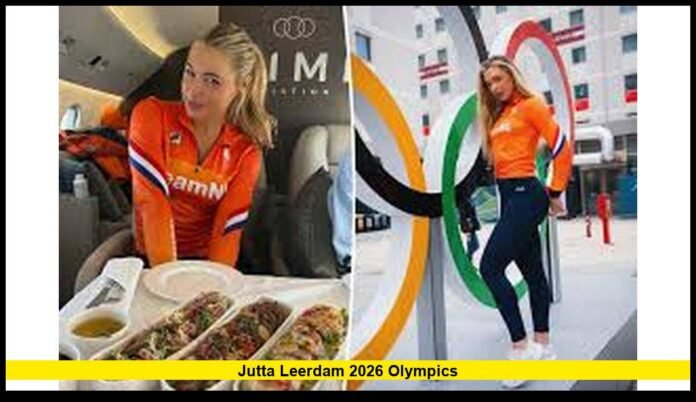

Jutta Leerdam 2026 Olympics coverage continues to dominate winter sports headlines as the Dutch speed skating star competes on the world’s biggest stage in Milano-Cortina. After capturing silver in the women’s 1000 meters at the 2022 Winter Games in Beijing, Leerdam arrived in Italy determined to climb one step higher on the podium. Now 27 and in her competitive prime, she enters these Olympics as one of the top contenders in women’s sprint speed skating.
American viewers are paying close attention. With prime-time broadcasts and intense medal battles unfolding, Leerdam stands out as one of the most recognizable athletes in long-track speed skating.
Olympic Events: 1000m and 500m
At the 2026 Winter Olympics, Leerdam is racing in two individual sprint events:
- Women’s 1000 meters
- Women’s 500 meters
The 1000m remains her signature discipline. It blends explosive power with technical endurance, rewarding skaters who can accelerate quickly and maintain speed through tight turns. Leerdam’s stride efficiency and corner control have made her one of the fastest women in the world at this distance.
The 500m demands even more raw speed. It is a one-lap sprint where reaction time and opening acceleration determine success. Over the last two seasons, Leerdam has sharpened her starts, making her a serious threat in this shorter event.
The Olympic oval in Milano-Cortina has delivered fast ice conditions, setting the stage for highly competitive times. With narrow margins separating medalists, flawless execution matters more than ever.
Momentum from the 2025–26 World Cup Season
Leerdam did not arrive at the Olympics quietly. She built momentum throughout the 2025–26 ISU Speed Skating World Cup season with consistent podium performances.
Key highlights from her pre-Olympic season include:
- Strong finishes in multiple 1000m World Cup races
- Competitive 500m times against top international sprinters
- Consistent ranking among the global elite
Her times leading into the Games confirmed that she remains among the fastest women in the world. More importantly, her consistency showed she could deliver under pressure across multiple venues.
For U.S. audiences used to seeing dramatic Olympic swings, that steady form signals readiness for a serious medal run.
Chasing Olympic Gold After Beijing Silver
Leerdam’s Olympic résumé already includes a silver medal from Beijing 2022 in the 1000m. That performance introduced her to a broader American audience and cemented her reputation as a big-stage competitor.
In Beijing, she delivered a near-perfect race but fell just short of gold. The experience provided valuable lessons in pacing, race strategy, and handling Olympic pressure.
Four years later, she brings that experience to Milano-Cortina. Athletes often peak physically and mentally in their mid-to-late 20s. At 27, Leerdam combines maturity with elite athletic ability.
The difference between silver and gold often comes down to hundredths of a second. Her focus now centers on refining every detail — from start reaction to final push across the line.
Technique That Separates Her From the Field
Speed skating rewards technical precision as much as power. Leerdam’s skating style features:
- Smooth, efficient stride mechanics
- Strong hip drive for acceleration
- Controlled edge transitions in corners
- Balanced upper-body posture for aerodynamic positioning
In the 1000m, she excels at maintaining speed through the second lap. Many skaters lose momentum after the opening burst. Leerdam typically sustains power deep into the race, which gives her a competitive edge.
Her 500m improvement reflects months of targeted training. Faster starts and cleaner first turns have tightened her margins against pure sprint specialists.
Media Attention and Opening Ceremony Decision
Beyond performance, Leerdam drew headlines for her choice to skip the Olympic Opening Ceremony. Instead of marching with the Dutch delegation, she prioritized rest and preparation for upcoming races.
Athletes competing early in the Olympic schedule often make similar decisions. The Opening Ceremony can last several hours, involving extended standing time and late-night commitments.
For Leerdam, performance came first.
The decision sparked debate internationally. Some fans viewed it as strategic. Others questioned the optics. Regardless, she remained focused on training sessions and race readiness.
Private Travel Scrutiny
Her arrival in Italy also generated discussion after it was confirmed she traveled via private jet. Social media amplified the story, creating a wave of online commentary.
Reactions varied:
- Critics questioned environmental implications.
- Supporters emphasized athlete autonomy and preparation comfort.
- Many American viewers remained focused on competition outcomes.
In elite sports, high visibility often brings amplified scrutiny. Leerdam has handled the attention without public confrontation, keeping her messaging centered on performance.
Why U.S. Viewers Are Watching Closely
Winter sports audiences in the United States have grown steadily in recent Olympic cycles. Women’s speed skating, in particular, has gained traction due to compelling rivalries and dramatic finishes.
Leerdam attracts American viewers for several reasons:
- She delivers high-speed, aggressive racing.
- Her Olympic experience adds credibility.
- She competes in events where podium spots shift by fractions of a second.
With Team USA fielding strong competitors, head-to-head matchups add another layer of excitement.
Olympic sprint races often produce unforgettable moments. A powerful final straightaway can redefine medal standings instantly.
Pressure of Competing for the Netherlands
The Netherlands carries a historic legacy in speed skating. Dutch fans expect excellence at every Winter Games. That national tradition adds pressure for athletes wearing orange.
Leerdam competes within a system known for producing world-class skaters. Internal competition for Olympic spots remains fierce. Earning selection alone represents a major achievement.
Carrying national expectations while managing global attention requires mental resilience. Leerdam’s calm pre-race demeanor reflects years of competing at the highest level.
Mental Preparation and Competitive Mindset
Olympic racing challenges athletes mentally as much as physically. Media interviews, sponsorship obligations, and social media buzz can create distractions.
Leerdam’s preparation routine includes:
- Structured warm-up sequences
- Focused breathing techniques before starts
- Limiting external engagement on race days
- Strategic recovery between events
Her approach prioritizes consistency. Rather than chasing headlines, she concentrates on execution.
That mindset becomes critical when medal races hinge on microscopic timing differences.
The 1000m: Her Strongest Medal Opportunity
Among her events, the 1000m remains the most promising path to gold.
This distance rewards skaters who combine acceleration with sustained mid-race control. Leerdam’s balance of strength and efficiency aligns perfectly with those demands.
Key elements that could determine her outcome:
- Clean, powerful start
- Smooth transition into the first turn
- Controlled pacing during the second lap
- Strong final straightaway push
The Olympic oval in Milano-Cortina has produced fast times, which increases the importance of flawless technique.
If she executes at her highest level, she can stand atop the podium.
The 500m: Explosive and Unpredictable
The 500m introduces a different challenge. It offers less room for recovery after small mistakes. A fractionally slow reaction or slight edge slip can cost a medal.
Leerdam’s recent improvements in acceleration position her as a serious contender, though the field remains stacked with pure sprint specialists.
Success in this event will depend on:
- Reaction speed at the starting gun
- Immediate power output
- Maintaining low aerodynamic posture
- Precision through the first curve
The 500m often delivers the tightest finishes in Olympic speed skating. Spectators can expect dramatic results.
Career Achievements That Built This Moment
Before Milano-Cortina, Leerdam built a decorated international career that includes:
- Olympic silver medal in 2022
- Multiple World Championship medals
- World Cup victories across sprint distances
- Consistent ranking among the world’s top skaters
She transitioned from junior success to senior dominance with impressive speed. Her development reflects years of disciplined training within the Dutch skating system.
Now, she stands at a defining point in her career.
Global Spotlight and Personal Brand
Leerdam’s popularity extends beyond the ice. She maintains a strong social media presence and connects with fans worldwide. That visibility has expanded interest in women’s speed skating, especially among younger audiences.
While attention can increase pressure, it also elevates the sport’s profile. Her Olympic races carry broader cultural significance as women’s winter sports continue gaining mainstream recognition in the United States.
What the Next Races Mean for Her Legacy
Every Olympic appearance shapes an athlete’s legacy. For Leerdam, Milano-Cortina offers the chance to move from Olympic medalist to Olympic champion.
Winning gold would:
- Cement her status among the sport’s elite
- Strengthen her place in Dutch speed skating history
- Expand her recognition among American sports fans
Even without gold, strong performances would reinforce her position as one of the defining sprinters of her generation.
The margins are thin. The stakes are enormous.
As the Olympic schedule unfolds, each race will add a new chapter to her journey.
Do you believe Jutta Leerdam will capture gold at the 2026 Winter Games? Share your thoughts and keep following the action as the Olympic sprint battles continue.