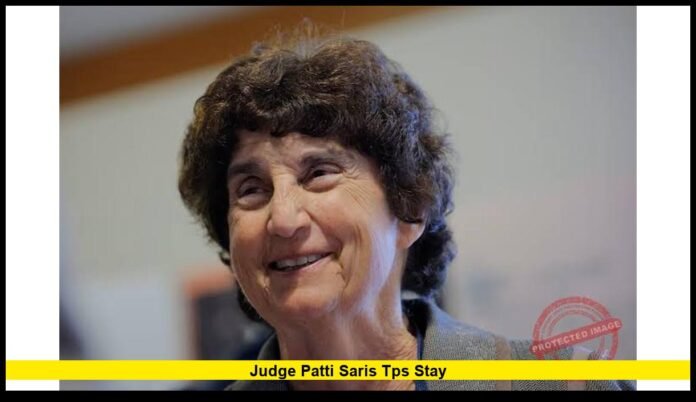

Judge Patti Saris TPS stay continues to draw national attention after a series of federal court rulings kept Temporary Protected Status (TPS) protections in place for eligible South Sudanese nationals while legal proceedings move forward. The case has become one of the most closely watched immigration disputes in the United States because it addresses the limits of executive authority, the role of federal courts, and the future of humanitarian immigration protections.
Although the legal landscape surrounding TPS changed significantly after a recent U.S. Supreme Court decision, the South Sudan case remains active. Judge Patti B. Saris has taken additional procedural steps to preserve the current situation while determining which legal claims may continue in federal court. As a result, eligible South Sudanese TPS holders remain protected as the litigation proceeds.
Why This Case Has Received National Attention
Temporary Protected Status has long been one of the most important humanitarian programs in U.S. immigration law. It allows eligible foreign nationals from designated countries to remain in the United States when conditions in their home country make a safe return impossible.
South Sudan has qualified for TPS because of years of armed conflict, political instability, and serious humanitarian challenges.
When the Department of Homeland Security announced plans to terminate the designation, affected individuals and advocacy organizations filed suit in federal court, arguing that the decision violated federal law and failed to properly evaluate current country conditions.
Judge Patti Saris agreed that the plaintiffs had presented substantial legal questions deserving immediate judicial review. Her ruling prevented the termination from taking effect while the case continued.
How the Legal Dispute Began
The litigation began after Homeland Security announced that Temporary Protected Status for South Sudan would end following a review of conditions in the country.
Government officials concluded that circumstances had improved enough to justify ending the designation.
Plaintiffs challenged that conclusion.
They argued that South Sudan continued to experience severe instability and that the government’s review failed to follow legal requirements established under the TPS statute.
The lawsuit quickly moved into federal court in Massachusetts, where Judge Patti Saris reviewed requests for emergency relief before the termination could become effective.
Judge Saris Blocks the TPS Termination
One of the most significant moments in the case came when Judge Saris issued a preliminary injunction preventing Homeland Security from ending South Sudan’s TPS designation.
A preliminary injunction is designed to preserve existing rights while a lawsuit continues.
Federal courts grant this type of relief only after evaluating several legal factors, including:
- The likelihood that plaintiffs may succeed.
- Whether immediate harm would occur without court intervention.
- The balance of hardships.
- The overall public interest.
After reviewing the evidence presented by both sides, Judge Saris concluded that the plaintiffs had met the legal standard required for preliminary relief.
That decision ensured eligible TPS holders could continue living and working in the United States while the lawsuit proceeded.
Government Appeals the Decision
Following the injunction, the federal government appealed the ruling to the U.S. Court of Appeals for the First Circuit.
Officials argued that immigration policy decisions concerning Temporary Protected Status belong primarily to the executive branch.
The government maintained that courts should not interfere with the Secretary of Homeland Security’s authority to determine whether TPS remains appropriate for a designated country.
Along with the appeal, government attorneys requested a stay of Judge Saris’ injunction.
If granted, the stay would have allowed Homeland Security to move forward with terminating TPS while the appeal remained pending.
Judge Patti Saris Denies the Stay Request
The request for a stay became another important stage in the litigation.
Judge Saris carefully reviewed the government’s arguments before denying the motion.
Her decision meant that her earlier injunction remained in effect throughout the appellate process instead of being suspended.
Federal judges generally consider several established legal standards before granting a stay pending appeal.
These include:
- The likelihood of success on appeal.
- The possibility of irreparable harm.
- Harm to other parties.
- The public interest.
Judge Saris determined that the government had not satisfied those requirements.
Because of that ruling, the protections created by the preliminary injunction continued uninterrupted.
Read More – Judge Halts Trump Visa Restrictions: Federal Court Temporarily Blocks Enforcement of Research Visa Policy
What Temporary Protected Status Provides
TPS is a humanitarian immigration benefit created by Congress in 1990.
It is available only to nationals of countries officially designated by the Secretary of Homeland Security because extraordinary conditions make returning unsafe.
Individuals approved for TPS generally receive:
- Protection from removal.
- Authorization to work legally.
- Permission to remain in the United States during the designation period.
TPS is temporary.
It does not automatically lead to lawful permanent residence or U.S. citizenship.
Instead, Homeland Security periodically reviews country conditions to determine whether each designation should continue.
Why South Sudan Remains Eligible for TPS
South Sudan has experienced years of conflict following its independence.
The country has faced armed violence, displacement of civilians, humanitarian emergencies, and political instability.
These conditions led the United States to designate South Sudan for Temporary Protected Status.
The legal challenge focuses on whether Homeland Security lawfully determined that those conditions had improved enough to justify ending the designation.
Plaintiffs argue that the agency failed to adequately support its conclusion.
Judge Saris found sufficient questions surrounding that decision to justify preserving TPS while the lawsuit moves forward.
Supreme Court Changes the Legal Landscape
The case took another important turn after the U.S. Supreme Court issued a major decision involving Temporary Protected Status.
The Court ruled that many statutory challenges to TPS determinations fall outside the scope of federal judicial review.
That decision affected multiple lawsuits involving TPS designations for different countries.
However, the ruling did not automatically end every pending TPS case.
Instead, lower courts must determine whether remaining constitutional claims can still proceed despite the Supreme Court’s decision.
The South Sudan litigation became one of the first cases to address those issues.
Administrative Stay Keeps Existing Protections in Place
Following the Supreme Court’s ruling, Judge Saris issued an administrative stay.
An administrative stay differs from a permanent injunction or a final judgment.
Instead, it temporarily preserves the current legal situation while procedural questions are resolved.
In this case, the administrative stay prevents immediate implementation of the TPS termination while Judge Saris considers whether plaintiffs may amend their complaint to pursue constitutional claims.
That order keeps existing protections in place during the next stage of litigation.
Constitutional Questions Remain Before the Court
Although the Supreme Court narrowed judicial review over certain TPS decisions, constitutional issues may still receive consideration in federal court.
Plaintiffs have sought permission to revise their lawsuit to emphasize constitutional arguments.
Judge Saris is now considering how those claims should proceed under current law.
Those questions remain unresolved.
As a result, the litigation continues even after the Supreme Court’s recent decision.
How Many People Are Affected
Compared with TPS designations involving larger populations, South Sudan’s designation covers a relatively limited number of individuals.
Current court filings indicate:
| Category | Current Status |
|---|---|
| Current TPS beneficiaries | Approximately 232 |
| Pending TPS applications | More than 70 |
Although the number is relatively small, the outcome remains highly significant because it may influence future legal challenges involving humanitarian immigration protections.
Arguments Presented by the Plaintiffs
The plaintiffs maintain that Homeland Security did not properly evaluate current conditions in South Sudan before announcing the termination.
Among their principal arguments are:
- Humanitarian conditions remain unstable.
- Armed conflict continues in parts of the country.
- The administrative record does not adequately support ending TPS.
- The decision-making process did not fully comply with applicable legal standards.
Judge Saris found these issues sufficiently serious to warrant preliminary judicial intervention.
Government’s Position
Federal officials continue defending the termination decision.
The government argues that Congress granted broad discretion to the Secretary of Homeland Security when deciding whether TPS should continue.
Officials also maintain that courts should defer to the executive branch’s evaluation of country conditions.
Those legal arguments remain central to the ongoing appeal.
Importance of the First Circuit Appeal
The U.S. Court of Appeals for the First Circuit continues reviewing the case.
Normally, appellate judges determine whether the district court correctly interpreted the law and properly applied established legal standards.
Because the Supreme Court issued its TPS decision while the appeal remained pending, the First Circuit must also consider how that ruling affects the South Sudan litigation.
Its eventual decision could influence the future direction of the case.
How This Case Differs From Other TPS Litigation
Several TPS lawsuits have reached federal courts in recent years.
Each involves unique facts, different administrative records, and separate legal arguments.
The South Sudan litigation stands out because Judge Saris determined that the plaintiffs demonstrated sufficient evidence to justify preliminary relief before the Supreme Court altered the legal framework governing judicial review.
That procedural history makes the case different from many other TPS disputes.
Current Legal Status
At present, several important points remain clear.
Judge Saris’ preliminary injunction continues to shape the litigation.
Her denial of the government’s request for a stay allowed protections to remain effective during the appeal.
After the Supreme Court issued its recent TPS ruling, Judge Saris entered an administrative stay while considering whether constitutional claims may continue.
No final ruling has yet resolved the merits of those constitutional issues.
Accordingly, the case remains active in federal court.
What Happens Next
Several procedural matters remain before the courts.
Judge Saris must determine whether the plaintiffs may proceed with amended constitutional claims.
The First Circuit will continue evaluating issues raised on appeal.
Additional rulings may clarify how federal courts should handle TPS challenges following the Supreme Court’s recent decision.
Until those questions receive final answers, South Sudan’s TPS litigation remains one of the most closely followed immigration cases in the country.
The outcome may help define the future relationship between executive immigration authority and judicial oversight in cases involving humanitarian protections.
For affected individuals, the current orders provide stability while the legal process continues.
For immigration law more broadly, the case represents another important chapter in the continuing debate over the scope of Temporary Protected Status and the role federal courts play in reviewing agency decisions.
What happens in the months ahead could have lasting implications for immigration law, so stay informed and join the conversation by sharing your thoughts below.