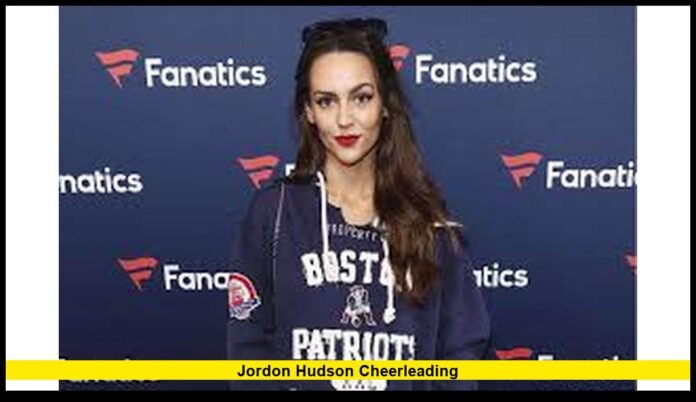

Jordon Hudson cheerleading captured renewed attention this month after the former collegiate champion appeared in a high-profile adult coed cheer event in Raleigh, North Carolina. The performance marked one of her first major cheerleading returns since she stepped away from competition, and her presence sparked both fan interest and media coverage focused on her athletic form and the evolving status of adult cheer competition in the U.S.
Her appearance with a top coed team brought her back into the spotlight—not just as a cheerleader but as a visible figure in the intersection of athletics, public persona and competitive culture. In the following sections we explore her background in cheer, how this latest appearance came about, what it means for her and the sport, and what to expect moving forward.
From collegiate champion to returning athlete
Hudson’s cheerleading résumé includes national-level success. While attending Bridgewater State University, she competed on a squad that secured a national championship in 2021. This background established her as a strong performer in collegiate cheerleading circles. She later graduated with a bachelor’s degree and carried that competitive mindset into her post-college endeavors.
In the years following her graduation, Hudson shifted her focus toward pageantry, business ventures and public appearances. Yet her roots in cheer did not disappear. The recent Raleigh event saw her stepping back into the role of performer—executing partner stunts, tumbling runs and team sequences alongside veteran adults in the coed environment. This kind of return invites attention because adult coed cheer is less mainstream than youth or collegiate divisions, yet it demands advanced athletic skill.
The Raleigh showcase: what happened
At the Raleigh adult coed cheer competition, Hudson’s team delivered a routine consistent with national-level coed standards. Key elements included:
- Multiple tumbling runs featuring standing and running passes, indicating strong individual ability.
- Partner stunts where bases launched flyers into twisting catches and extensions.
- Multi-person pyramids set up and disassembled mid-routine, showing synchronized timing.
- Team choreography combining dance transitions with cheer motions, creating showmanship alongside athleticism.
Hudson appeared in several of the stunts and passes, visible in crowd footage and competition clips. The event drew spectators, and the presence of a well-known former athlete added to the spectacle. While this was not a traditional collegiate competition, the routine’s format and execution aligned with what many adult coed competitions demand.
What her return signals for her and the sport
Her participation matters for several reasons:
- It suggests she remains physically capable of performing at a high level in cheer even after a break from intense competition.
- It draws awareness to adult coed cheer divisions, which often operate under the radar compared to high school and college squads.
- It challenges the notion that cheer ends at college—her return illustrates how athletes can continue performing in organized settings beyond school.
- It creates a narrative of comeback and athletic dedication that resonates with fans of competitive sports and cheer culture alike.
For the sport of adult coed cheer, her return may help increase visibility, attract new participants, and encourage media interest in competitions that previously received less spotlight.
Training, preparation and what goes into the performance
Adult coed cheer teams train intensely. Even veterans must keep their skills sharp. For her part:
- Hudson reportedly resumed tumbling drills, twist and catch stunts, and conditioning workouts to prepare for the event.
- The team she joined executes routine components that include both male and female bases/flyers, uneven stunts and aerial transitions.
- Timing, coordination, and safety protocols are critical—especially when reentering high-impact skills after any hiatus.
- Given her previous championship experience, Hudson’s return routine likely involved adjustments to ensure she could meet current difficulty standards while managing her own physical readiness.
This level of preparation underscores the seriousness of her comeback and the legitimacy of the performance beyond a novelty appearance.
Media and public reaction
The audience response to Hudson’s return spanned several categories:
Fans of cheer and athletics reacted positively, noting her skill, her decision to return and the energy of the routine. They applauded the ability of former collegiate athletes to remain active and competitive.
Media outlets and social-media users focused on the visual contrast of a high-profile public figure re-entering a niche sport, generating commentary about her role in that world. The event became a talking point because of her prior achievements and the rarity of adult coed athletes achieving visibility.
Critics and longtime cheer participants offered mixed responses. Some raised questions about whether celebrity involvement shifts attention away from grassroots athletes. Others saw it as an opportunity to bring more infrastructure, sponsorship and attention to adult coed cheer.
Overall, her presence added a layer of narrative to the competition—something beyond pure athletic performance.
Team dynamics and coed cheer structure
Coed cheer teams differ from traditional single-gender squads in key ways. For the team Hudson competed with:
- Male and female athletes both perform tumbling and stunts.
- Flyers are launched by bases who must execute precise timing, strength and coordination.
- Pyramids often involve multi-layered structures with transitions and catches at height.
- The scoring system emphasizes difficulty, execution, transitions, showmanship and synchronization.
- Adult coed divisions allow athletes beyond college age, often drawing those who previously competed and want to continue.
The team’s logistics—such as training schedules, stunt group assignments, and material selections—often mirror those of younger teams but adapt for the years of experience and physical maturity of adult participants.
For Hudson, integrating into such a team meant stepping into an environment where everyone expects advanced routines, clean execution and consistent training.
What’s next for Hudson and the competition scene
Following her return appearance, several developments may shape the near future:
- She may stay with the team for a full competitive season, including regional qualifiers and national-level championships.
- The routine could evolve, with increased difficulty, new stunts or role changes for her within the group.
- Publicity and social-media promotion might accompany additional appearances, creating crossover visibility for the team and the division.
- The team might leverage her presence to attract sponsorships, recruit new athletes, and raise its profile in the adult coed cheer world.
From a broader standpoint, adult coed divisions may gain greater audience, better broadcast or streaming coverage, and possibly expanded opportunities for athletes like Hudson to bridge competitive experience with public visibility.
Why this matters beyond the event
This scenario speaks to several larger themes:
- Long-term athlete identity: Hudson’s return suggests that athletic identity doesn’t have to end after college. Many former competitors explore ways to continue performing and training.
- Sport visibility growth: Adult coed cheer has historically had limited media coverage. A known figure returning to competition helps bring attention and may lead to improved infrastructure, media placements and funding.
- Intersection of performance and public persona: When athletes step into public view again, their sport becomes part of a larger narrative. For Hudson, her cheer career, her public appearances and her role in athletics intersect.
- Opportunity for expansion in niche sports: This moment may encourage other adult athletes to rejoin or newly join competitive leagues. It signals that competitive performance remains accessible and relevant.
Practical tips for fans and aspiring coed athletes
If you’re following Hudson’s return or want to learn more about adult coed cheer, consider the following:
- Attend live events: Regional showcases provide atmosphere, allow you to see routines live and track team progress.
- Follow team social channels: Teams often post behind-the-scenes training clips, athlete profiles and competition updates.
- Understand division rules: Adult coed divisions have specific age brackets, difficulty limits, and scoring criteria.
- Assess athlete backgrounds: Many athletes have prior competitive experience—knowing that helps understand performance levels.
- Focus on safety and training: If you consider joining, prioritize proper training, conditioning and stunt progressions.
By engaging with these tips, fans and aspiring athletes alike can gain greater insight into the coed cheer world and appreciate the athletic demands and team dynamics.
Conclusion
Jordon Hudson’s return to competitive cheerleading offers a meaningful snapshot of how adult coed divisions continue to evolve in the United States. Her performance at the Raleigh showcase demonstrates athletic readiness, team integration and the power of experienced athletes returning to the floor. The event also highlights the broader potential for increased visibility, growing fan interest and deeper understanding of a sport that thrives on precision, teamwork and high-level skill.
As Hudson continues this chapter of her athletic journey, the cheer community and broader sporting audience will be watching—both for her individual progress and for what her return signifies for adult coed competition.
Are you an adult athlete returned to competition or a fan of coed cheer? Leave your thoughts or share your experience in the comments below — let’s keep the conversation going.